
As someone who has been obsessed with first-person shooters since childhood, I've always believed this genre houses some of the most electrifying, unforgettable experiences in gaming. From indie gems to triple-A blockbusters, the FPS landscape is littered with titles that push boundaries in gunplay, storytelling, and immersion. Yet, time and again, I find myself fixating on tiny imperfections—seemingly insignificant design choices—that tug these near-masterpieces back from the brink of perfection. They're not broken games; they're brilliant ones held back by a single, stubborn flaw.
Over the years, I've catalogued these heartbreaks. Here are ten minor issues that haunt otherwise phenomenal FPS titles, preventing them from sitting comfortably at the genre's summit.
10. Mullet Madjack – The Visual Monotony Problem
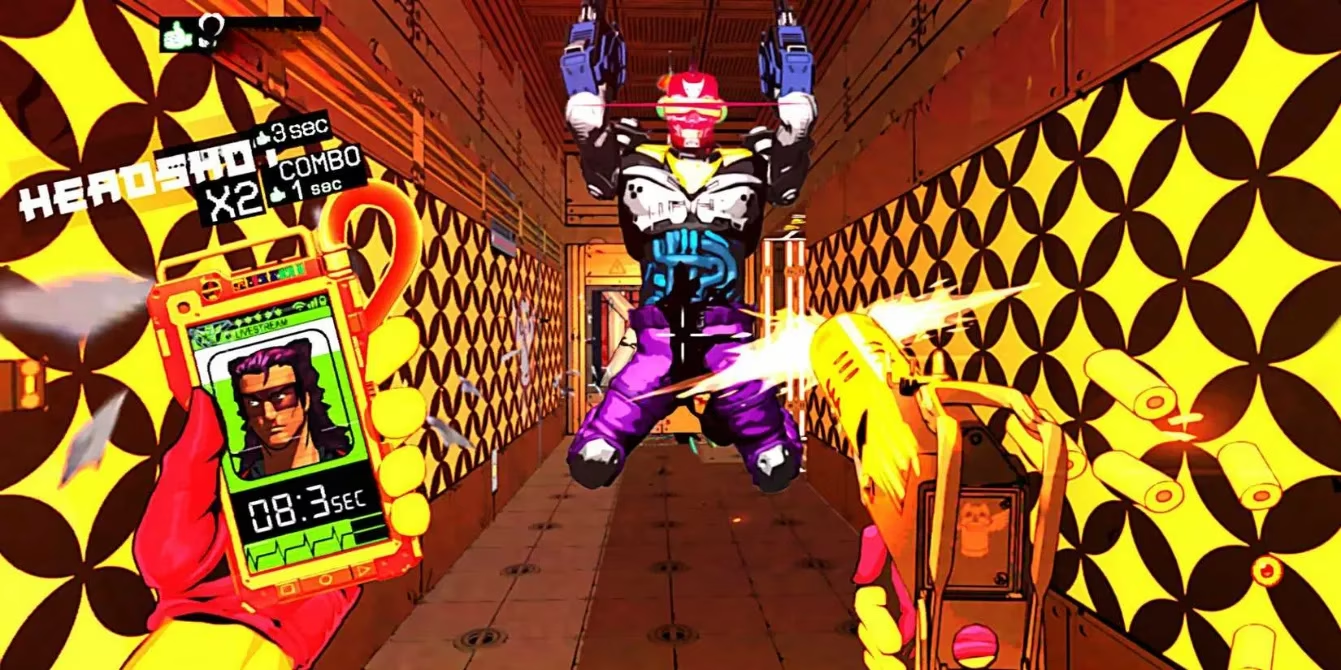
Mullet Madjack is, without hyperbole, one of the most inventive indie shooters I've ever played. Its fast-paced, roguelite-inspired violence and anime aesthetic won me over instantly. But after a dozen hours, the levels began blurring into a numbing, neon smear. The problem is not the art direction itself—which is striking—but the severe lack of aesthetic variety. Every floor looks identical, recycling the same color palettes, poster designs, and environmental signatures. There are no memorable landmarks, no thematic shifts to break the visual monotony. The result? A title that feels like it has only one level repeated infinitely, breeding visual fatigue and draining the personality from its otherwise razor-sharp combat. A little procedural dressing-up of the backdrops could have made this a perfect 10.
9. Metro Exodus – Confused Enemy Detection
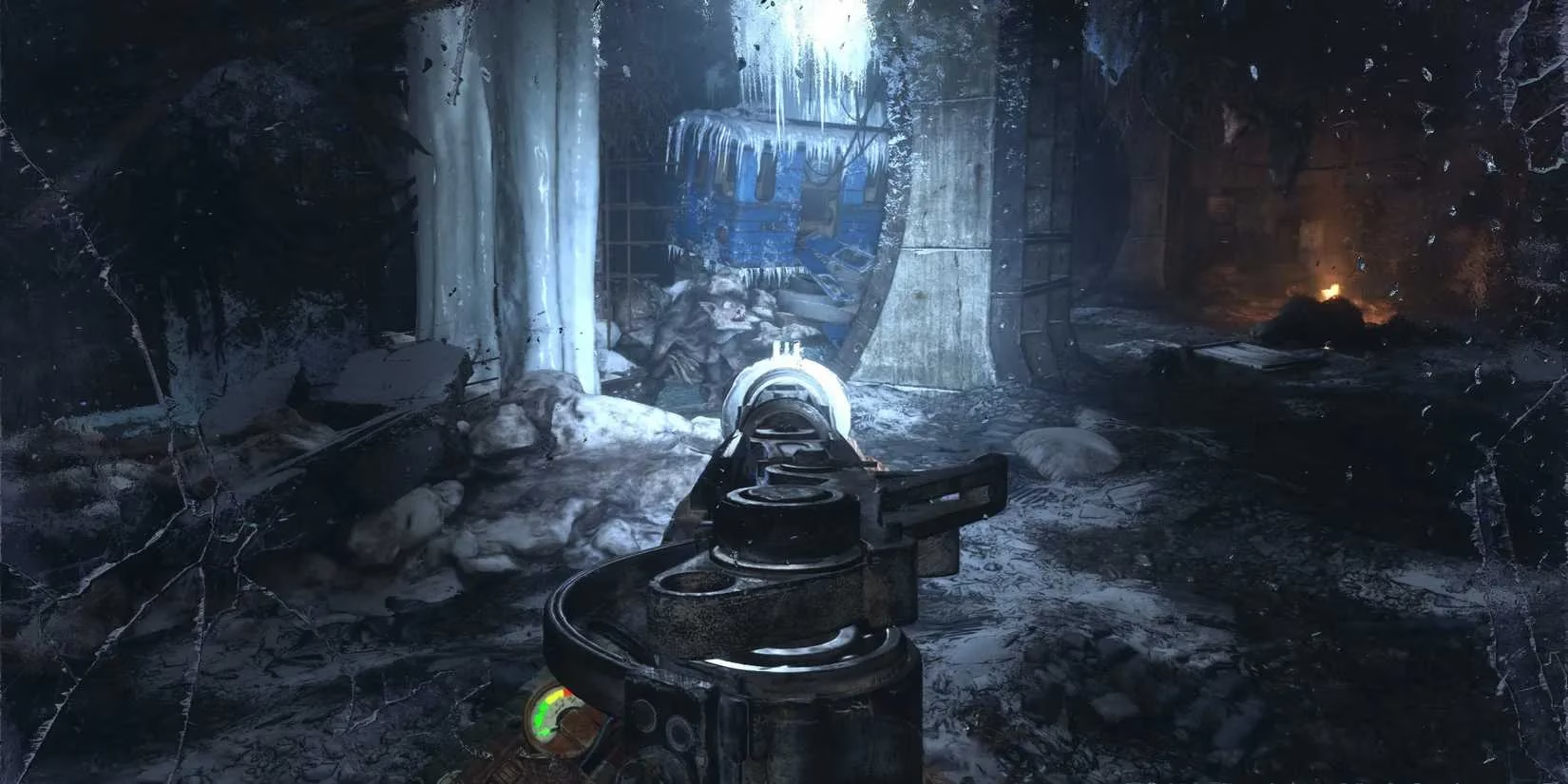
As a conclusion to Artyom's grim journey, Metro Exodus refined almost everything: gun customization, semi-open world exploration, and survival horror tension. Still, I can't shake the erratic enemy AI that puts a dent in this gorgeous post-apocalyptic trip. In one firefight, foes are comically blind, standing oblivious as I crouch three feet away. In the next, they possess supernatural perception, spotting me through thick foliage from miles out. There's no baseline, no consistency. This bipolar detection system—oscillating between mindless and omnipresent—shatters immersion and forces me to approach every encounter with guesswork rather than strategy. When a game trades so heavily on atmosphere, unpredictability of this sort isn't thrilling; it's exasperating.
8. Far Cry 3 – Dream Sequences That Overstay Their Welcome
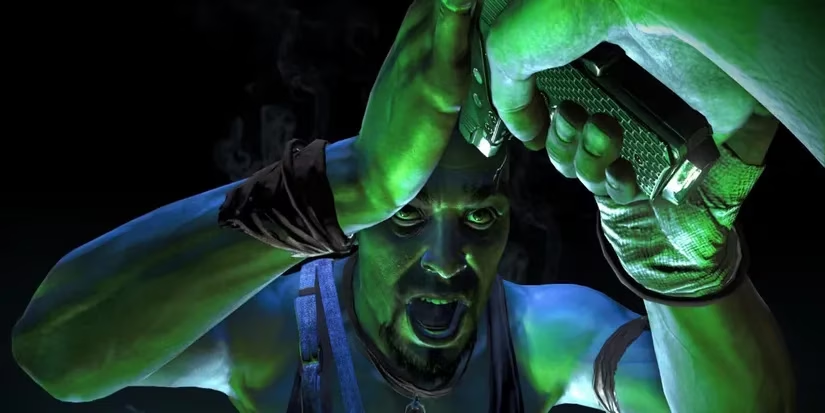
Vaas Montenegro's maniacal speeches and Jason Brody's descent into savagery remain iconic, but I'm baffled that so few discussions mention the campaign's worst detour: the forced dream sequences. When I think of Far Cry 3, I remember explosive liberation of outposts, tense wildlife attacks, and sun-drenched exploration. What I'd rather forget are the psychotropic, quick-time-event-laden visions that interrupt the story at crucial junctures. They attempt narrative depth but deliver clunky mechanics and a dragging pace that undermines the empowerment of the open world. Instead of feeling like a meaningful plunge into Jason's psyche, they play out as tired, hand-holding set-pieces that clutter an otherwise pulse-pounding adventure.
7. Singularity – A Pandora's Box with Too Few Monsters
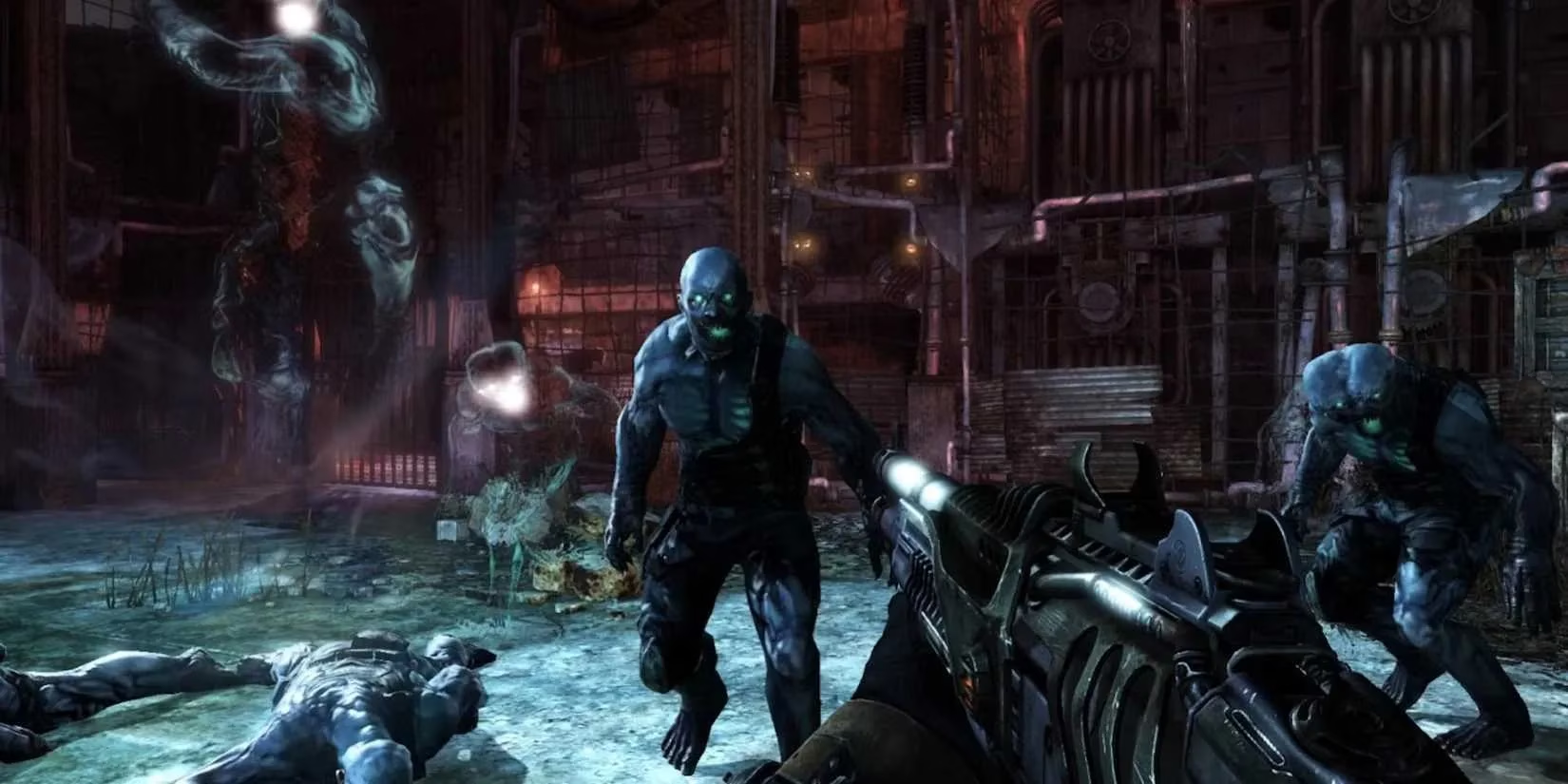
Raven Software's time-bending shooter is a cult classic, and deservedly so. The Time Manipulation Device lets you age enemies to dust or reverse bullet trajectories—ingenious ideas executed with flair. Yet the enemy roster betrays that brilliance. You'll face a handful of mutant variants and a slightly different handful of soldiers, and that's it. No adversary genuinely demands creative use of your temporal powers; the same two or three tactics work from the opening hour to the credits. This limited bestiary turns combat from a brainy ballet into rote repetition. Visual monotony and tactical stagnancy combine, leaving
Singularity just shy of the innovation crown it could have claimed.
6. Crysis 2 – The Hallway-Hero Syndrome
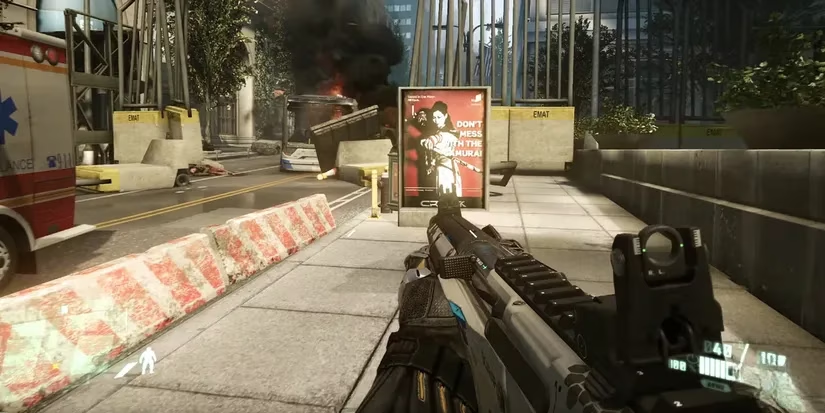
The original Crysis rewired my expectations of what a sandbox FPS could be: vast jungles, emergent encounters, and a nanosuit that turned every firefight into a physics playground. When Crysis 2 shifted the battlefield to New York, I expected a similarly liberating playground. Instead, I got beautifully rendered but suffocating corridors disguised as city streets. The campaign funnels you through a linear series of alleyways and broken buildings, stripping away the improvisation that made the first game a revelation. Wearing a super-soldier suit and wielding experimental weaponry feels hollow when your only option is to proceed down a single, narrow path. It's a technical marvel, but one that forgot its liberating roots, trading freedom for a cinematic chokehold.
5. Deathloop – The Puzzle That Solves Itself
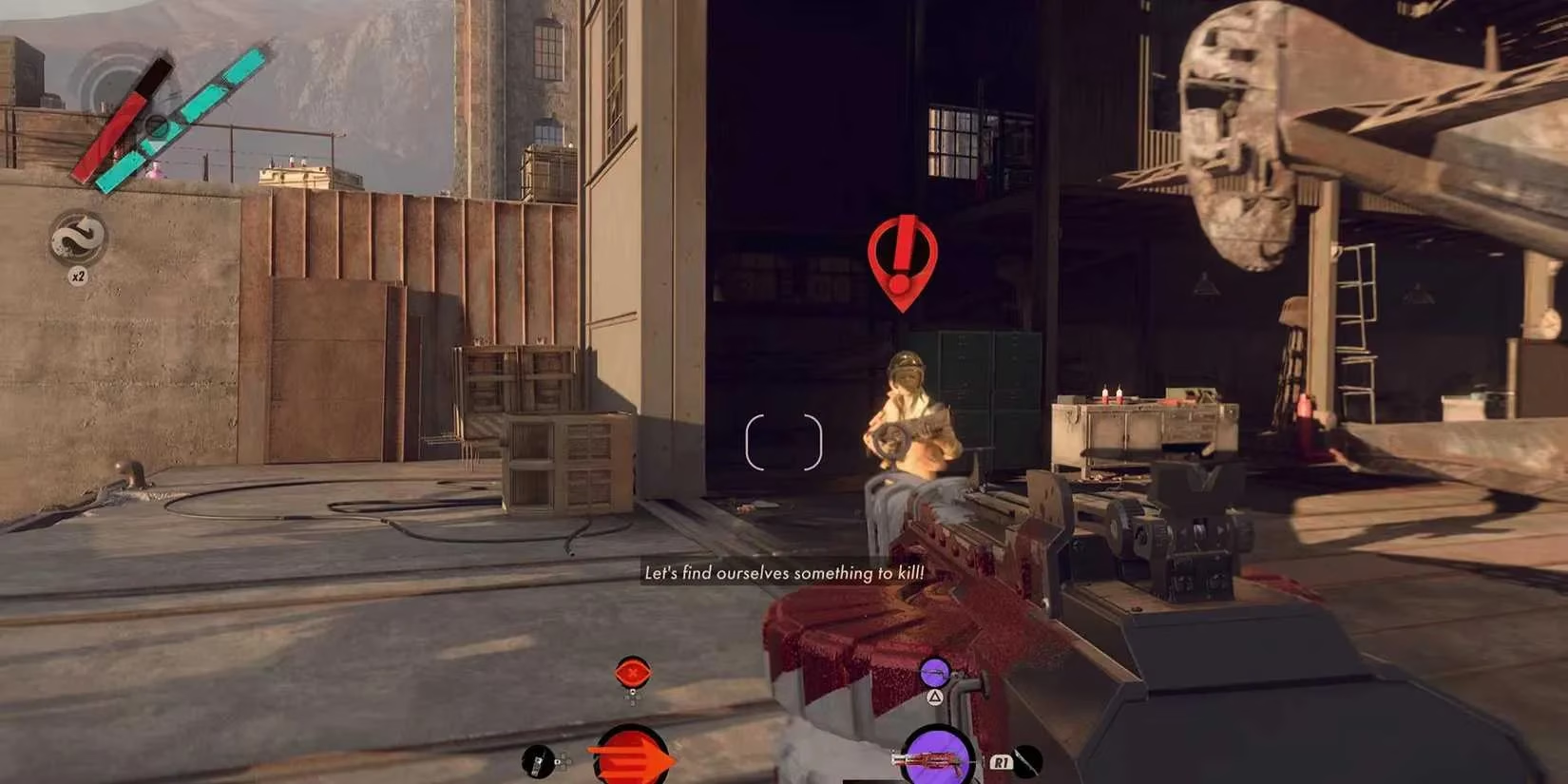
Arkane's time-looping assassin thriller drips with 60s chic and slick gunplay. The "Groundhog Day" structure should have been a cerebral puzzle box, but instead, an overbearing breadcrumb trail robs you of any real detective work. Unlike Outer Wilds, which trusts the player to unravel its cosmic clockwork, Deathloop bombards you with mission markers, objective text, and explicit instructions. Every step toward breaking the loop is spoon-fed, eliminating the eureka moments that make this subgenre so intoxicating. The perfect loop execution feels less like my own genius and more like completing a checkbox list. It's still a blast to play, but I mourn the self-discovery that was sacrificed at the altar of accessibility.
4. Neon White – Dialogue Overload in the Fast Lane

Speedrunning angels through heavenly architecture while discarding weapons for movement abilities—Neon White is a masterclass in kinetic flow. The character writing, surprisingly, is full of wit and genuine charm. But the game forces these conversations directly into the critical path, stopping your momentum dead. After a blistering 30-second dash, you're locked into a minutes-long dialogue exchange that feels like a speed bump on a race track. The optional banter is delightful; the mandatory interruptions are devastating. In a game where every millisecond of aerial, acrobatic mastery matters, being yanked out of that state wrecks the rhythm. A more elegant, player-driven approach to storytelling would have made this speedrunning heaven truly flawless.
3. Borderlands 2 – The Tyranny of Tedious Sidequests
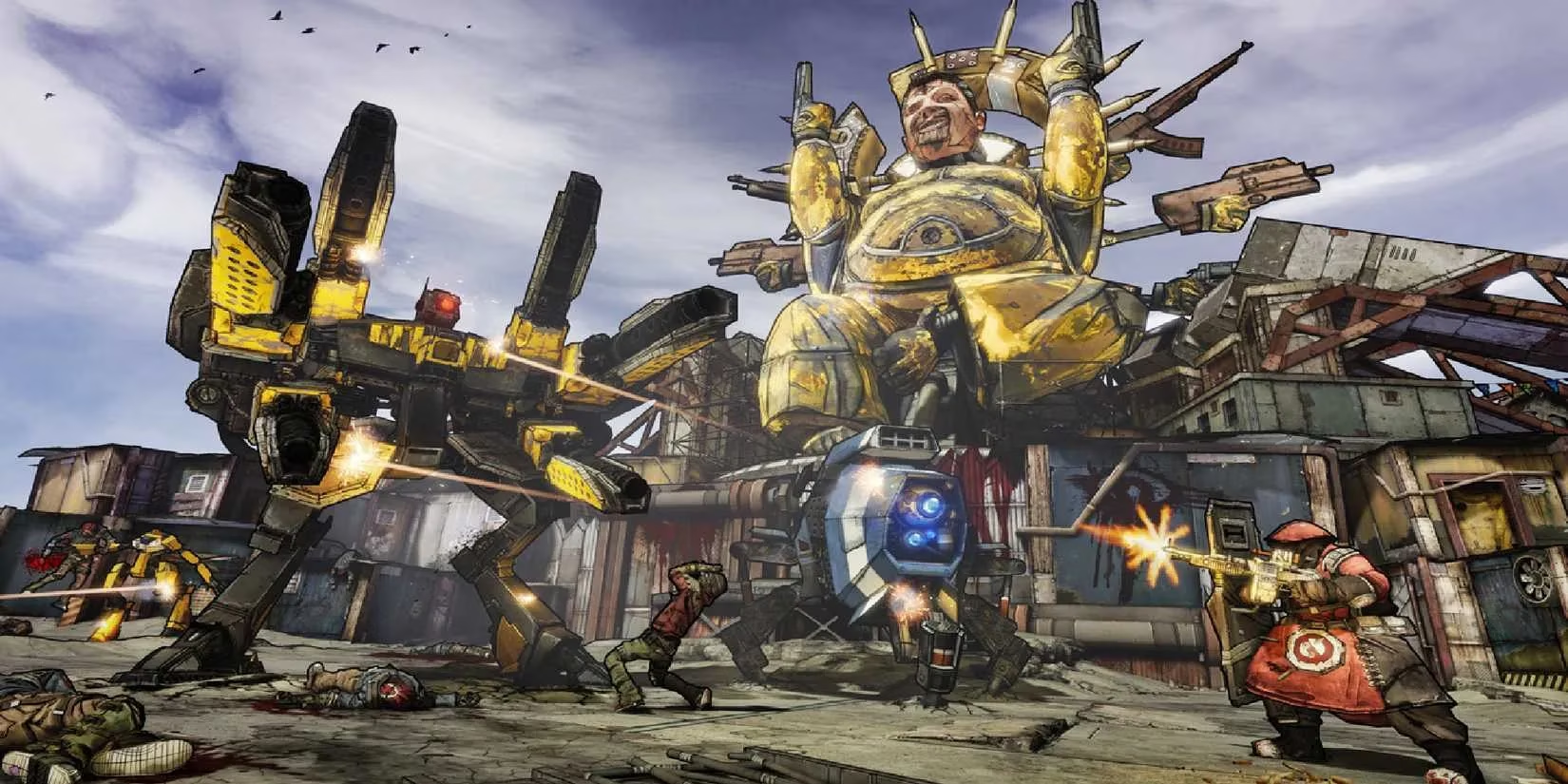
Pandora's irreverent soul is etched into every line of dialogue, and Handsome Jack remains one of gaming's greatest villains. Yet the side content in Borderlands 2 is a creative wasteland. Whether you're fetching items, escorting clumsy NPCs, or killing waves of skags, the mission structure rarely deviates from a handful of tired templates. The characters and writing are doing all the heavy lifting to mask mechanical monotony. After the dozenth "go here, kill that, return for loot" errand, the open-world emptiness sets in. In a loot-driven shooter predicated on variety, the lack of inventive objectives is a glaring blind spot that dulls the borderlands' shine.
2. Wolfenstein II: The New Colossus – The Hub That Kills the Vibe
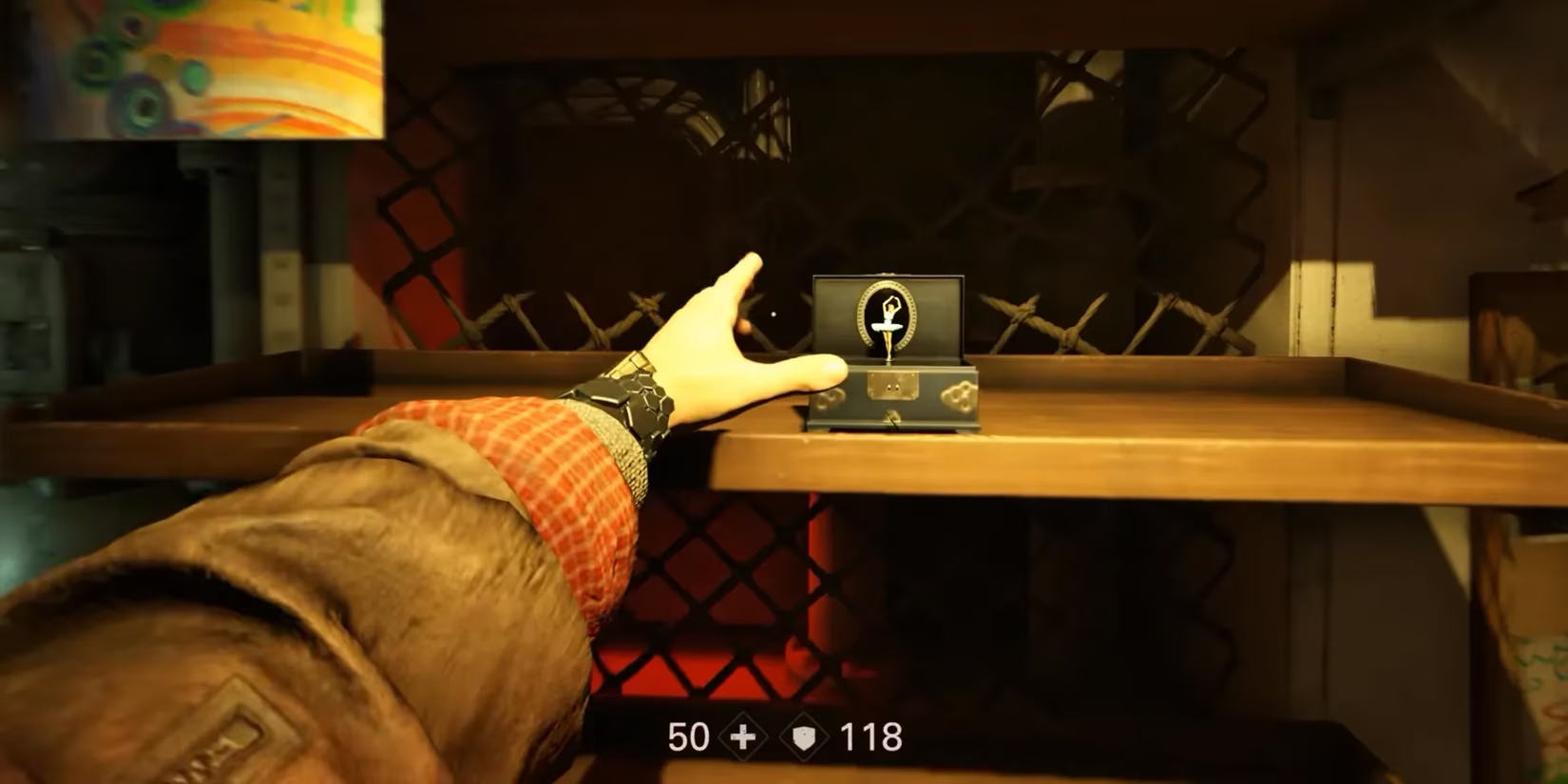
MachineGames' alternate-history Nazi-slaying saga reached its narrative peak in The New Colossus, but the design decision to center the campaign around a submarine hub drained its ferocious energy. The Wolfenstein brand was built on relentless, adrenaline-pumping rampages. Being forced to spend extended stretches in safe-zones—chatting with crewmates, solving minor fetch quests—feels discordant. The hub has its heartfelt moments, but it dilutes the very brutality that fans crave. Compared to The New Order's tighter pacing, the sequel's scale comes at the cost of intensity. I applaud the ambition to deepen the world, but a blood-soaked series should never trade forward momentum for idle busywork.
1. DOOM: The Dark Ages – Exploration Over Extermination
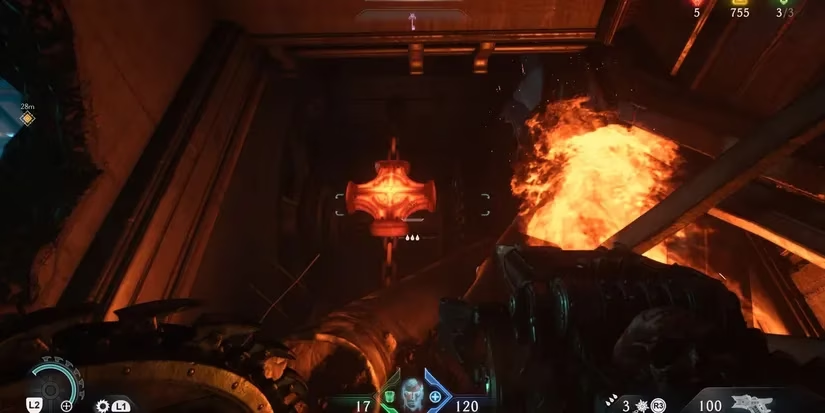
The best shooter of 2025 and a triumphant addition to the rebooted saga, DOOM: The Dark Ages should have been my unquestionable game of the year. But id Software's newfound love for labyrinthine exploration left me restless. Entire stretches of the campaign are spent backtracking through expansive gothic levels, hunting for secret encounters and collectibles, while the rip-and-tear loop waits impatiently. The horizontal map design and widely spaced points of interest inject a passivity that clashes violently with the series' DNA. Where DOOM and DOOM Eternal balanced discovery with destruction, this chapter tilts the scales toward treasure-hunting over demon-slaying. The result is an extraordinary game that occasionally forgets what made its heart pound—and what makes ours follow.
These ten shooters are so close to perfection that their flaws feel like tiny cracks in a grand mural. As a fan, I point them out not from contempt but from affection. Because when a game is this good, you can't help but imagine how it might have been truly legendary.
Comments