
I still remember hauling my bulky CRT monitor to a friend’s garage just so four of us could huddle around a single screen and embark on a pixelated adventure. Those were great times, but let’s be real—gaming in 2026 is a completely different beast. Now we fire up a Discord channel, click a button, and instantly drop into sprawling worlds with friends from across the globe. Co-op RPGs have evolved from a niche luxury into a rich genre bursting with unforgettable shared moments. Over the past year I’ve revisited some absolute legends, and I’m here to walk you through the ten four-player RPG experiences that still deserve a permanent spot in your rotation. Grab your party, because this list is all about friendship, laughter, and just a little bit of chaos.
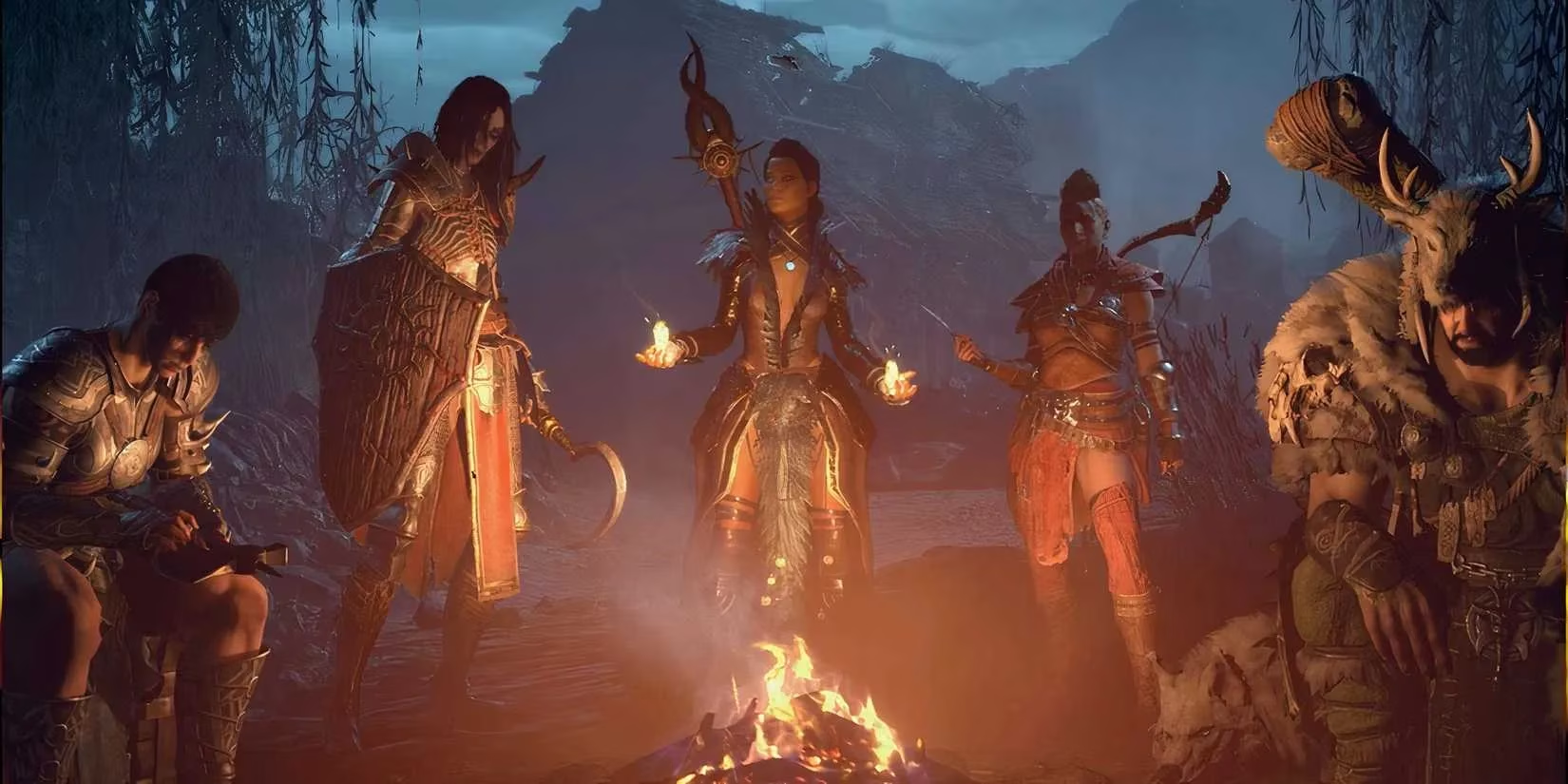
Kicking things off at number ten is Diablo 4, and let’s be honest—Sanctuary has never felt this alive. Even in 2026, with multiple seasons under its belt and the Vessel of Hatred expansion now a familiar battleground, the game continues to pull my group back in. What makes it shine in co-op is the sheer freedom of its class system. You can field five distinct heroes out of the box, and if you’ve grabbed the expansion, the Spiritborn joins the fray with a completely fresh playstyle. I’ve lost count of how many nights we’ve spent theory-crafting builds over voice chat, only to scrap them halfway through a Nightmare Dungeon because someone discovered a broken interaction. My first druid started as a shapeshifting berserker but morphed into a storm-and-earth mage after a few respecs, and that flexibility keeps every session unpredictable. The endgame loop of Helltides, world bosses, and the endlessly customizable Paragon Boards gives your party concrete goals to chase while still leaving room for pure, cathartic demon-slaying. If you haven’t experienced Lilith’s return with a full squad, you’re missing out on one of the most polished cooperative power fantasies out there.
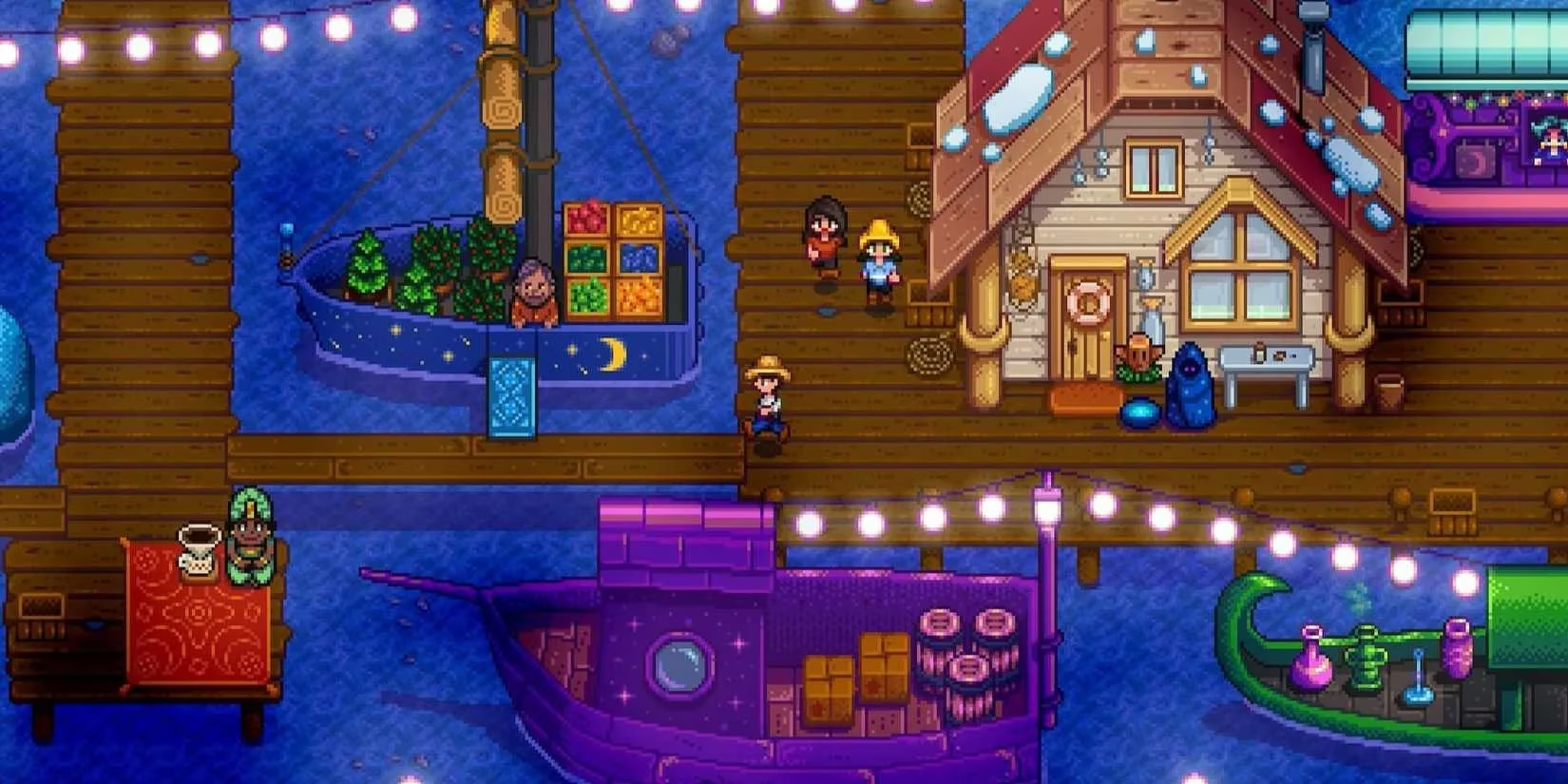
Sliding into ninth place is a game that confused a lot of my Call of Duty squad when I first suggested it: Stardew Valley. Yes, it’s a farming sim. Yes, we spent the first hour planting parsnips. And no, nobody regretted it. The beauty of a four-player Pelican Town is that it transforms into a wonderfully efficient little commune. One friend can dive into the mines as a geologist, cracking open geodes while I take the miner path and become a blacksmith, turning our raw ore into bars that fuel another friend’s artisan products. Meanwhile, the fourth player is off wooing an NPC or building a giant pumpkin empire. We regularly swap stories about our wildly different days that somehow all flow back into the community center bundles. The game’s retro charm hasn’t aged a day, and nothing resets my mental state after a week of competitive shooters like an evening of watering crops and smashing rocks to the sound of a jukebox. It’s a must-play co-op RPG not despite its gentle nature, but precisely because of it.
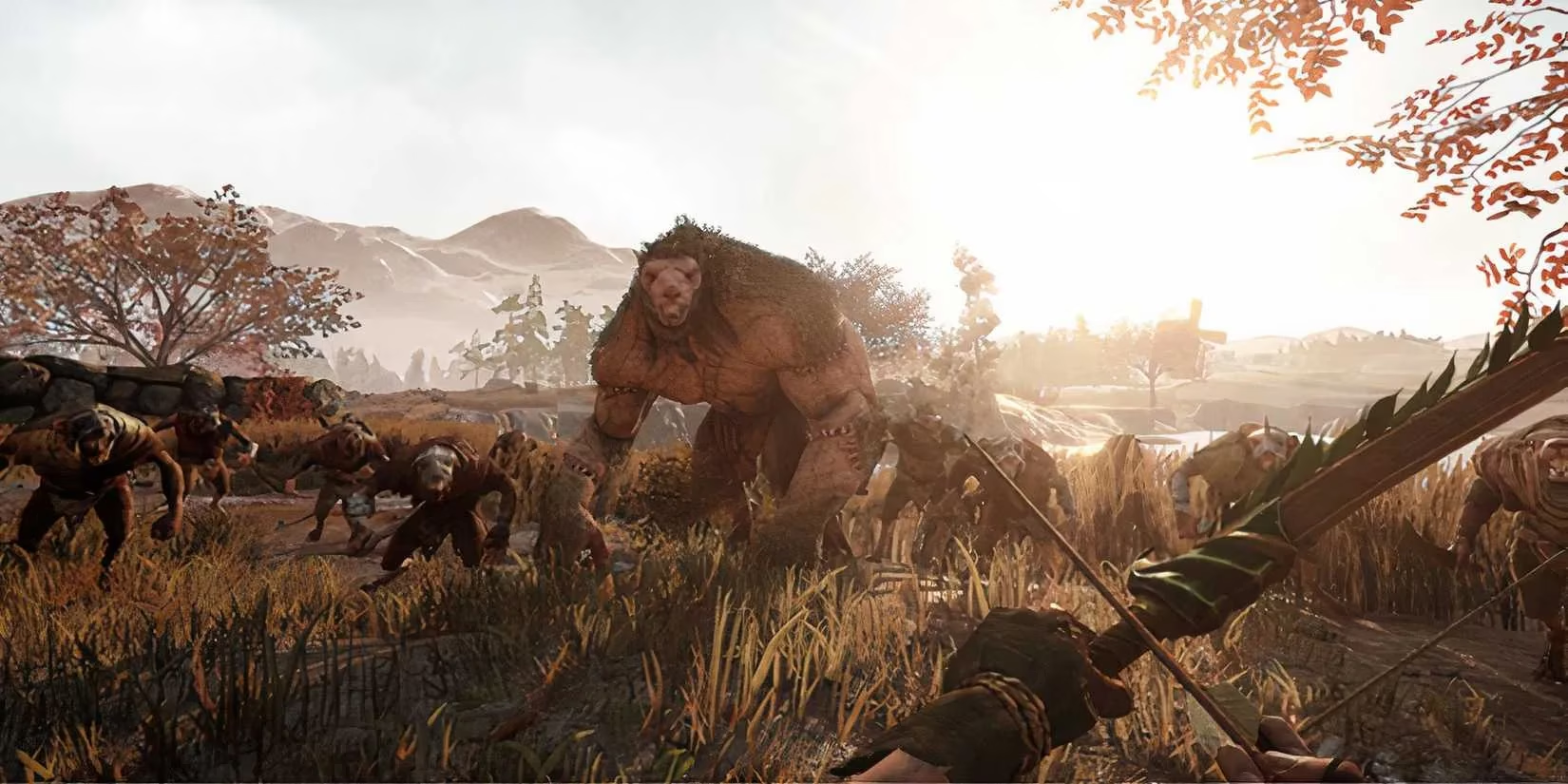
If your idea of friendship involves decapitating rat-men in cramped medieval tunnels, Warhammer: Vermintide 2 sits comfortably at number eight. Fatshark’s melee ballet still looks and feels incredible, even as we march through 2026’s launch calendar. The five heroes—Markus Kruber, Bardin Goreksson, Sienna Fuegonasus, Kerillian, and Victor Saltzpyre—each offer three career paths, meaning you and your three friends can assemble a 15-talent-tree cocktail of specialized carnage. I’ll never forget the first time our group synced a Mercenary’s crowd-control shout with a Shade’s backstab barrage; it felt like a choreographed execution. The banter between characters is genuinely funny, and when a Chaos Spawn crashes your carefully planned chokepoint, panic turns into hilarity faster than you can say “grimoire.” Seven years post-launch, the visual fidelity and weighty first-person combat remain a benchmark for the genre. This is a game where you stand together or you die separately—and my squad wouldn’t have it any other way.
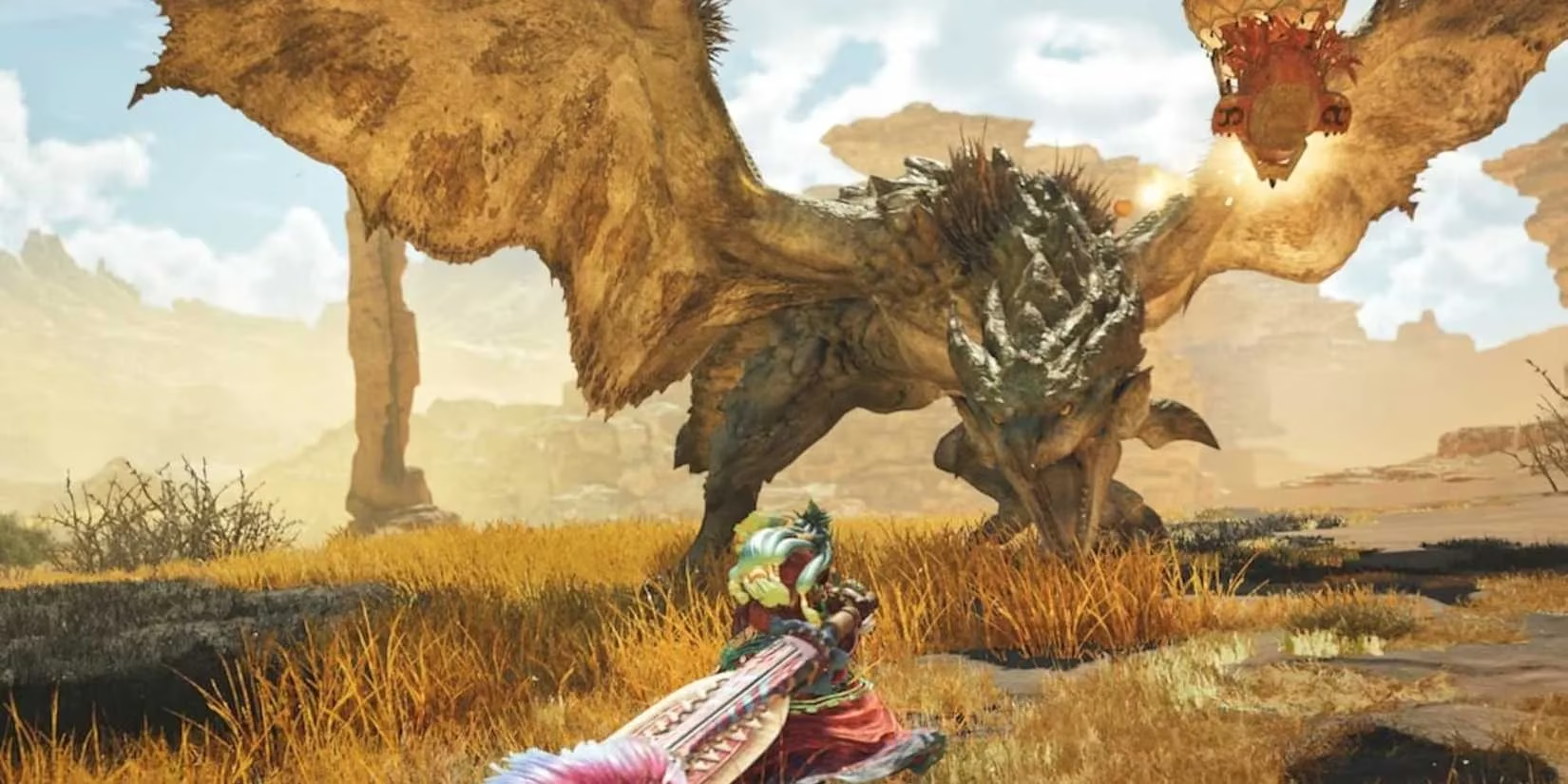
Coming in hot at number seven is Monster Hunter Wilds. Capcom somehow topped itself again. The dynamic weather systems and seamless seasonal transitions create the most immersive hunting grounds I’ve ever stalked through, and forging gear from the remains of a storm-wreathed apex monster with your party is pure dopamine. Weapon identity has always been Monster Hunter’s secret sauce, and Wilds expands that to a glorious degree. One friend wields a charge blade like a mechanical artist, another provides ranged support with a heavy bowgun, I’m in the middle with a hammer cracking skulls, and our fourth member is dancing around the beast with dual blades. The prep phase back at camp—discussing elemental weaknesses, equipping mantles, and sharing consumables—is a ritual that binds a hunting party. With steady updates and a vibrant community, Wilds in 2026 remains a premier destination for anyone who craves cooperative action where teamwork isn’t just encouraged, it’s required.
Path of Exile 2 claims the sixth spot, and what a journey it has been. Having left early access behind, the full release has delivered a sprawling, dark world with a skill tree so vast it practically requires a second monitor. Growing up on Diablo, I adore what Grinding Gear Games has achieved here. Twelve classes with distinct identities mean your party can coordinate synergies that make boss arenas feel like tactical raids. I lean heavily on my Ranger, weaving elemental arrows that pair beautifully with a friend’s curse-slinging Witch. Visuals have only improved with polish, combat flows like silk, and hearing your teammates collectively hold their breath when a pinnacle boss enters its final phase is the kind of shared tension that makes co-op RPGs magical. POE2 is deep, demanding, and endlessly rewarding—a labyrinth I’m thrilled to get lost in with friends.
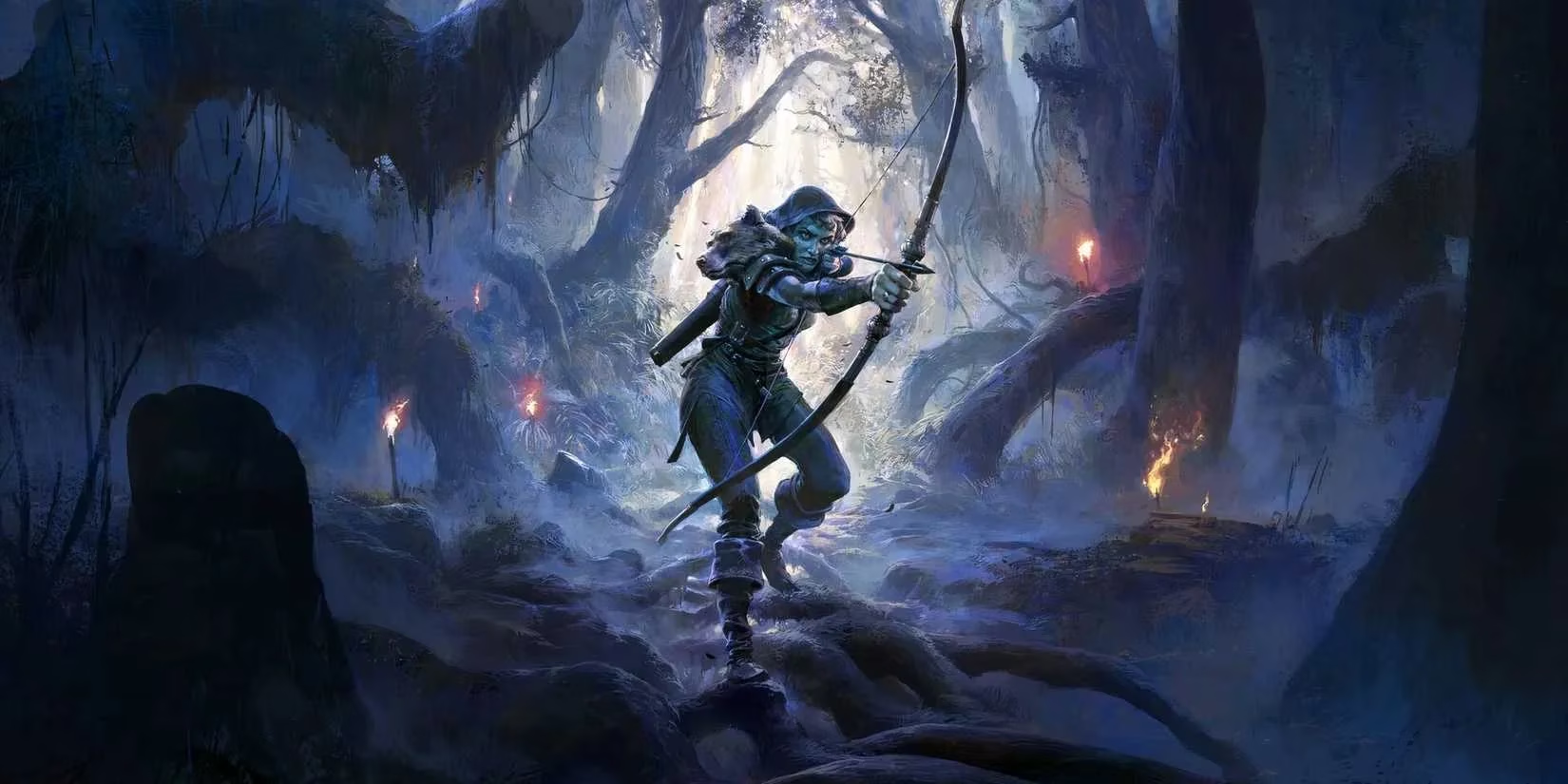
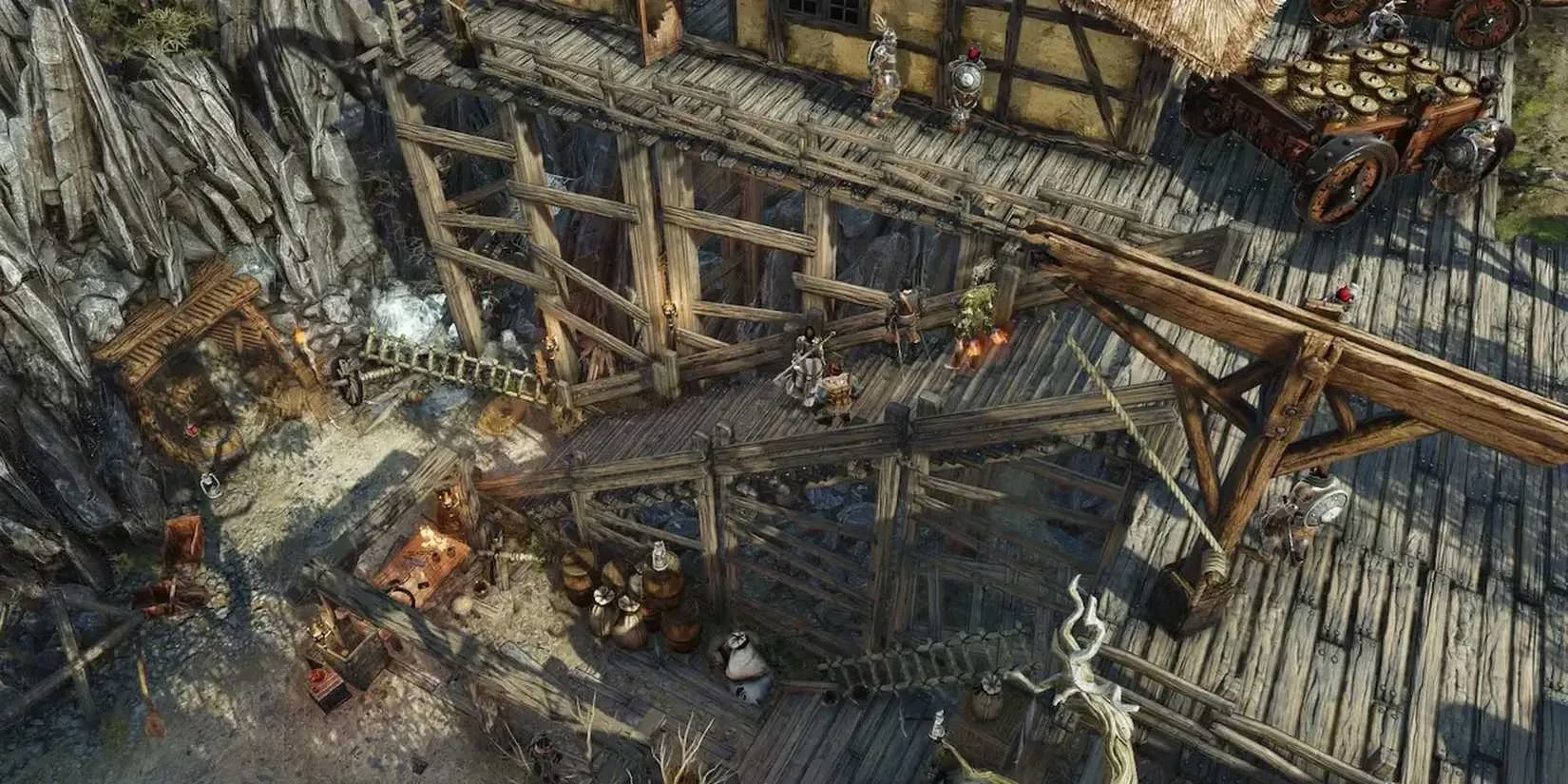
Breaking into the top five is a modern classic that walked so Baldur’s Gate 3 could run: Divinity: Original Sin 2. Larian’s tactical turn-based masterpiece still hits different in 2026, especially when you’re coordinating elemental combos over voice comms. The game’s five origin characters give your party built-in narrative hooks, but creating a custom avatar and molding your tag-team from scratch is where true co-op magic lives. I once played a geomancer who turned the battlefield into a maze of poison clouds while a friend’s pyrokinetic ignited the whole mess. Another friend played an undead rogue who picked off survivors while our fourth member taunted them with a living tank. Every victory feels earned, every defeat a lesson in hubris. The writing is sharp, the world is reactive, and when you unravel a quest in a way the dungeon master never anticipated, the shared laughter is genuine. DOS2 remains a masterclass in cooperative tactical RPG design.
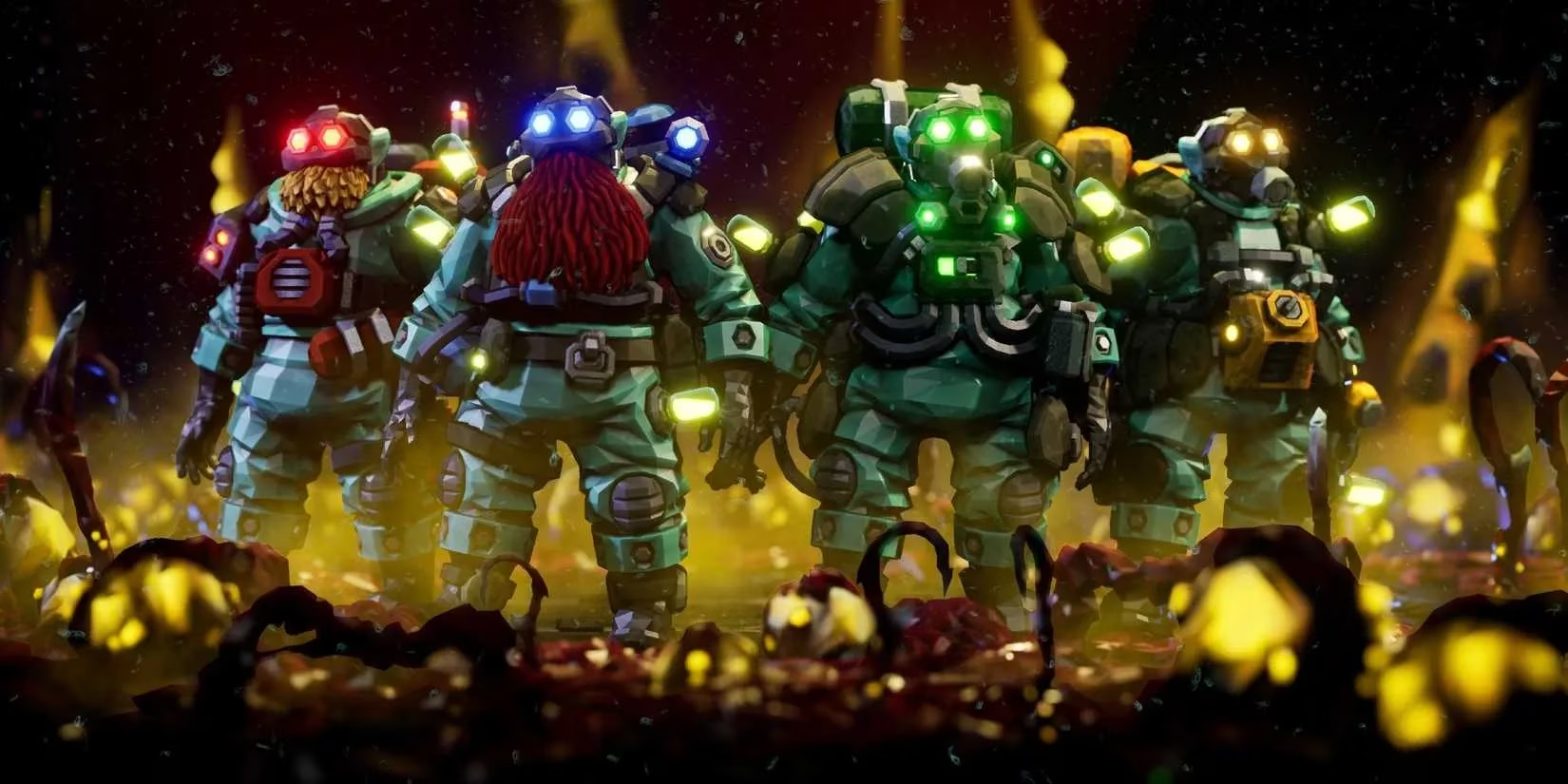
“Rock and Stone!” That catchphrase alone gets Deep Rock Galactic to number four, but the game underneath the chant is even better. I’ve poured hundreds of hours into this space-dwarf mining sim, and it remains one of the most uplifting cooperative experiences available. The four classes—Engineer, Driller, Gunner, and Scout—are designed to depend on each other so naturally that you can’t help but bond. My Engineer’s platform gun completely opens up the map for our Scout’s grappling hook, while the Driller carves shortcuts through solid rock in seconds and the Gunner lays down suppressing fire. The procedural caves keep exploration fresh, and those moments when a Detonator appears during extraction are the most beautifully chaotic tests of teamwork I know. Ghost Ship Games has continued to support DRG with love, and the space rig is still packed with silly mini-games that delay our missions by ten minutes every session. It’s a game built on community, cooperation, and a remarkable attention to detail.
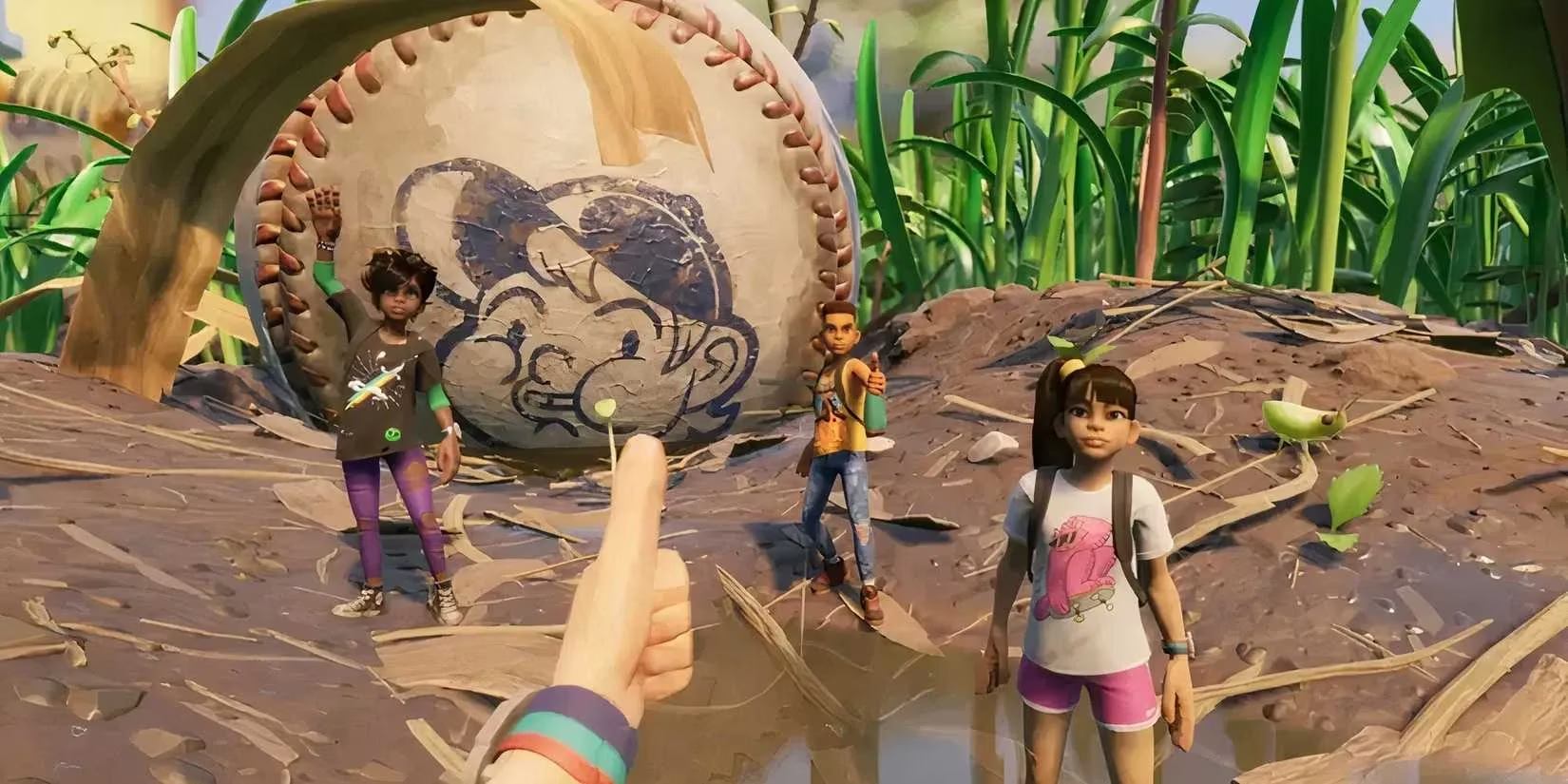
Grounded takes the bronze medal because it delivered an experience I genuinely did not see coming. Shrunk to the size of an ant in a suburban backyard, you and your friends must scrape together survival against giant wolf spiders, bombardier beetles, and the terrifying koi fish. The first night my squad spent huddled in a grass-plank hut while a wolf spider tore through the walls was pure terror comedy. The crafting progression is deep, and the survival mechanics demand genuine cooperation—someone has to haul dew drop water back to base while another cooks aphid honeydew and a third scrounges for quartzite. The base-building rivals many dedicated sandbox games, and exploring the vast yard reveals astonishing verticality. Obsidian’s support has kept the backyard lively, and I can confidently say Grounded is the most creatively refreshing survival RPG I’ve played with a full party.
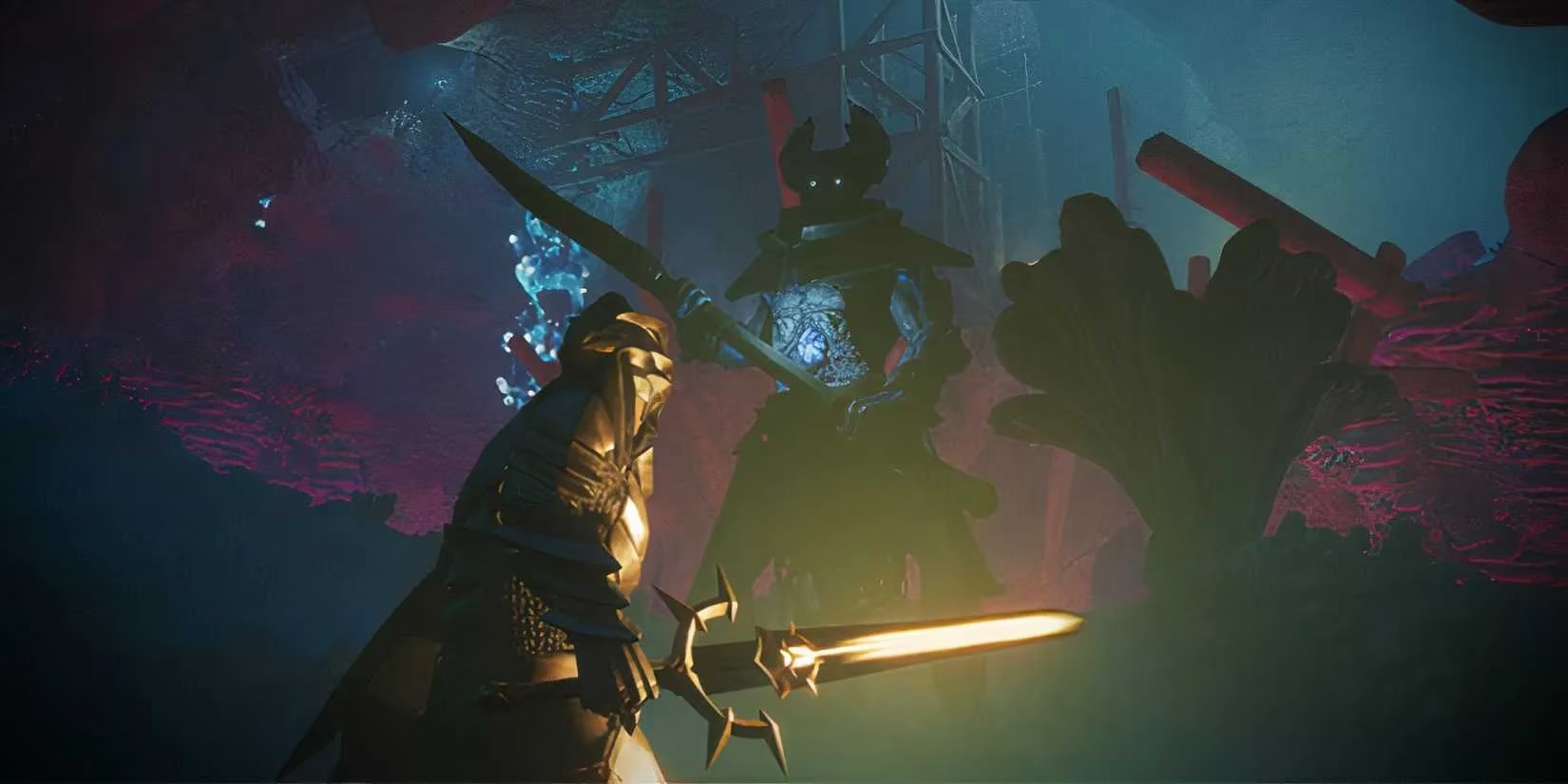
Runner-up is the atmospheric triumph Enshrouded. Released in early access, it has since blossomed into one of the most polished open-world survival RPGs on the market. Flying over the shroud with a glider while three friends watch your back is a vibe I can’t get enough of. The skill tree offers phenomenal hybrid potential—I’ve run a battlemage, a ranger, and a tanky barbarian in different playthroughs, and each build changes how the group approaches combat and exploration. The voxel-based building system lets my squad construct entire villages, and the way light interacts with our creations still makes me stop and stare. Embervale feels alive with mystery, and with a roadmap that keeps delivering, Enshrouded in 2026 is an absolute powerhouse of cooperative adventure.
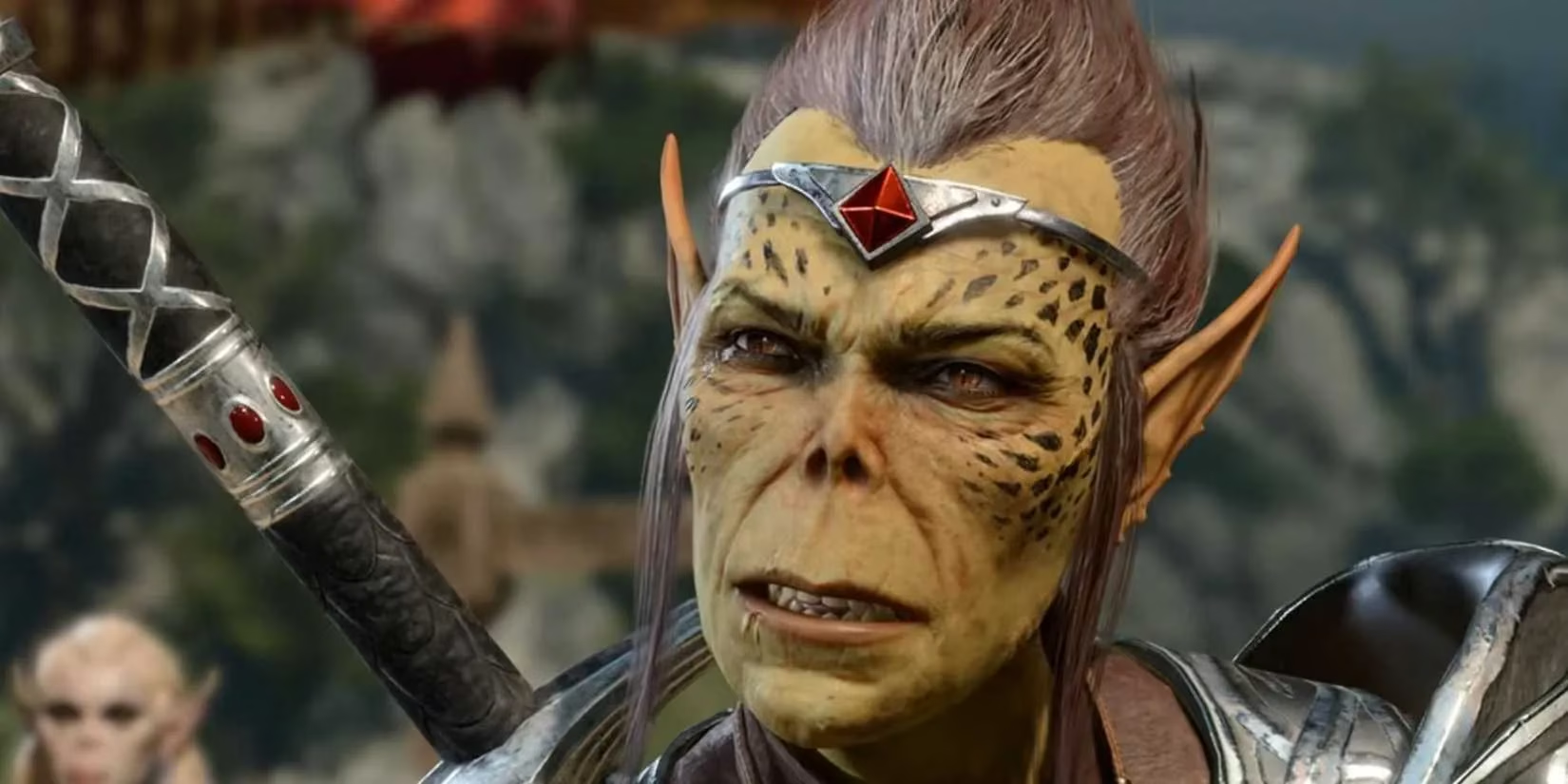
And the crown goes to Baldur’s Gate 3. Larian didn’t just raise the bar with this one—they launched it into the stratosphere. In 2026, no game matches its combination of cinematic storytelling, player agency, and co-op reactivity. The attention to detail is staggering: split-screen improvisation, asynchronous quest progression that still respects everyone’s agency, and dialogue-driven set-pieces that leave my group speechless. My first campaign saw a gnome bard accidentally seduce a devil while our half-orc paladin started a bar fight in the background and our rogue stole the cutlery. Every choice ripples through the game in ways we’re still uncovering four playthroughs later. It’s the ultimate friendship-RPG, a digital tabletop where your wildest ideas somehow work, and the shared memories become inside jokes for years. Baldur’s Gate 3 isn’t just number one on this list—it’s an easy contender for the greatest co-op RPG ever made.
Comments