
The Kyoto air in 2025 felt strange, didn’t it? Like a room where a conversation had just stopped, leaving only the hum of the lightbulb. I remember watching the final moments of season 2, the screen fading to a close-up of a single Joker card, a symbol that felt less like a conclusion and more like a held breath. The story, as Haro Aso had penned it, arrived at its terminus with Arisu and his companions waking in a hospital limbo, their memories dissolved like morning mist. Yet, that card—a question mark etched onto pasteboard—pulsed with a forbidden promise. Now, after an eternity of three long years, the first trailer for season 3 has been released, and it doesn't just answer our biggest question; it reframes the entire odyssey as a love letter written in the ink of desperation.

The Echo Chamber of Memory
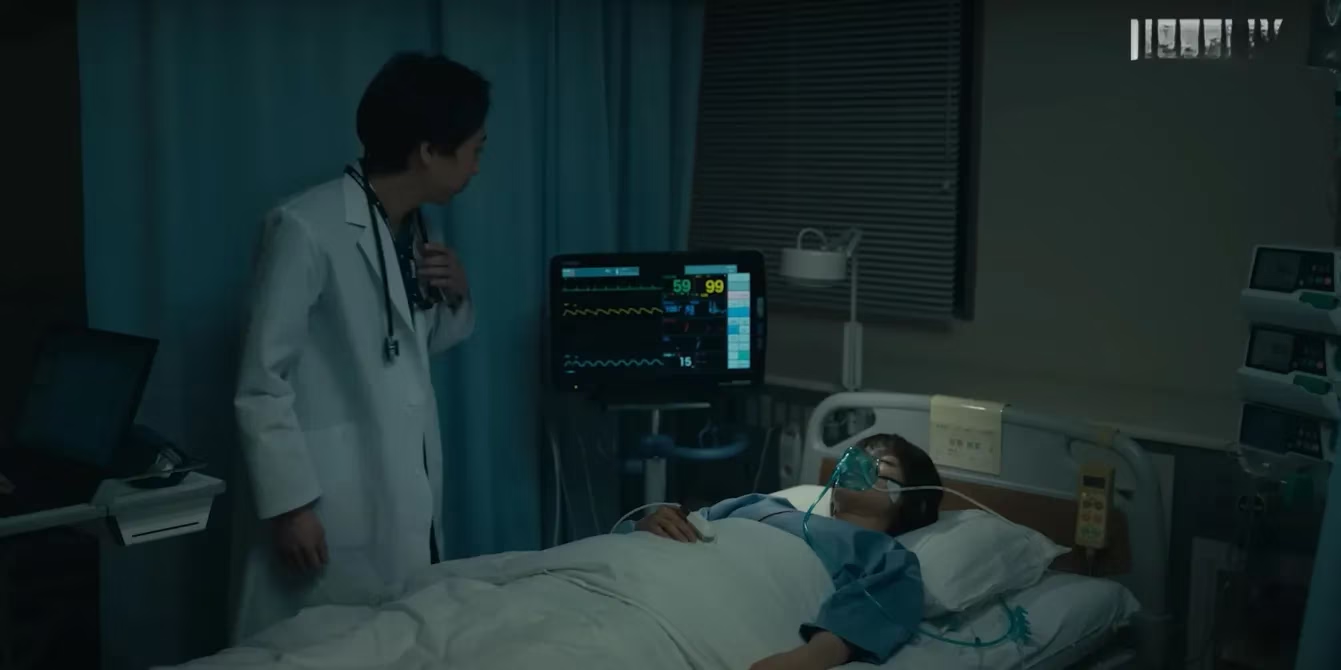
The trailer operates like a fractured prism, splitting the white light of reality into painful, recognizable colors. I saw Arisu and Usagi not as survivors haunted by a shared dream, but as a married couple, their quiet domesticity a fragile glass ship sailing on a sea of trauma they can no longer name. Two years have passed since the meteorite incident, since their hearts synchronized a final time in the Borderland’s crucible. The source material had offered a brief epilogue, the 2020 manga Alice in Borderland: Retry, where a father-to-be Arisu is thrown back into the game by a freak accident on the day of his child’s birth. That was a solitary pilgrimage, a quick, sharp stab of a story. However, what showrunner Shinsuke Sato seems to be crafting here is a richer, far more terrifying tapestry. The synopsis whispers of a “mysterious scholar obsessed with the afterlife,” a man named Ryuji who guides an unconscious Usagi back through the veil. This isn't a random accident; it’s an abduction. The Borderland is no longer a passive purgatory that catches falling souls; it has become a snare, a net cast deliberately by someone who wishes to study the abyss.
The Persephone Gambit
The greatest revelation of this new chapter is the inversion of the hero’s journey. In Retry, Arisu was dragged, a victim of circumstance. Here, Arisu doesn't fall—he dives. To watch Usagi lying on that hospital bed, connected to the machinery of a world that cannot explain her soul's absence, is to see Arisu become an Orpheus in a hoodie. He is a man declaring war on metaphysics. The synopsis confirms that he will “return to the perilous Borderland” not to escape reality, but to retrieve his wife from it. I find this narrative choice profoundly poetic, turning the very architecture of the series inside out. Where once the games were a chaotic trial imposed by death, they now represent a conscious door kicked open by love. He is teaming up with new players, a desperate cadre ready to face the “yet-unseen 'Joker' stage.” The Joker, in Aso’s original manga, was merely a ferryman, a neutral trickster glimpsed during the transit between worlds. But in Netflix’s 2026 continuation, the Joker feels like a malevolent master of ceremonies, a cosmic warden who doesn't want to let Usagi go. The chilling return of Yaba Banda, now a grinning, fully-fledged citizen of the Borderland, suggests the game has evolved into something bureaucratic and eternal, a society of the dead that has grown hungry for the living.
Original Stitches on Old Wounds
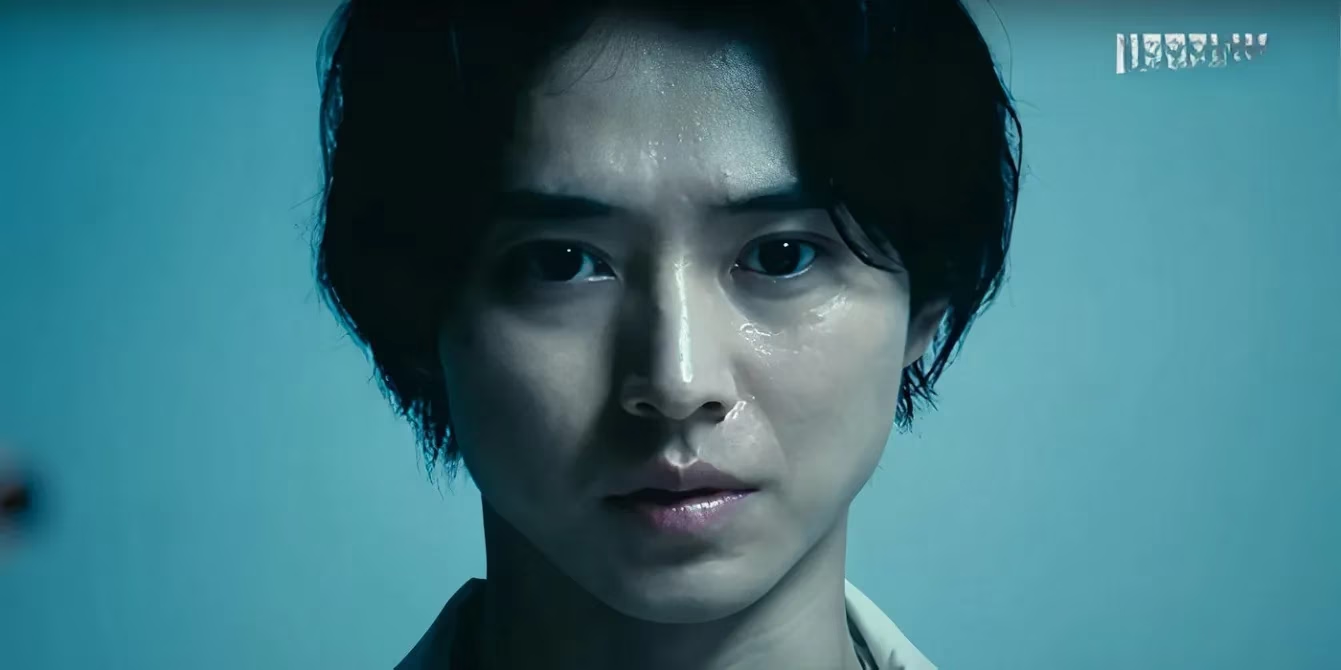
I must confess, as a purist, I feel the distinct vertigo of a train leaving the tracks. Alice in Borderland: Retry was a brief, precious coda; this third season is a full-blown original symphony. It is risky to drift away from the source material, like a pilot navigating by the stars inventing a new constellation. Yet, I find my skepticism dissolving into giddy anticipation. Retry simply did not provide enough scaffolding for a multi-episode arc. The opening visual of Arisu holding a bloodied playing card, his expression not one of panic but of grim, seasoned focus, tells me this isn't a retread. It’s a campaign. I am particularly intrigued by the memory flashes the trailer teases—electrical flickers of past faces and heartbreaks. Are these returning fully like a tidal wave, or will Arisu have to rediscover the visceral horror of the Seven of Hearts while simultaneously hunting for his wife? The show is implying a dual rescue mission: one to save Usagi’s body, and another to reassemble the shattered mirror of her soul.
A Game Without a User Manual
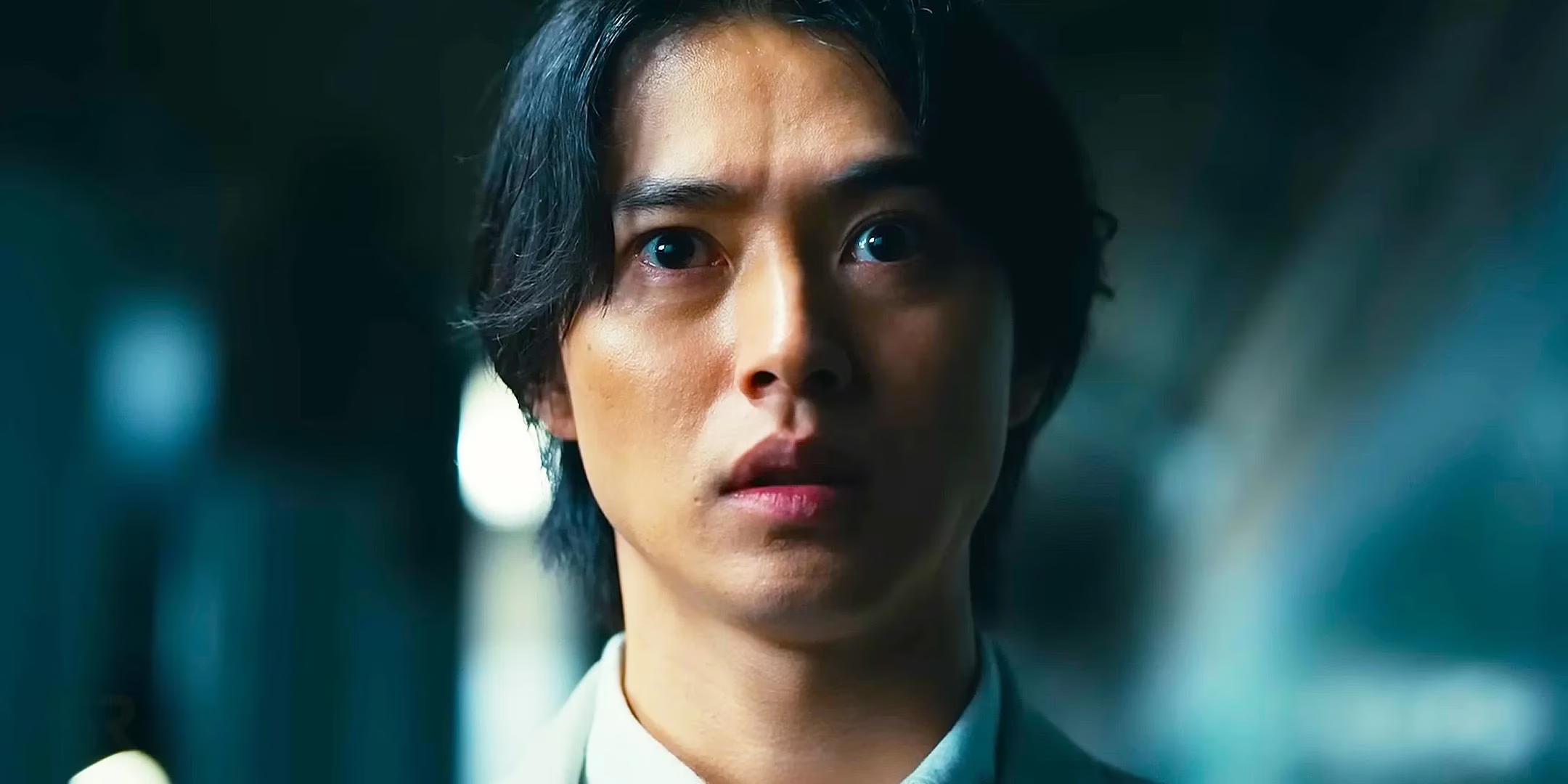
As I sit here in 2026, I realize the true terror of the Joker isn't the card itself, but the absence of rules. Season 1 and 2 had clear, brutal mechanics. Season 3 promises a labyrinth designed by a scholar of the afterlife, a man whose face is a cipher and whose motives likely lie somewhere between scientific curiosity and psychotic worship. The narrative has shifted from a group survival struggle to a narrative of targeted extraction, a thin, sharp blade aimed directly at the heart of the audience’s sympathy. Watching Arisu trek back into that blinding Tokyo corridor, knowing exactly what demons wait, is like watching a painter walk back into a burning gallery to save a single portrait. The canvas will be singed, the colors will bleed, but the portrait—the love it represents—makes the flames irrelevant. The game, it seems, is no longer just about surviving the cards you are dealt; it is about choosing to sit at a table from which nobody has ever really come home.
Comments