
I’ve been looting and shooting through Pandora and beyond since the very first Vault opened, and I’ve got to say—Borderlands has always played it safe at its core. Sure, the billions of guns and irreverent humor gave it personality, but under the hood it stayed a frantic, first-person looter shooter with only a flirtatious glance at role-playing mechanics.
Well, 2026 is here, and after spending some real quality time with Borderlands 4, I can finally say it out loud: this isn’t just a bigger Borderlands. It’s a proper action RPG, and the shift is massive. Let’s be real, the series needed this—you can’t keep teasing deeper character builds and player agency without ever fully committing. If Borderlands 4 hadn’t gone this route, it might have risked becoming a relic. Instead, it feels like the franchise’s last big chance to innovate, and it’s seizing the moment with both hands.
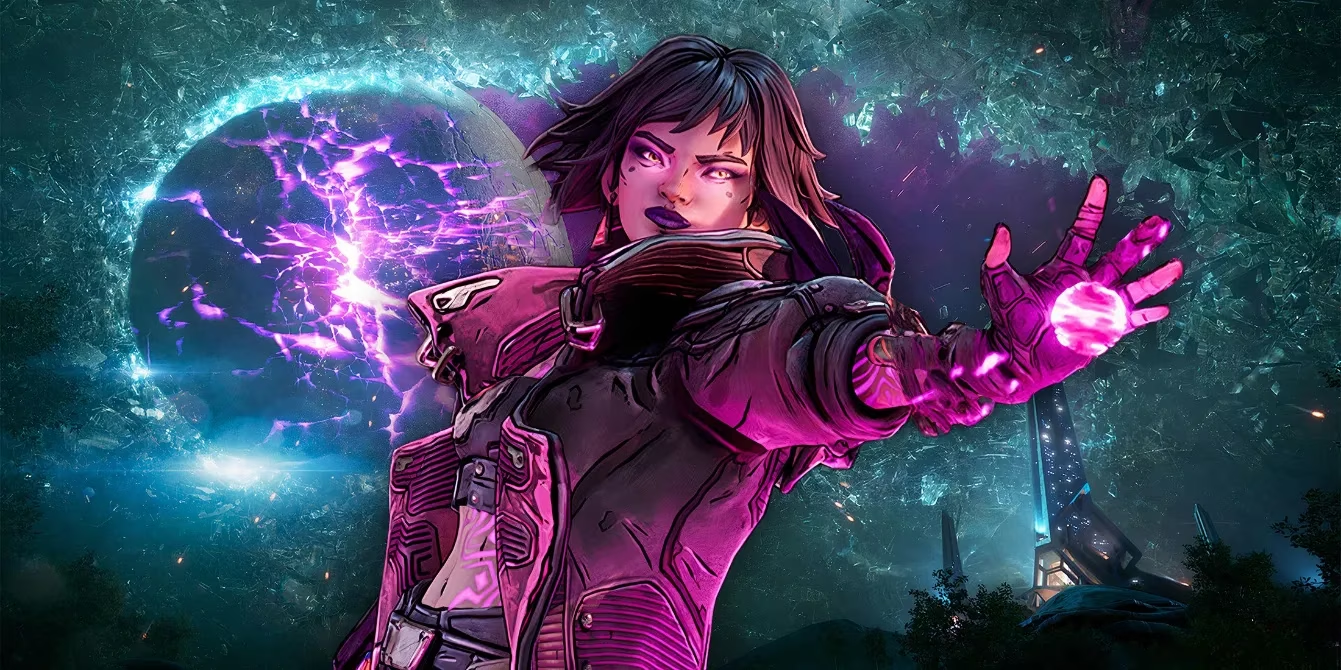
The heart of any RPG is how you build your character, and Gearbox has turned that heartbeat into a full drum solo. Each Vault Hunter now brings three different Action Skills, each with its own branching tree that digs so much deeper than I expected. I’m not gonna lie, I spent my first few hours just staring at Vex the Siren’s trees, grinning like a maniac. Her Trait dynamically changes the elemental effect of her Action Skill based on her currently equipped weapon. That’s not just a passive boost—that’s a whole invitation to strategize your loadout in real time. Do I go with a shock SMG to strip shields and chain lightning, or swap to an incendiary pistol for crowd control? It turns every fight into a puzzle with multiple solutions, and that’s exactly what RPG fans like me crave. The capstone skills feel genuinely transformative rather than just numeric upgrades, making me think twice about synergies I’d normally overlook.
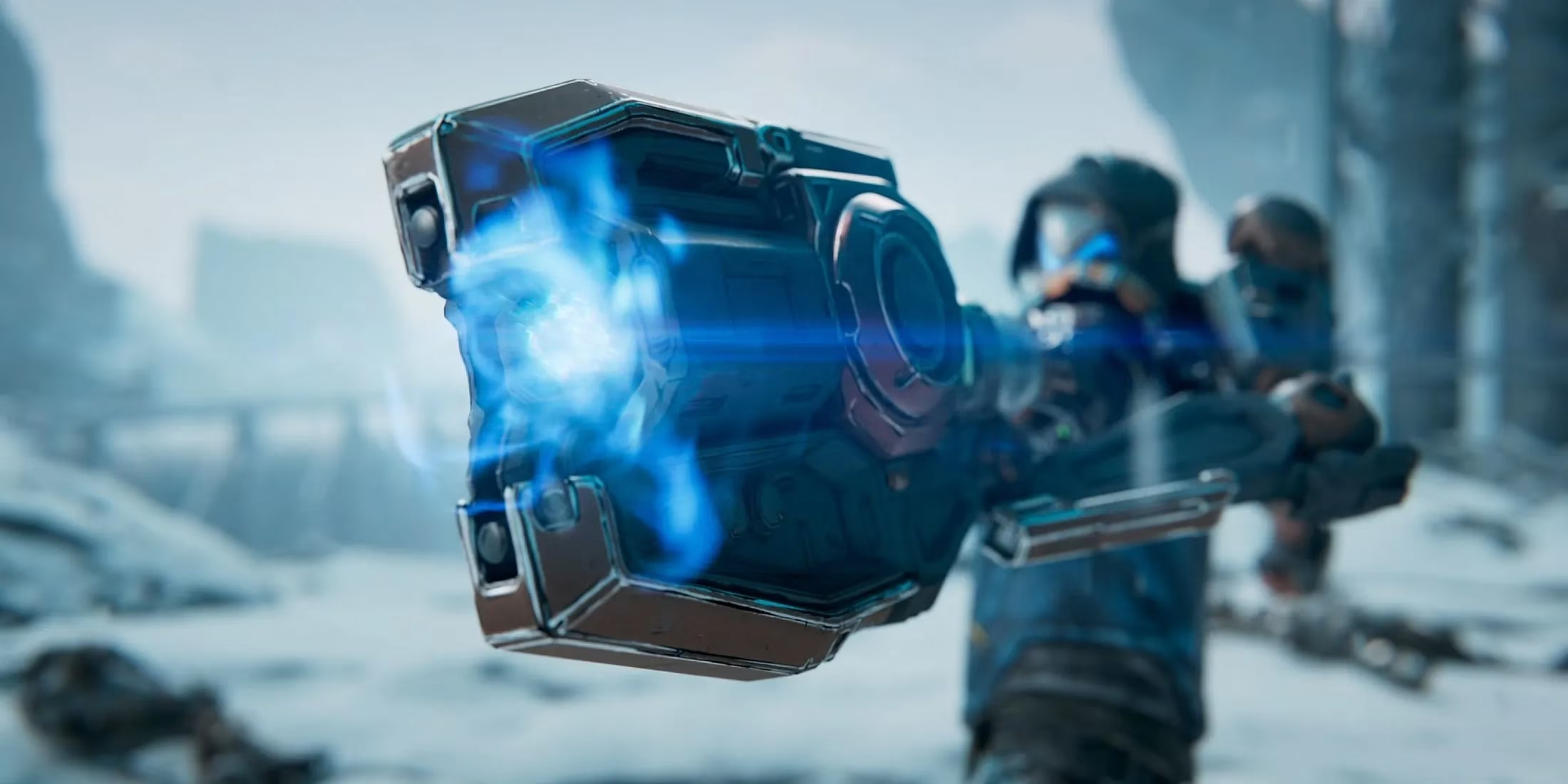
But the build-craft doesn’t stop there. The new Licensed Parts system almost feels like tinkering with a crafting station in a fantasy RPG, except everything is tied to what you blast out of an enemy’s hands. I picked up what looked like a standard Dahl assault rifle, but it had a Vladof under-barrel grenade launcher and a Hyperion aiming stabilizer. Let that sink in—weapons are no longer purebred manufacturer creations. They’re scrappy, modular hybrids that make every drop feel personal. It’s like Borderlands finally woke up and smelled the RPG coffee, handing players the tools to fine-tune their gear in ways that can completely change a play session. My co-op partners and I frequently pause to compare “frankenguns,” and no two armories ever look the same. That uniqueness factor is huge, and it’s something this series has only ever pretended to have until now.
Then there’s Kairos, the game’s new planet. I remember my first landing—no blinking waypoints, no urgent radio call pushing me toward the next objective. Just an open stretch of alien terrain whispering “go find trouble.” Earlier Borderlands games often held your hand through linear zones disguised as open maps, but Kairos shrugs off that training wheels design. Quests don’t clutter your log until you actually stumble into the area that triggers them. I wandered into an abandoned mining facility simply because a weird structure caught my eye in the distance. Twenty minutes later I was neck-deep in a multi-stage story arc that only activated because I let curiosity take the wheel. That freedom is an RPG staple, and it makes exploration feel weighty and rewarding rather than like a checklist chore.
Now, imagine walking across a sun-bleached mesa at dusk, no objective arrow on the horizon, and suddenly you spot a cargo shuttle crash-land in the distance—you rush over not because a NPC told you to, but because the world itself just dangled a mystery in front of you. That’s the kind of organic storytelling Kairos serves up regularly. It gets my RPG-loving heart racing every single time.
With skill trees that finally demand genuine theorycrafting, a loot system that treats weapons like modular experiments waiting to happen, and a world shaped around player curiosity instead of breadcrumb trails, Borderlands 4 has firmly stepped into a genre it spent years only flirting with. Is it the biggest shift in series history? Without a doubt. Whether it reshapes the franchise’s future or simply adds a rich new layer to its chaotic identity, one thing is clear: Borderlands is no longer just about pulling the trigger—it’s about who you are when you pull it, and that makes all the difference.
This overview is based on OpenCritic, a review-aggregation source that helps contextualize how major releases are being received across a wide range of critics. Framed against the kind of systemic changes described in Borderlands 4—deeper skill trees, more expressive buildcraft, and exploration that rewards player curiosity—critical consensus can be a useful barometer for whether the franchise’s pivot toward action-RPG sensibilities is landing as more than just “more Borderlands,” and instead as a meaningful evolution in player agency and long-term replay value.
Comments