
The announcement of Borderlands 4's arrival on the Nintendo Switch 2 arrives not with a triumphant fanfare, but with a complex, layered melody of anticipation and compromise. While the vaults of Pandora will eventually open on Nintendo's newest console, the journey there is paved with waiting and a notable absence. Players will need to exercise patience, as the game's release on the Switch 2 is slated for a date three weeks after its debut on all other platforms. This temporal gap is the first whisper of a larger narrative about the challenges of bringing a modern, expansive looter-shooter to a hybrid console. The plot thickens with a quiet, yet significant, confirmation buried in the support page's fine print: the vibrant, chaotic joy of split-screen cooperative play will not be making the transition to the Switch 2. This omission leaves a palpable void, turning what is often a shared, couch-bound carnival of bullets into a solo spectacle on the handheld screen.
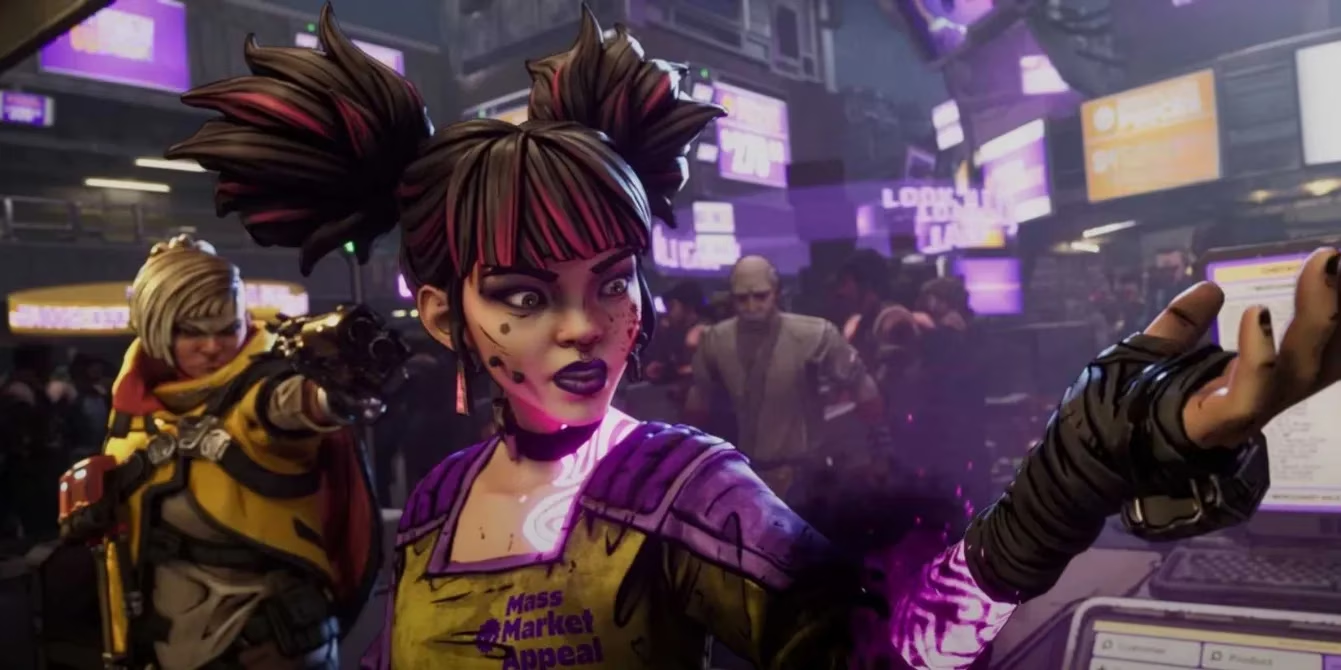
The Compromised Canvas of Cooperation
The support page for the Switch 2 version paints a picture of near-parity, only to reveal a crucial piece missing from the frame. It assures that all editions, pre-order bonuses, and the core chaotic experience will be present. Yet, in a FAQ that reads like a postscript to good news, it delivers the sobering line: "Switch 2 players will have the same exciting Borderlands 4 experience as other platforms minus the split-screen option." This isn't merely a missing feature; it is the removal of a foundational social pillar for many fans. Split-screen co-op in Borderlands is not just a mode—it is a shared language of laughter over misplaced grenades, a synchronized dance of looting and shooting that turns a living room into a warzone of camaraderie. Its absence on the Switch 2 feels like a song played without its harmony, leaving the melody feeling strangely hollow and incomplete.
In a pivot that feels like applying a bandage to a deeper wound, Gearbox and 2K quickly highlight the inclusion of crossplay support. This means a Switch 2 vault hunter can indeed partner with friends on PlayStation, Xbox, or PC. However, this digital bridge comes with its own toll: each player must possess their own copy of the game and their own separate hardware. The spontaneous, barrier-free local party is replaced by a scheduled, online rendezvous. The console that built its identity on shared, immediate play experiences finds one of its core philosophies subtly sidelined for this particular title.
Echoes of a Familiar Dilemma
This scenario is not an isolated incident in the gaming landscape of 2026; it is an echo of a recent, resonant chord. The memory of Baldur's Gate 3's troubled launch on Xbox Series consoles serves as a poignant precedent. The less powerful Series S struggled mightily with the game's split-screen cooperative mode, acting like a fragile vessel trying to contain a oceanic storm of data and AI calculations. This technical bottleneck caused a significant delay for the Xbox release and took over a year of dedicated work from developer Larian Studios to fully resolve.
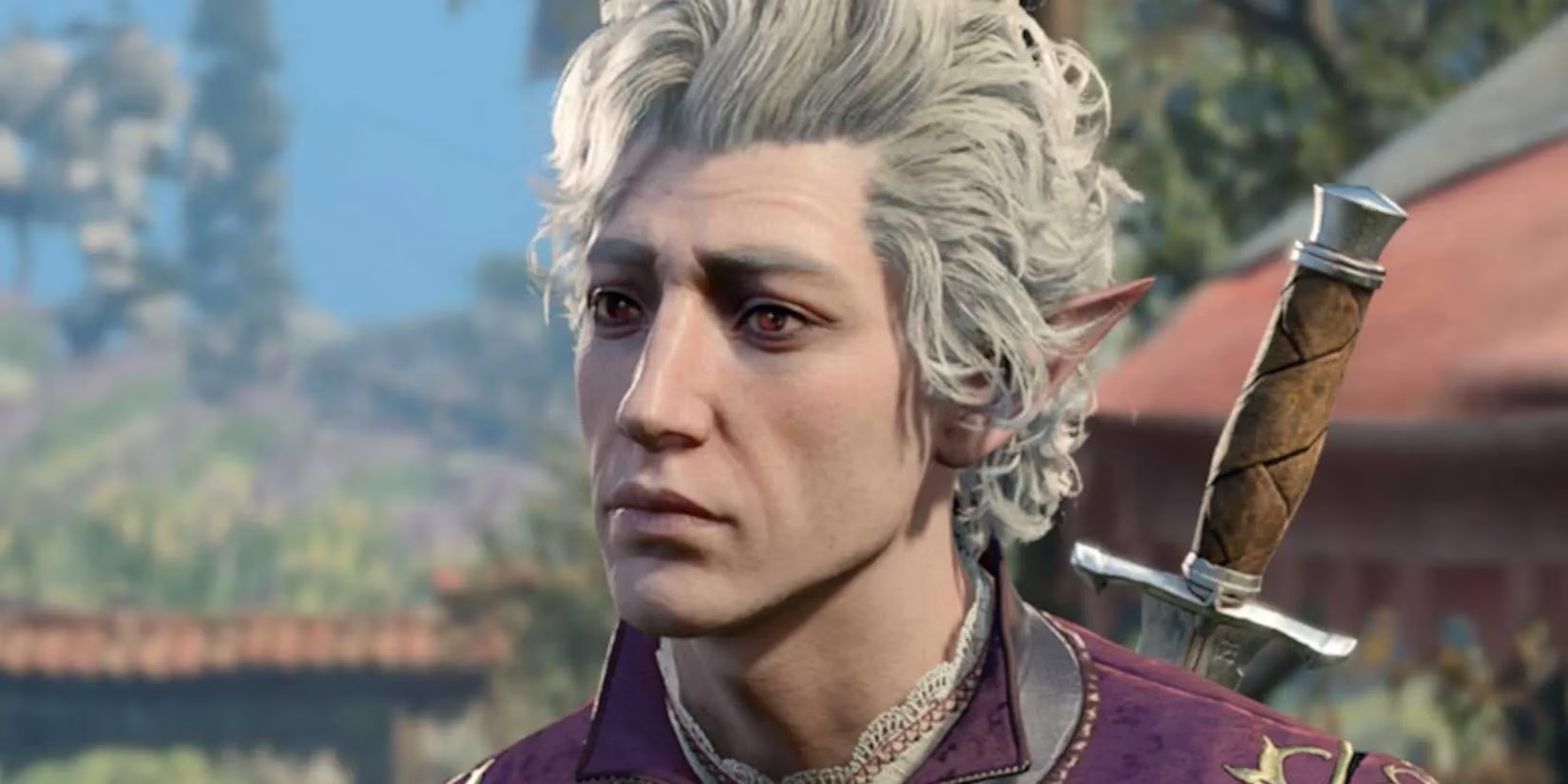
The parallel to Borderlands 4 on Switch 2 is striking. Here, the compromise is announced upfront rather than discovered post-launch, but the root cause likely shares a common ancestry: the immense technical demand of rendering a complex game world twice over on a single, constrained hardware unit. For the Switch 2, a marvel of hybrid engineering, asking it to perform this double duty for a game as visually frenetic as Borderlands 4 may be akin to expecting a master calligrapher to paint two detailed murals simultaneously on a single, small parchment—the result would compromise the integrity of both.
A Performance on a Tightrope
The missing split-screen feature is, troublingly, not the only note of concern for the Switch 2 port. Gearbox has already confirmed that the game will not reach the 60 frames-per-second benchmark enjoyed on other platforms. More concerning is the admission that maintaining a stable 30fps will be a struggle. In a fast-paced shooter where timing and reaction are currency, an unstable frame rate can transform smooth gameplay into a stuttering, frustrating slideshow. This performance reality casts a long shadow, suggesting that the hardware is being pushed to its absolute limits, leaving little room for the additional computational burden of split-screen rendering.
| Feature | Other Platforms (PS5, Xbox Series X/S, PC) | Nintendo Switch 2 |
|---|---|---|
| Release Date | Launch Day | Launch Day + 3 Weeks 📅 |
| Split-Screen Co-op | ✅ Available | ❌ Not Available |
| Online Crossplay | ✅ Available | ✅ Available 🌐 |
| Target Frame Rate | 60fps (or higher) | ~30fps (with potential instability) |
| Local Multiplayer | Couch Co-op Possible | Online-Only for Co-op |
The Lingering Question: Is It Enough?
This confluence of factors—the delayed release, the absent split-screen, and the precarious performance—leaves potential players at a crossroads. Is the promise of portable Borderlands 4 worth these significant trade-offs? The value proposition hinges entirely on individual preference:
-
For the Solo Nomad: A player who primarily adventures alone and treasures handheld play may find the compromises acceptable. The entire galaxy-trotting, loot-driven saga in their hands is a powerful allure.
-
For the Social Vault Hunter: For those whose fondest Borderlands memories are forged side-by-side on a couch, sharing a screen and a pizza, the Switch 2 version loses its essential magic. It becomes a solitary experience in a franchise built for shared chaos.
The ghost of Baldur's Gate 3 offers a glimmer of hope, but also a cautionary tale. Larian's game achieved monumental success despite its initial Xbox shortcomings, but that success was underpinned by the studio's relentless, post-launch commitment to fixing the problems. The key question for Borderlands 4 on Switch 2 is whether Gearbox views this version as a final, settled creation or as a living project. Will there be a sustained effort post-launch to optimize performance, or perhaps (though far less likely) to engineer a miracle that allows split-screen? Or has the studio already determined that this is the best the hardware can manage, and the portable experience, however diminished, is the selling point?
In the end, the Switch 2 version of Borderlands 4 stands as a testament to the eternal tension in game porting: the desire to deliver a complete experience versus the hard limits of technology. It is a symphony played on a slightly smaller stage with one instrumental section silent, asking its audience to decide if the melody that remains is still sweet enough to justify the ticket and the wait. For some, the convenience of portability will be a siren's song; for others, the missing notes of local camaraderie will render the tune sadly incomplete.
Comments