
So, Borderlands 4 has been out for about three months now, and the player numbers on Steam have taken a nosedive. We're talking about losing roughly 96% of that initial 300,000+ peak. Ouch, right? As someone who's been deep in the Vault-hunting trenches since the original, I've watched this unfold, and honestly, the dropping player count feels like a symptom, not the disease. The real issue staring us in the face is that Gearbox seems to be having a full-blown identity crisis with this franchise.
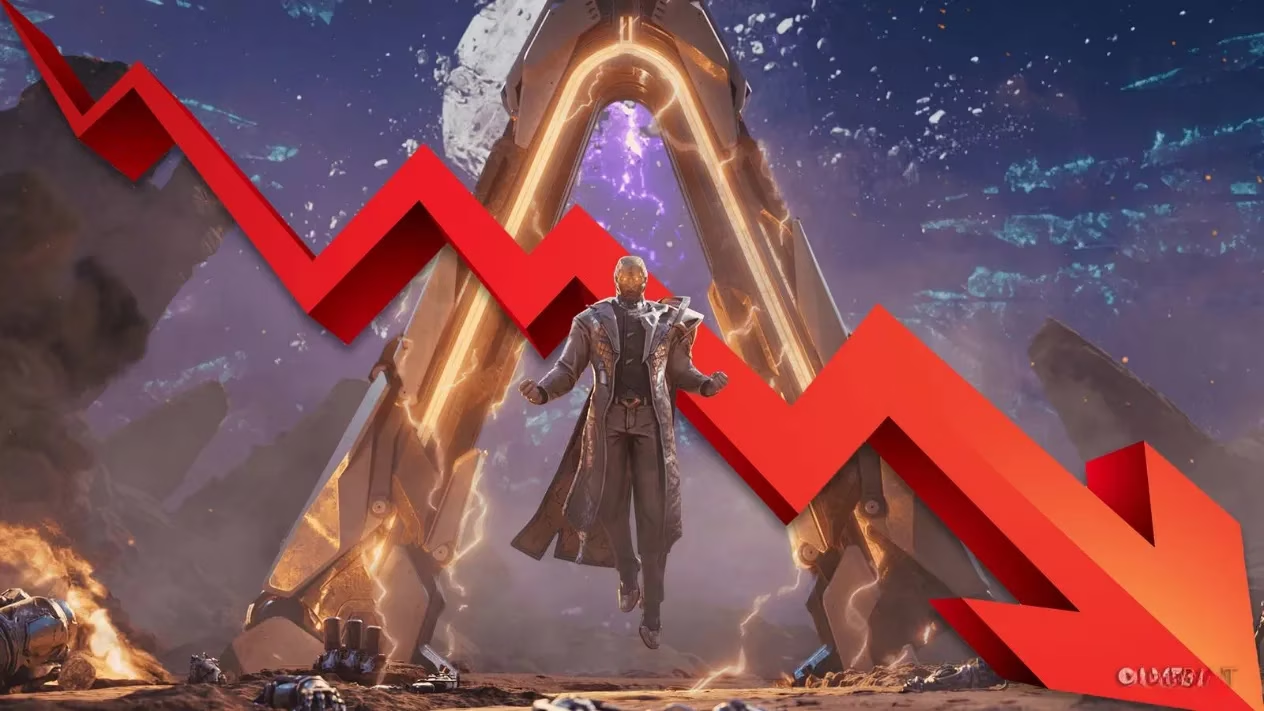
Look, Steam charts aren't the be-all and end-all, but they're the most transparent metric we have. And they're getting used to judge BL4 like it's a live-service titan. But here's the kicker: Borderlands 4 isn't a live-service game. It never officially claimed to be one. Yet, it's dressed head-to-toe in the trappings of one, and that's where the confusion—and the criticism—really kicks in. It's like showing up to a casual BBQ in a full tuxedo and then getting mad when people expect a five-course meal.
Let's break down all the 'live-service-lite' stuff BL4 is packing:
-
A Post-Launch Roadmap Stretching into 2026 📅
-
Seasonal Mini-Events with exclusive cosmetics 🎃
-
Paid Bounty Packs & Story DLC 💰
-
Weekly Activity Rotations & Black Market Vendors 🔄
-
Endgame Progression Loops tied to updates ⚙️
Having a roadmap isn't weird in 2025; most big games do. The problem is the cadence and the intent. BL4's post-launch rhythm—weekly chores, rotating vendors, event-tied gear—is ripped straight from the Destiny 2 playbook. It's a design built to manufacture retention, not necessarily to deliver satisfaction. After the main story updates dried up, the game leaned hard on these weekly loops to pull us back in. Gearbox even had to slow things down, switching to monthly major updates because the well was running dry.
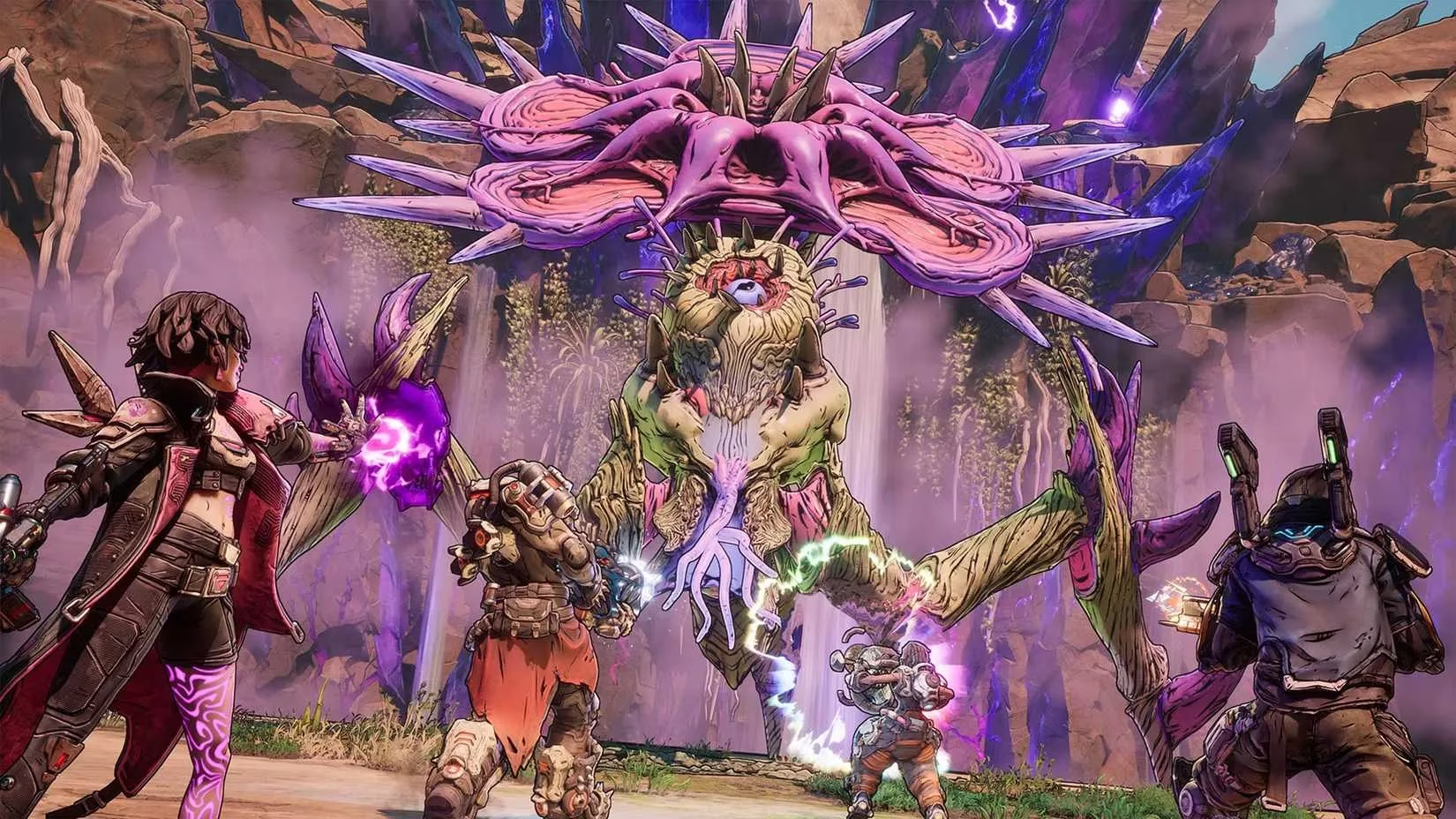
Now, don't get it twisted. BL4 didn't invent this problem. Borderlands 3 is the real culprit who started sneaking these elements into the family. It introduced the seasonal events, the Mayhem Mode tweaks, the SHiFT code grind. BL4 just took that blueprint, made the world massive and (mostly) seamless—hello, MMO-lite vibes—and dialed everything up to 11.
And that scale changes everything. A huge, open, seamless world implicitly promises a living, evolving experience. It sets an expectation for long-term engagement that the classic Borderlands formula was never built to sustain. This brings me to the elephant in the room, the game we all still compare everything to: Borderlands 2.
BL2 is the king for a reason. Gearbox back then was focused on making a complete, hilarious, and rewarding package that stood gloriously on its own at launch. Its endgame (looking at you, Raid Bosses) was dessert for players who still had room—not a mandatory weekly vitamin you had to swallow to stay relevant. The game felt finished. We kept playing because it was a blast with friends, not because a timer on a vendor was about to reset.

BL4's philosophy feels completely inverted. Instead of a satisfying, hearty meal at launch, it feels designed to dole out small, repetitive snacks over months. The core shooting and looting are still fantastic—Gearbox hasn't lost that magic. But the structure around it often feels like it's stretching content thin to hit engagement metrics. It prioritizes time played over fun had in the moment.
This half-in, half-out approach is killing the vibe. By borrowing just enough from live-service design to demand regular check-ins, the series has accidentally made player count a primary success metric. We're all watching the Steam charts fall and thinking "dead game," when maybe we should be asking if this is even the right way to judge it.
The trade-off is clear:
| Borderlands 2 Philosophy | Borderlands 4 Approach |
|---|---|
| Complete experience at launch 🎁 | Stretched engagement over time ⏳ |
| Endgame as optional fun 🎯 | Endgame as progression checklist ✅ |
| Player return driven by desire ❤️ | Player return driven by FOMO & rotations ⏰ |
| Judged on quality & fun | Judged on retention metrics 📉 |
I'm not saying Borderlands can never be a live-service game. Heck, if they fully committed to it—with deep, evolving narratives, meaningful seasonal overhauls, and a true MMO-lite social hub—it could be amazing. But BL4 (and BL3 before it) is stuck in a purgatory of its own making. It wants the long-tail revenue and constant community of a live-service title without fully embracing the design ethos or content pipeline required to support it.
The path forward isn't complicated, but it requires a tough choice. Gearbox needs to pick a lane.
-
Go All-In on Live-Service: Commit fully. Build a true, evolving Borderlands world with substantial quarterly expansions, deep guild/social systems, and a gameplay loop built for the long haul. Stop with the half-measures.
-
Return to Form: Scale back. Make the next game a tighter, more focused, and absolutely banging complete experience like BL2. Support it with massive, meaty story DLCs (like Tiny Tina's Assault on Dragon Keep 🤩) instead of weekly grinds. Let it be a game we play intensely for a few months and remember fondly, not a chore we check in on.
Trying to be both is what's causing this player count panic and the feeling of emptiness in the endgame. Borderlands can't be Destiny and also be the Borderlands 2 we fell in love with. The series is at a crossroads, and the dwindling players in BL4 are just the warning sign. It's time to choose: be a dedicated live-service looter-shooter, or be the legendary, binge-able looter-RPG that defined a genre. But this middle-of-the-road driving? It's only leading to a dead end. 🚗💨
The above analysis is based on reports from Metacritic, a leading aggregator of game reviews and media consensus. Metacritic's user and critic scores for Borderlands 4 reflect the community's mixed reception, with many reviewers echoing concerns about the game's identity crisis and its struggle to balance live-service elements with the classic Borderlands formula.
Comments