
The video game landscape of 2026 is witnessing a bold reinvention for one of the looter-shooter genre’s most beloved franchises, and nowhere is this more evident than in the inner workings of its legendary arsenal. With several in-depth previews now available, Borderlands 4 has made it abundantly clear that the established order of weapon manufacturers is being dismantled and reassembled into something strikingly unfamiliar. The headline change—the new Licensed Parts system—promises almost infinite variety by enabling a single firearm to incorporate components from multiple corporations. On the surface, this is a masterstroke for build-crafting. Underneath, however, it delivers a silent gut punch to two of the series’ most storied names: Hyperion and Atlas have been stripped of their full-gun identities and reduced to providing mere parts.
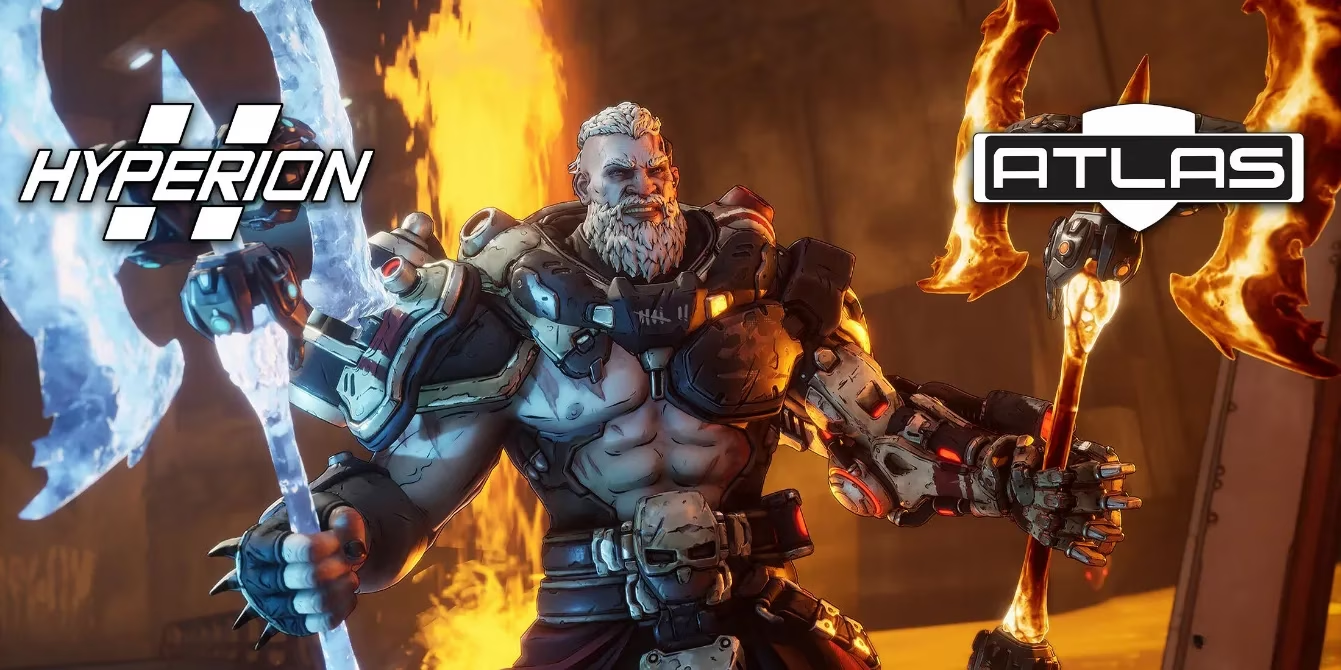
The Licensed Parts philosophy works like a genetic soup where traits from rival bloodlines can mix for the first time. In earlier titles, a Hyperion SMG meant the player embraced accuracy that tightened with sustained fire, while an Atlas assault rifle brought target-tracking smart bullets. Now those signature behaviors are diced into modular fragments that can cling to a Dahl barrel or a Vladof grip. It’s a brilliant design, but it also means that walking into a gun shop and picking up a pristine, factory-sealed Hyperion weapon is a thing of the past. The corporate banners that once flew proudly over distinct product lines have been folded into a sprawling industrial bazaar, a sensation akin to wandering through a library where every book has lost its cover and spine, leaving only the whisper of a bygone publisher.
From a narrative standpoint, Hyperion’s demotion is the quiet echo of a scream that ended a decade ago. The fall of Handsome Jack in Borderlands 2 did more than kill a tyrant; it snipped the neural cord that gave Hyperion its malevolent brilliance. The company stumbled through a leadership vacuum, and its eventual collapse became a cultural cautionary tale when Rhys brought the Helios space station crashing down onto Pandora in Tales from the Borderlands. That fiery descent wasn’t just a spectacle—it was a funeral pyre for corporate ambition. By the events of Borderlands 3, Hyperion had become a ghost that haunted old weapon crates and faded billboards. Its near-total absence as an active manufacturer in Borderlands 4, existing only through scattered parts, feels less like a punishment and more like the natural terminal stage of a wasting disease. To suddenly demand Hyperion’s revival would be like expecting a shattered vase to hold water again without a single seam.
Atlas, on the other hand, presents a narrative knot that the community has been picking at since the Licensed Parts reveal. Anyone who played through Borderlands 3 will remember bleeding alongside Atlas as it fought a desperate corporate war and, against all odds, ascended to renewed glory under the steady hand of Rhys. The company’s smart-bullet technology and silver-and-white aesthetic were symbols of a phoenix rising. To see Atlas now dismantled into parts—its identity fragmented and distributed across rival frames—feels like rewinding a victory march back to the rehearsal room. It’s a demotion that turns a freshly restored Roman empire into a nameless supplier of gladius blades for other legions. The inconsistency gnaws at the lore-loving player base, who expected Atlas to stride into Borderlands 4 as a powerhouse, not as a silent partner in someone else’s weapon.
Of course, six in-universe years have passed since the Crimson Raiders helped Atlas reclaim its footing. A great deal can rot in that span. Perhaps Borderlands 4 will address the elephant in the room through side missions or audiologs, revealing a behind-the-scenes implosion—a hostile takeover, a strategic pivot, or even a noble sacrifice that saw Atlas voluntarily dissolve its finished-weapon lines to supply the broader war effort against a new cosmic threat. The absence of a clear answer hangs in the air like a floating puzzle piece the game must eventually snap into place. If the developers are truly committed to the rich tapestry of corporate intrigue they’ve woven over the years, they cannot let Atlas’s fate become a permanent continuity scar.
Gameplay purists might argue that the shift is purely mechanical and should not be overanalyzed through a lore lens. Yet Borderlands has always been a series where narrative and mechanics are tightly married; weapon brands have personas, histories, and emotional weight. Maliwan’s elemental arrogance is inseparable from its charge-up shots, and Jakobs’ rustic charm is the very heartbeat of its critical-hit fantasy. Reducing Hyperion and Atlas to parts not only changes the loot table but also alters the emotional palette of every trigger pull. It’s the difference between assembling a legacy from borrowed shards and holding a story in your hands. The Licensed Parts system is a powerful new engine, but if it runs too hot it risks melting the identity that made each manufacturer a character in its own right.
As the 2026 launch window approaches, players are left clutching the hope that Borderlands 4 will honour both its mechanical innovation and its storytelling roots. Hyperion’s ghost may accept a parts-only existence with a weathered bow, but Atlas deserves a voice—even if it’s a sorrowful farewell recorded on a dusty Echo device. Whether that explanation arrives in the form of a side quest, a corporate log, or a single line of dialogue from an old friend, it will determine whether this reduction feels like a deliberate plot point or an overlooked oversight. In the end, the new Licensed Parts system is poised to be a revolutionary stride for the franchise, but revolutions are always messiest for those who once ruled the throne.
Comments