
When Alice in Borderland first dropped on Netflix back in December 2020, it felt like a secret handshake among thriller aficionados. The Japanese survival drama, all neon-drenched despair and cerebral death traps, arrived almost a full year before Squid Game turned the entire planet into dalgona-candy enthusiasts. Yet, somehow, the show languished in relative obscurity. It was the friend who brought the edgy music to the party only to watch the later guest hog the karaoke machine. Then Squid Game exploded, and suddenly everyone wanted a second helping of white-knuckling, life-or-death games. Netflix, in its infinite data-mining wisdom, realized there was an entire buffet sitting right there. Alice in Borderland season 2 scored a massive spike in viewership, but the real story began when the streamer announced a third season — a daring expansion beyond the manga that had already ended. Now, in 2026, looking back at the scorching finale that aired on September 25, 2025, it’s clear that the gamble paid off in spades. Well, in Joker cards.
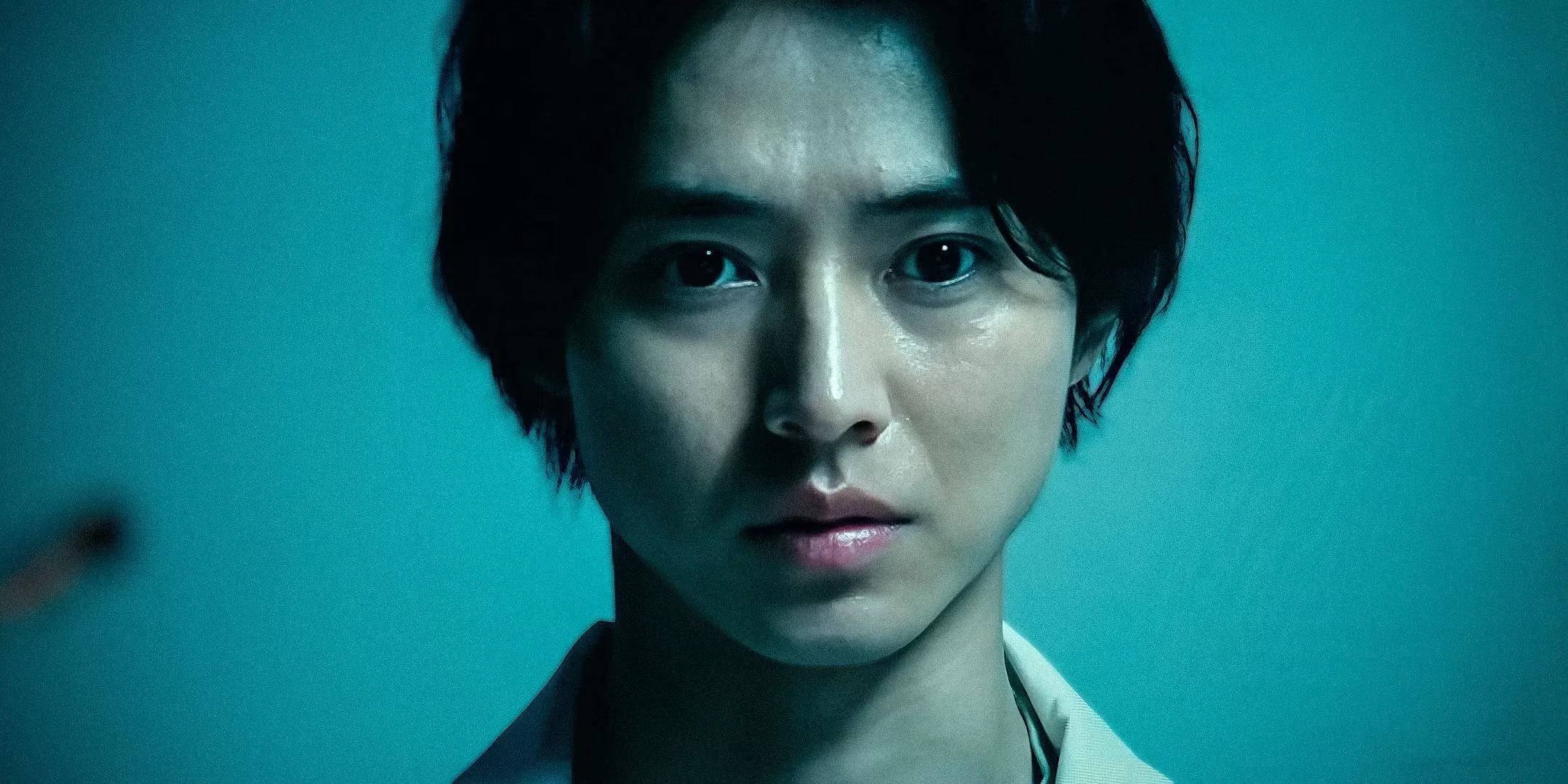
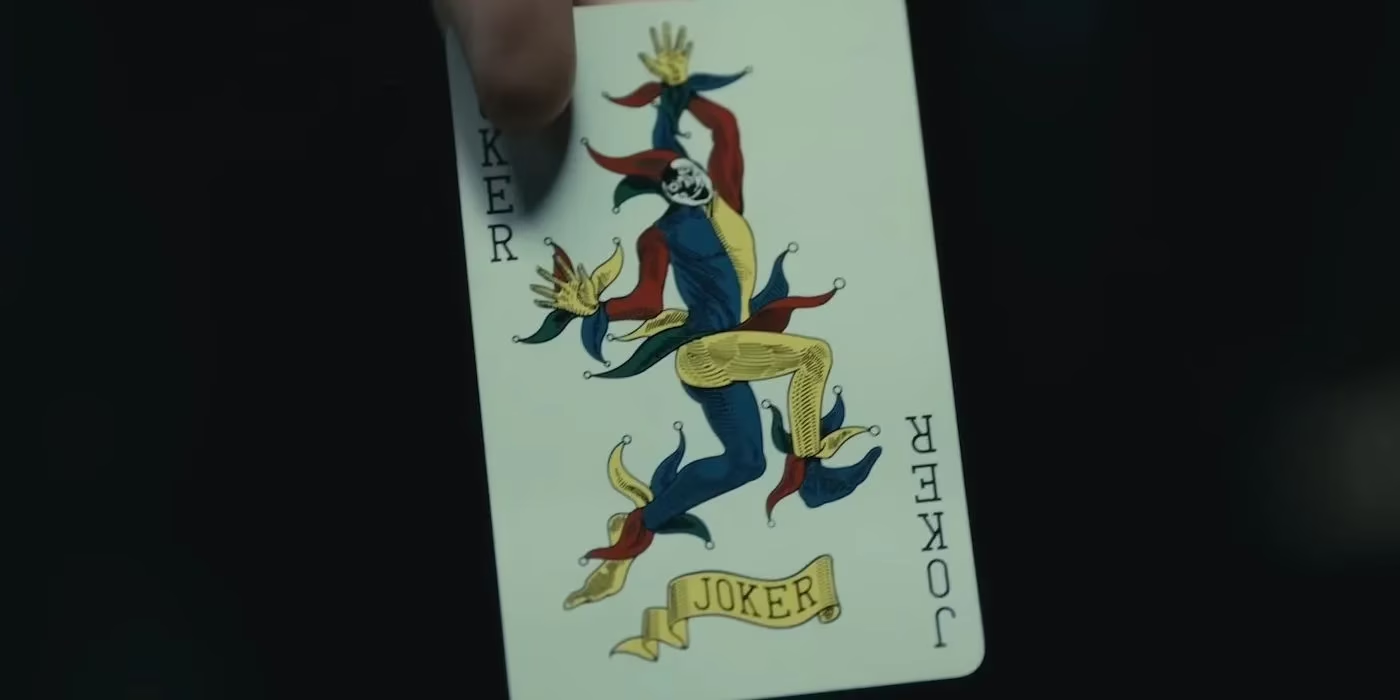
Arisu (Kento Yamazaki) and Usagi (Tao Tsuchiya) had already been through enough trauma to fill a library of self-help books. Season 2 concluded with them seemingly back in the real world, the Borderlands just a shattering memory. So when the season 3 trailer first dropped, fans collectively lost their minds over a single detail: wedding rings. Yes, the two survivors were married. For approximately two seconds, the internet dared to imagine domestic bliss. Then, in classic Alice in Borderland fashion, the rug was yanked away. Usagi vanished. A Joker card appeared. And Arisu’s face did that thing where all hope visibly drains out of it.
The final season didn’t just rest on the laurels of nostalgia. With only eight episodes, it sprinted from a quiet slice-of-life beginning into a labyrinth of psychological horror. The official synopsis revealed that Arisu and Usagi retained no conscious memories of the Borderlands, yet they were plagued by gruesome flashes in their dreams and hallucinations. This amnesia twist was a stroke of diabolical brilliance. It meant viewers were constantly questioning reality alongside the characters. Is this a new game? Is it a shared delusion? The show toyed mercilessly with those boundaries.
New faces shook up the formula in delightful ways. Ryuji, played with chilling calm by Kento Kaku, emerged as a wildcard whose motives stayed murky until the final minutes. His introduction felt reminiscent of the sudden alliances and betrayals that made the first two seasons so addictive. Meanwhile, the return of Banda (Hayato Isomura) as a semi-antagonistic force brought a deliciously uncomfortable energy. Banda’s nihilistic philosophy, born from his experiences as a serial killer in the Borderlands, clashed perfectly with Arisu’s desperate humanity. Each scene between them crackled like a live wire.
Yet, not everyone made the cut. The notable absence of Chishiya, the fan-favorite sociopath with the Mona Lisa smirk, stung hard. His deadpan genius and unexpected moments of vulnerability had become a cornerstone of the series. The trailer’s careful avoidance of his face had sparked a million fan theories. Would he get a spin-off? Was he secretly controlling the Joker game? The show never fully filled that Chishiya-shaped hole, but it smartly acknowledged his legacy through subtle callbacks. One memorable sequence involved a puzzle solved using a method Chishiya would have executed in half the time, prompting Arisu to mutter, “He would’ve been insufferably smug about this.” The fourth-wall-leaning humor felt earned.
From a production standpoint, season 3 was a visual feast. The empty Shibuya streets returned, but this time they were bathed in a melancholic gold instead of the usual cold blue. The Joker card served as the thematic anchor — chaos as the only true law. Games became more surreal, less reliant on physical endurance and more on psychological unraveling. One standout challenge involved a massive, ever-shifting maze where players had to decide whose memory to sacrifice to proceed. It was gut-wrenching television, and the show’s 86% Rotten Tomatoes score suddenly felt like an understatement.
Critics initially worried that extending the story beyond Haro Aso’s manga would dilute its impact. The original ending had been tidy, almost serene. Netflix was taking a massive risk. In retrospect, the gamble mirrored the very heart of the series: you have to play to survive. The showrunners, led by director Shinsuke Sato, didn’t merely tack on a sequel. They interrogated what “survival” means after the trauma has supposedly ended. Arisu’s arc transformed from a boy haunted by his father’s expectations into a man fighting for a love he keeps forgetting he had. That emotional core, wrapped in outlandish death games, gave the finale a weight that Squid Game’s second season arguably fumbled.
Speaking of which, the inevitable comparison between the two Netflix titans reached its peak in late 2025. Fans debated furiously on social media: which final season stuck the landing? Squid Game went big, almost too big, with global scale and convoluted lore. Alice in Borderland went inward, crafting an intimate, mind-bending conclusion. TikTok edits of Usagi’s tear-streaked face as she disappeared in episode three flooded feeds, usually set to mournful piano covers. The show didn’t just replace Squid Game as a cultural craving; it reminded audiences that sometimes the smaller, stranger story hits hardest.

The finale, without venturing into spoiler territory, managed the near-impossible: it honored the manga’s spirit while forging a new, original conclusion. The Joker wasn’t just a card. It was a philosophy. It was a promise that the game never truly ends, even when the credits roll. By the time the screen cut to black, accompanied by a hauntingly beautiful reprise of the main theme, the general consensus was that Netflix’s risky bet had transformed into one of the best conclusions in survival-drama history.
For those who slept on Alice in Borderland because it wasn’t the global behemoth that Squid Game became, the final season served as a triumphant, stylish corrective. It swung for the fences with a story about love, loss, and the unbearable randomness of chance. And like the best games in the Borderlands, it left its players — and viewers — breathless, a little broken, and utterly captivated.
Comments