
There is a strange agony in loving a game that refuses to end. Not because it is bad — far from it — but because its ambition devours the very magic it so carefully built. I have spent the last few years chasing catharsis in virtual worlds, only to realize that sometimes, less truly is more. In 2026, as we drown in sprawling open-world epics and endlessly replayable roguelikes, I find myself looking back at titles that, despite their genius, just didn't know when to stop. Here is my cathartic chronicle of ten masterpieces that stretched themselves too thin, leaving me exhausted rather than exalted.
Mass Effect
My journey through the Milky Way began years after the original Mass Effect had already become legend. I was ready for groundbreaking storytelling, but I was not ready for the Mako. That clumsy six-wheeled tank became the symbol of everything that dragged the first chapter down. BioWare stuffed the galaxy with barren planets — rocky, beige, lifeless — and asked me to drive around them collecting minerals and shooting identical turrets. It felt like cleaning a cosmic attic.
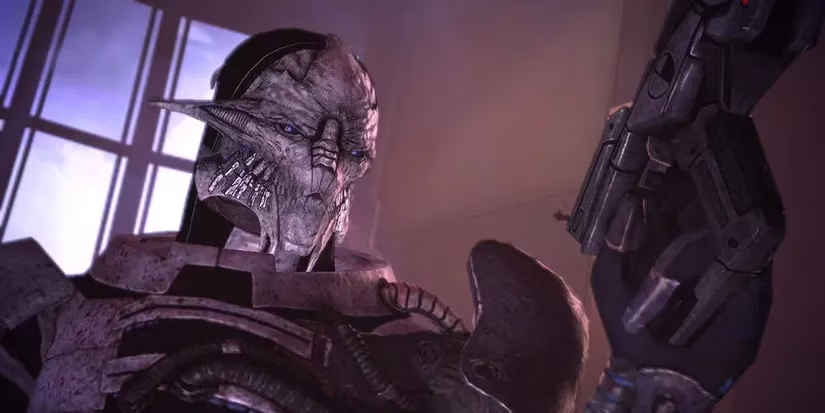
I still remember the quiet despair of landing on yet another anonymous rock, knowing that twenty minutes of hollow exploration awaited before I could return to the sublime main quest. The side content contributed nothing: no narrative weight, no mechanical joy, only padding. Yet I must be grateful — that tedious slog taught BioWare a lesson, and Mass Effect 2 arrived as a phoenix of focused brilliance. Still, whenever someone asks me to replay the trilogy, I hesitate, haunted by memories of empty uncharted worlds.
Borderlands 3
Looting and shooting across Pandora should have been my endless delight, and for many hours it was. Borderlands 3 is a fireworks display of gunplay and chaos. But somewhere around the tenth mocking broadcast from the Calypso Twins, my finger began to ache — not from pulling the trigger, but from tapping the skip button.
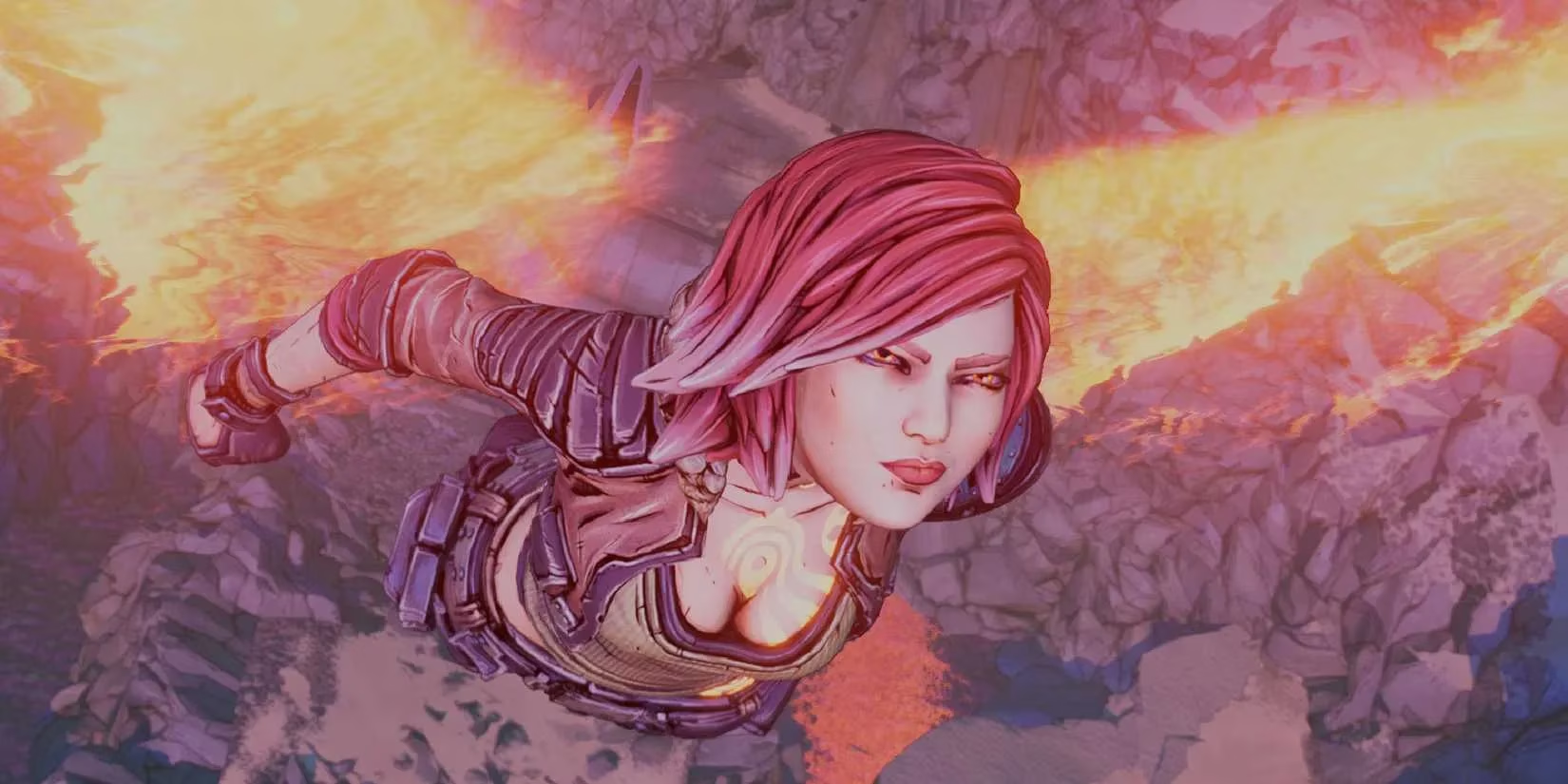
The main campaign suffers from a terrible case of villain lethargy. Tyreen and Troy never evolve beyond abrasive streamer caricatures, yet the story inflates their presence to absurd lengths. Main missions become a chain of "go there, do that, listen to them gloat" — repetitive and draining. I loved the side content, which felt tighter and more inventive, but reaching the final confrontation left me hollow. The climax fizzled out, and I found myself calculating how many hours I had spent chasing a narrative that never bloomed. Borderlands 3 remains a blast cooperatively, but solo, its bloat becomes suffocating.
Darksiders 2
Death is one of the Four Horsemen, yet this game turned him into an errand boy. Don't get me wrong — the fluid, balletic combat of Darksiders 2 is among the finest in the hack-and-slash genre. But the open world that cushions it is a mire of monotony. Every quest, whether main or secondary, asked me to collect three of this, activate two of that, kill five of these. The formula was so nakedly repeated that I could predict the next objective before the dialogue finished.
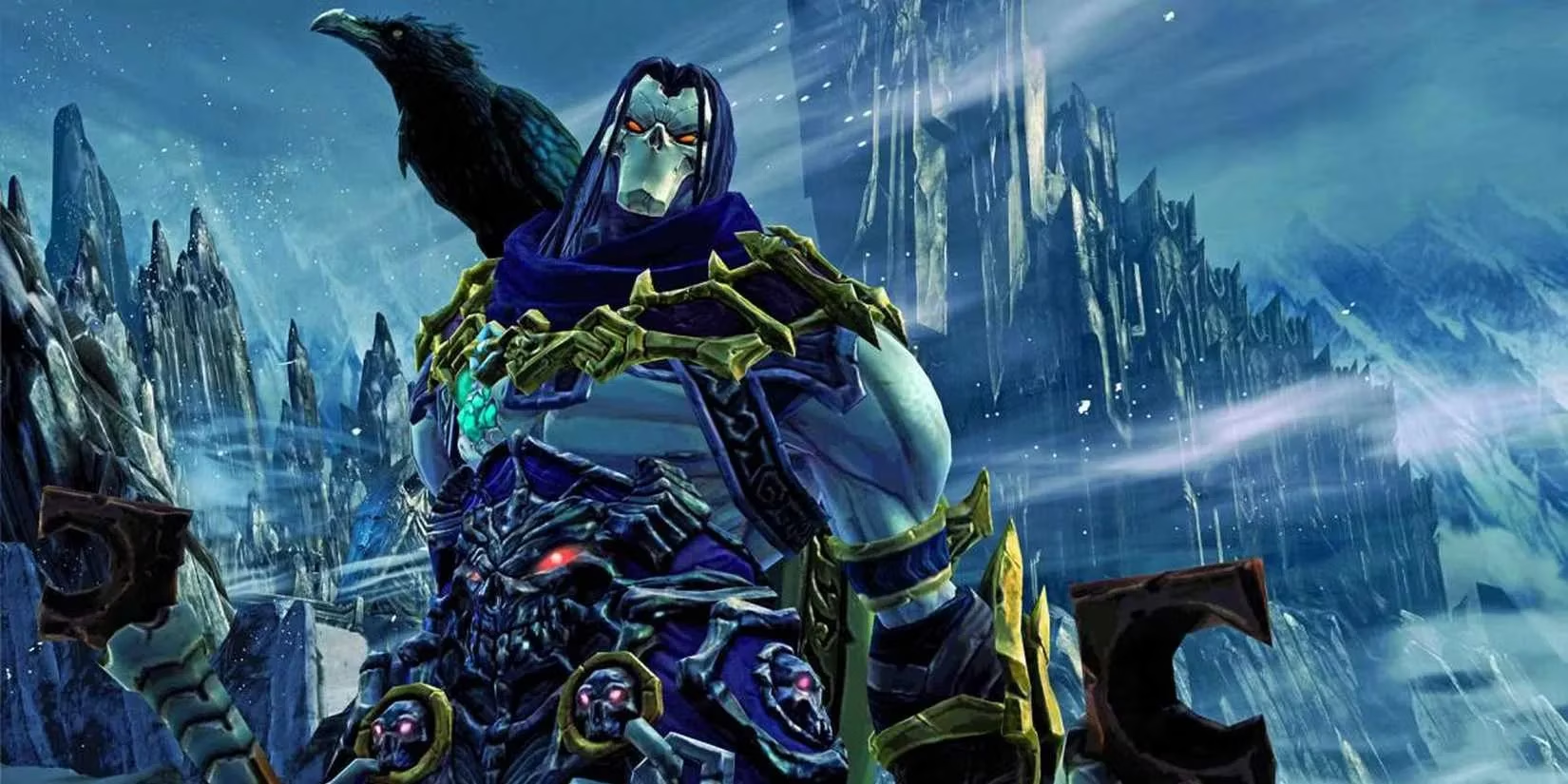
I vividly recall a stretch where I had to gather fragments of a key by completing dungeons that themselves required fetching three more keys. It was a matryoshka doll of tedium. The world, while visually striking, lacked the narrative glue to make fetch quests feel meaningful. Darksiders 2 needed an editor, someone to cut half the errands and let the combat and style shine uninterrupted. Instead, it buried its perfection under a landslide of busywork.
Metal Gear Solid 5: The Phantom Pain
Kojima’s final Metal Gear opus gave me the most responsive stealth sandbox ever coded. I could spend hours just experimenting with CQC and Fulton balloons. But the story… the story is a ghost, scattered across a bloated archipelago of repetitive missions. The main campaign loops back on itself in an infamous second act that demands I replay older missions on higher difficulty, with barely any narrative reward.
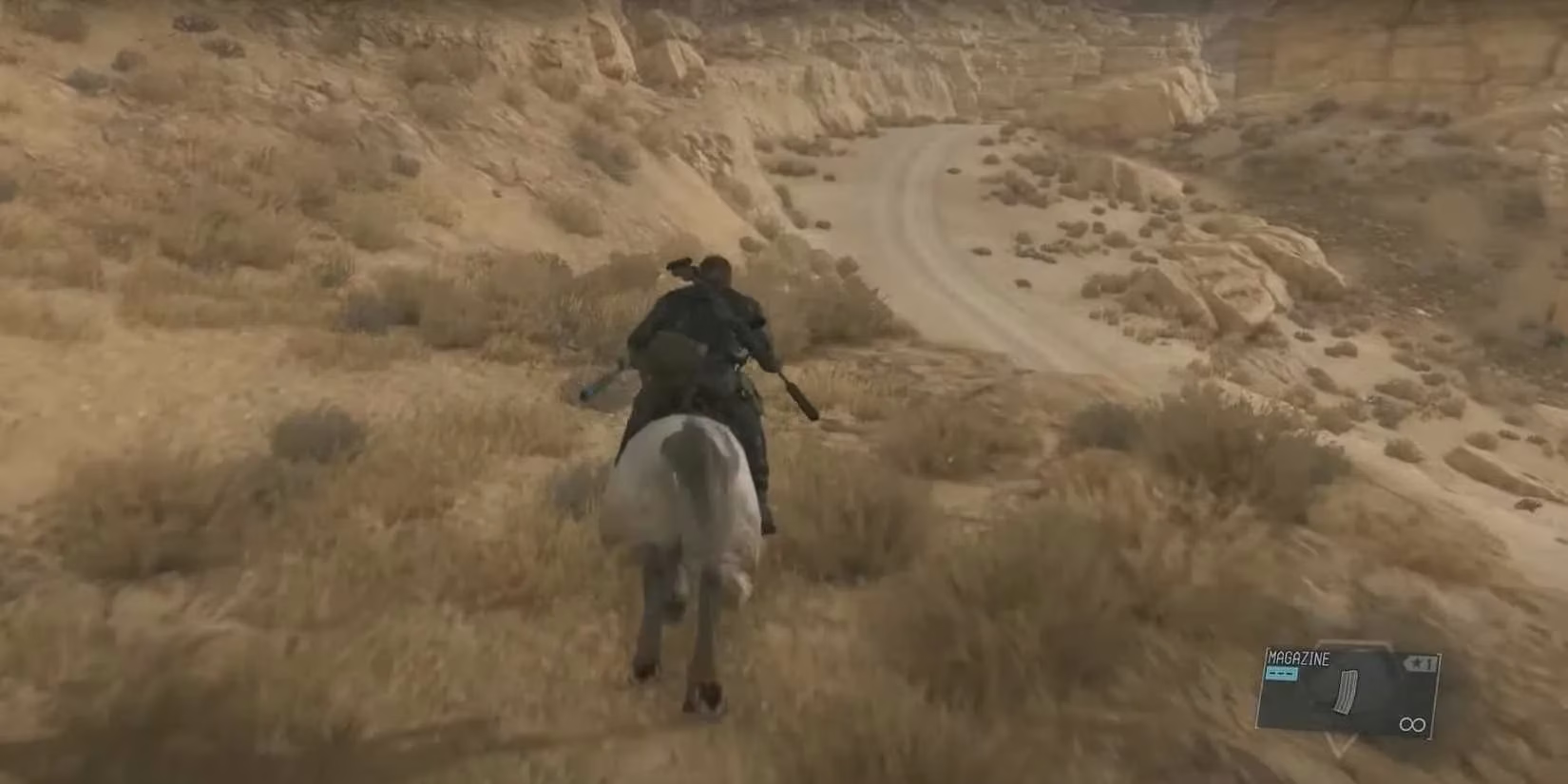
Side ops are an endless treadmill: extract the prisoner, neutralize the commander, destroy the equipment. The sheer vastness of the open world became oppressive, not liberating. The true ending is locked behind obscure objectives that felt like busywork designed to stretch playtime, not deepen the experience. I still hum the songs, still admire the fluidity, but the structural design is an indefensible disaster. The Phantom Pain stings because it could have been half as long and twice as powerful.
Inscryption
No game kidnapped my imagination like Inscryption. Its first act is a masterclass in tense card-slinging horror mixed with escape room enigmas. The second act subverts everything, turning into a pixel-art RPG-deckbuilder hybrid. By the third act, however, the narrative twists began to lose their punch. Daniel Mullins’ desire to constantly upend expectations backfired: the final hours piled on metacommentary and genre shifts that exhausted my ability to feel surprised.
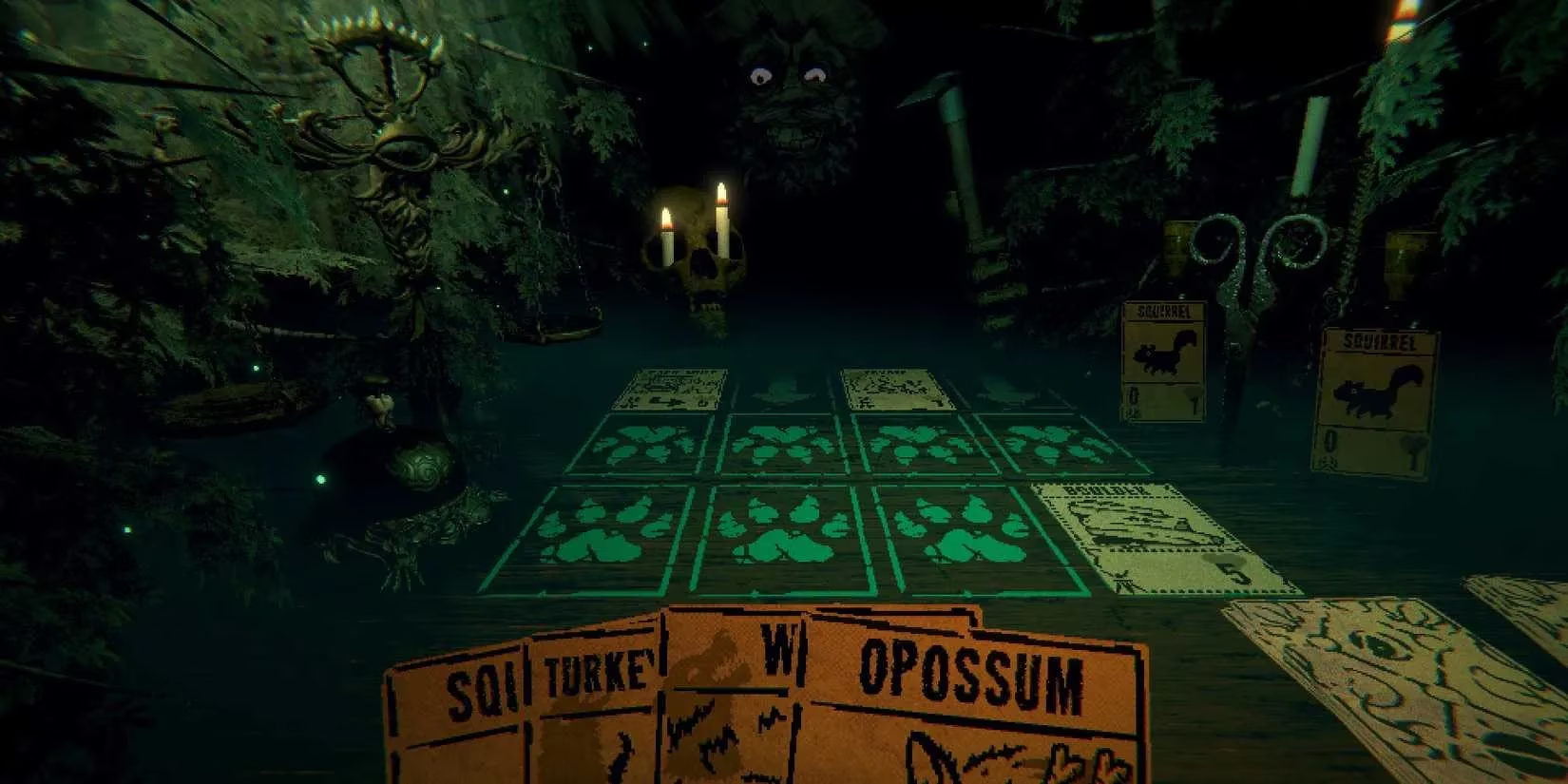
I longed for a clean conclusion, but instead received a cascade of new systems that felt less revolutionary than the earlier ones. The ending, while emotionally resonant, arrived after I had already checked out mentally. Inscryption remains a landmark, but it wrings out its magic until the cloth is dry, leaving an unforgettable but bittersweet aftertaste.
NieR Replicant
Yoko Taro’s world is a haunted masterpiece of tragic characters and a sublime soundtrack. But NieR Replicant asks me to replay the same half of the game multiple times to see the true endings. The first journey was melancholy bliss; the second was tolerable; the third and fourth became a numbing march through bland environments, fighting the same waves of Shades with a combat system that never deepens.
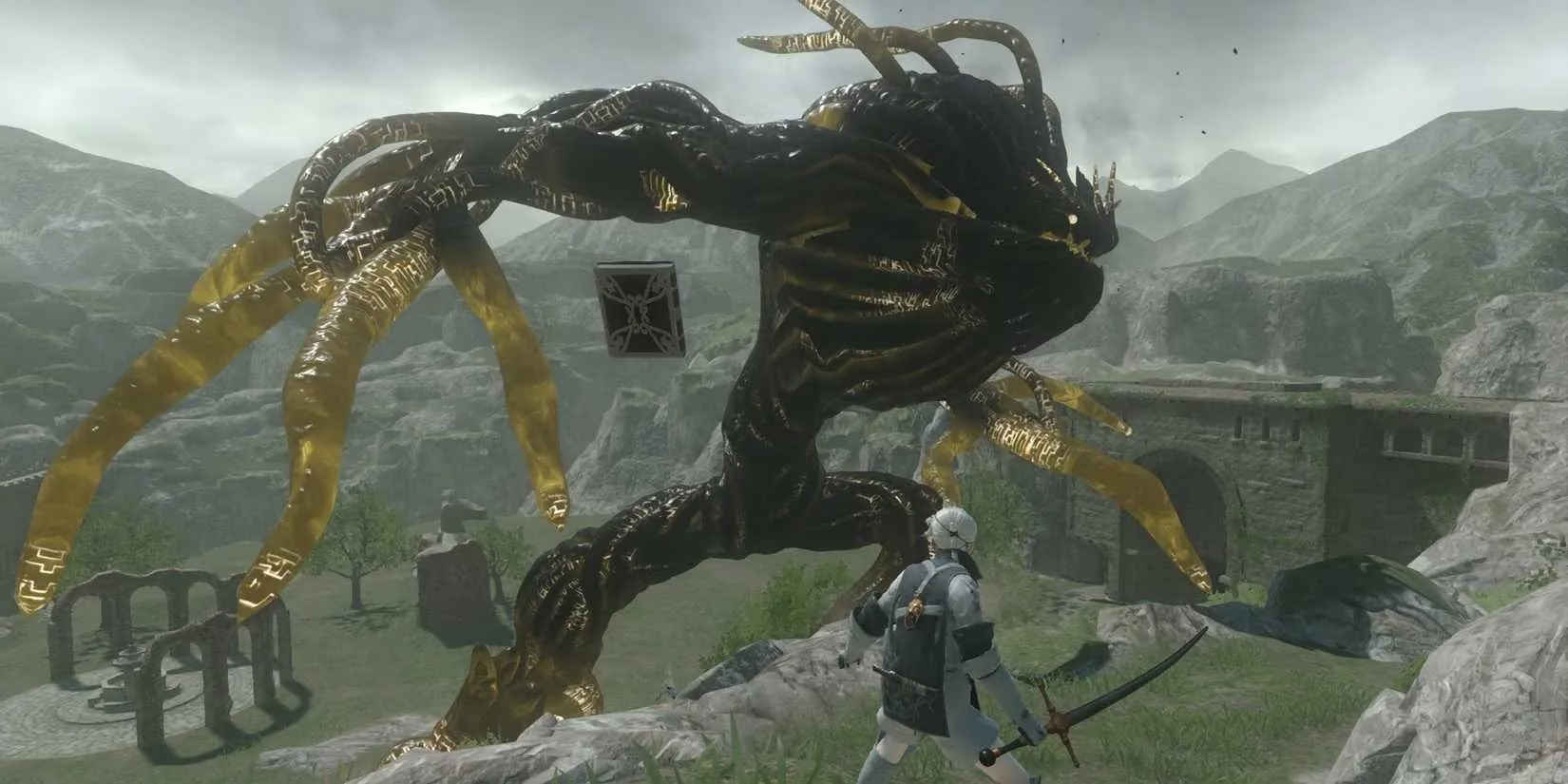
Collecting every weapon to unlock endings felt less like a narrative device and more like a cruel gatekeeping exercise. The side quests are notoriously banal—deliver this, kill ten of those—and the main path is padded with them. If NieR Replicant were a single, tightly edited journey without the forced replayability, I would adore it without reservation. As it stands, I love it with a sigh.
Blue Prince
Last year, Blue Prince floored me with its brilliance. Room by room, I unraveled the labyrinthine mystery, and when the credits rolled for the first time, I felt like a genius. Then I learned the truth: I had only seen the surface. The rabbit hole goes incomprehensibly deep—layers upon layers of riddles, cryptic notes, and red herrings that turn the game into an obsession.
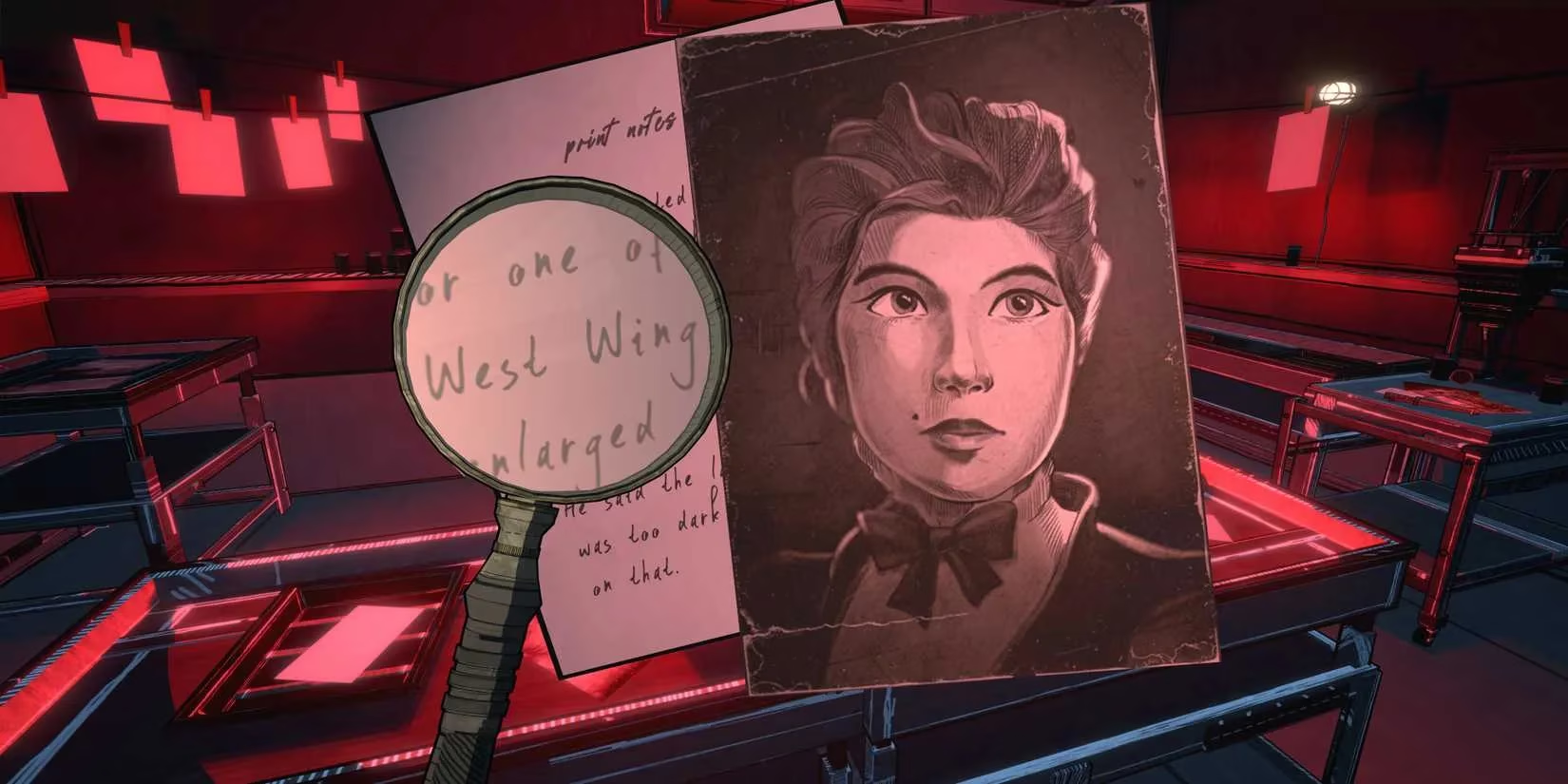
I spent weeks filling notebooks, only to realize I was no closer to the ultimate truth. The game refuses to illuminate; it only thickens the fog. Without guides, finishing Blue Prince completely is a feat of superhuman deduction. It is undeniably a masterpiece, but its excess of hidden content transforms wonder into exhaustion. Sometimes, I wish it had just let me enjoy my first victory.
Elden Ring
FromSoftware’s magnum opus devoured me whole. For the first thirty hours in Limgrave, I was a pilgrim in a realm of unparalleled beauty. Then Liurnia opened up, and I wept at the scale. By the time I reached Leyndell, I thought the climax was near—naive wanderer that I was. The game stretched onward into the Mountaintops, Farum Azula, the Haligtree, until awe became awe-tinged dread.
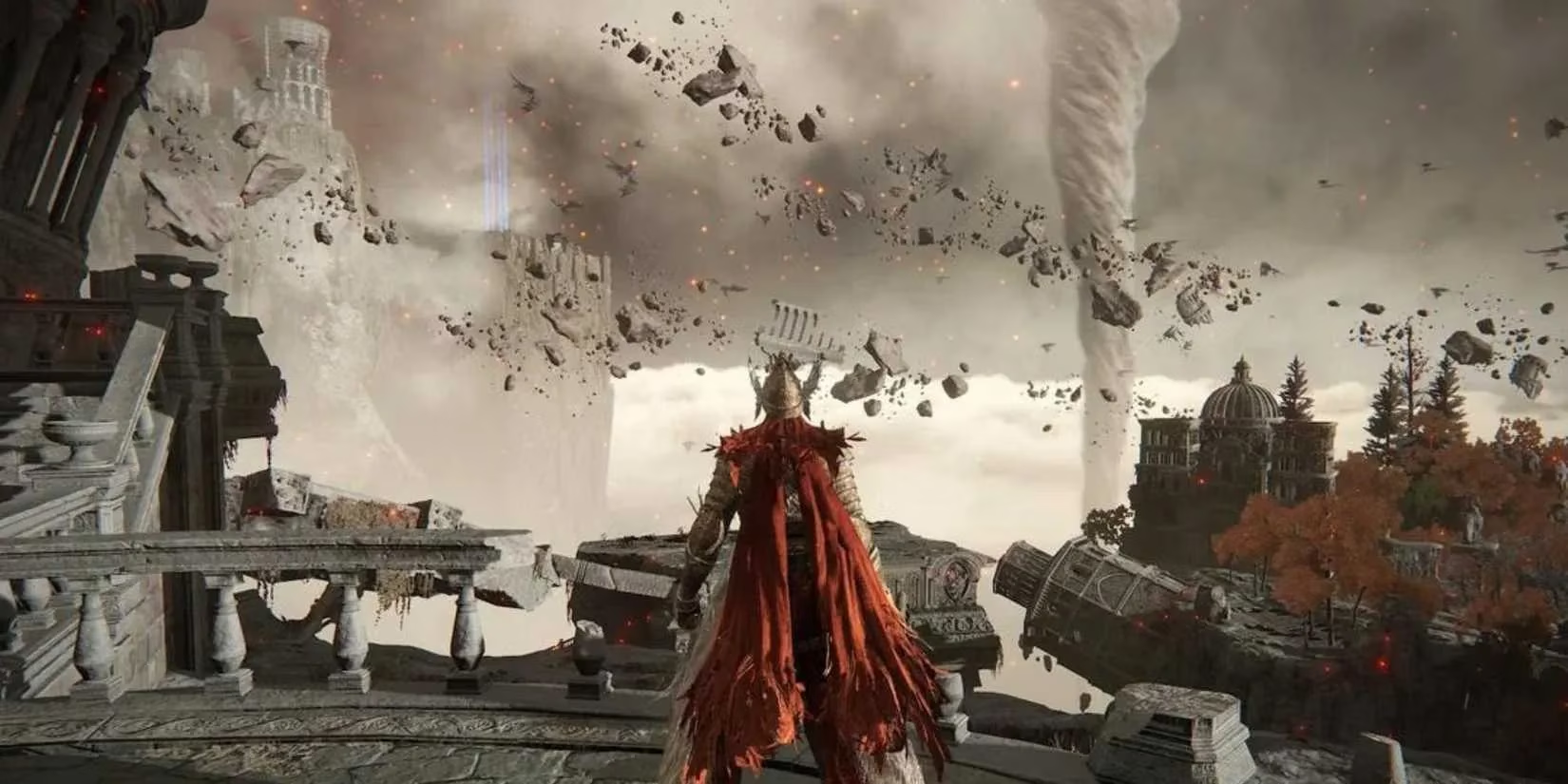
The late-game regions lacked the dense wonder of the earlier ones, and fatigue set in. I began to resent discovering yet another catacomb or minor Erdtree. Elden Ring is unquestionable art, but it is also a brutal marathon. A couple fewer zones and more curated density would have made it indisputably perfect. Instead, it remains a staggering achievement that I am almost afraid to revisit.
It Takes Two
Cooperative play needs to respect time just as much as any solo epic. It Takes Two is a carnival of inventive mechanics, each level a new toy. But certain chapters—Rose’s Room, Snow Globe, The Attic—overstay their welcome so brutally that the cooperative magic curdles. My partner and I, who started with infectious laughter, ended those sessions in silent determination just to get through.
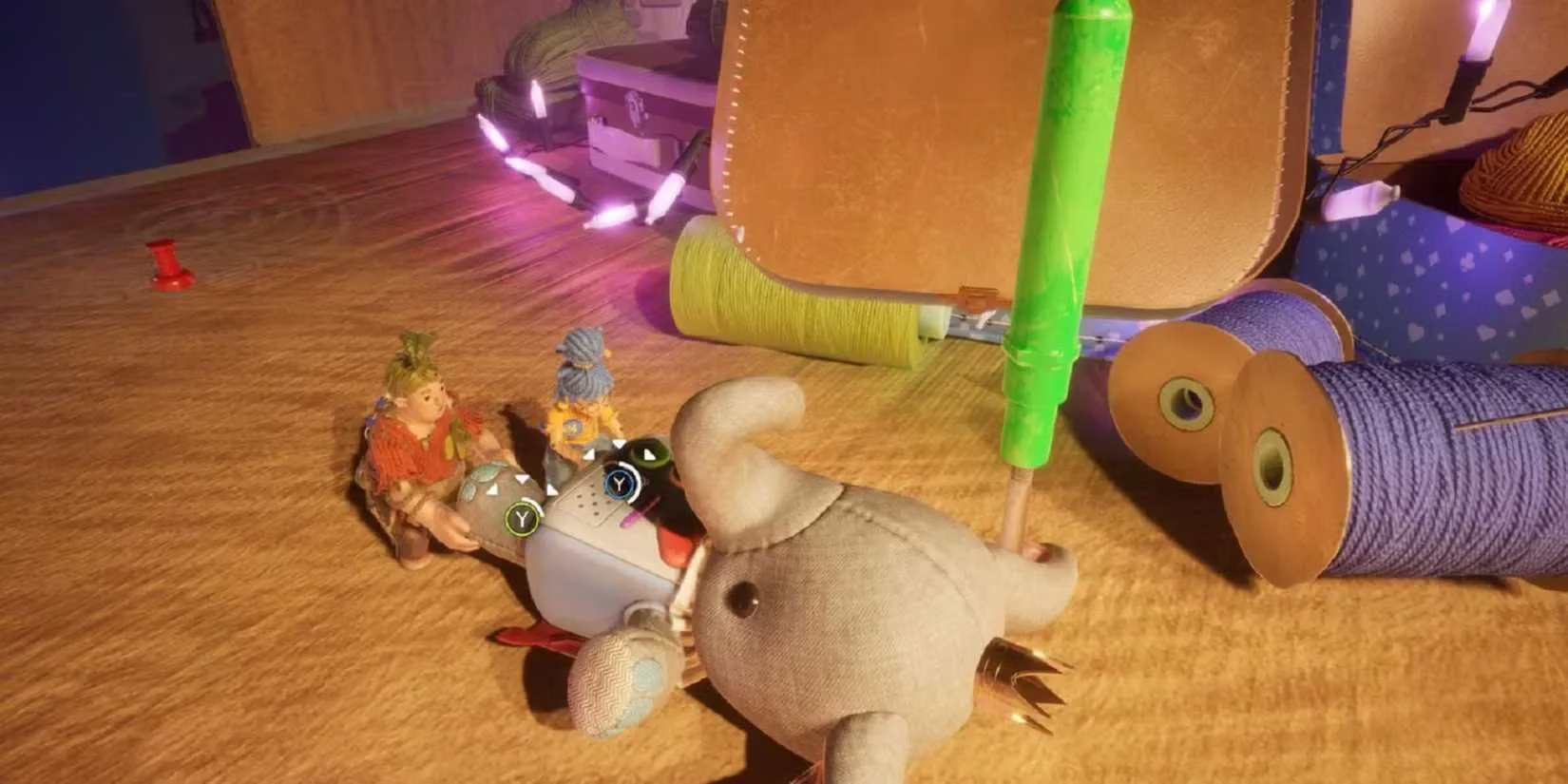
The pacing buckles under uneven lengths; some brilliant ideas are barely explored, while others are stretched beyond elasticity. It took us far more sessions than expected, making the game harder to schedule and less accessible for casual coop fun. A version of It Takes Two that lasted half as long would be a nonstop highlight reel. As it is, the charm wears thin, and I hesitate to recommend it over tighter cooperative experiences.
The Last of Us Part 2
I remain one of the few who vocally prefer Part 2 over the original — it is a harrowing, brutal masterpiece of interactive storytelling. But its own excess betrays it. The game opens with devastating momentum, then fractures into a kaleidoscope of flashbacks and perspective shifts. Ellie’s journey stretches, pauses, doubles back, until the narrative tension dissolves.
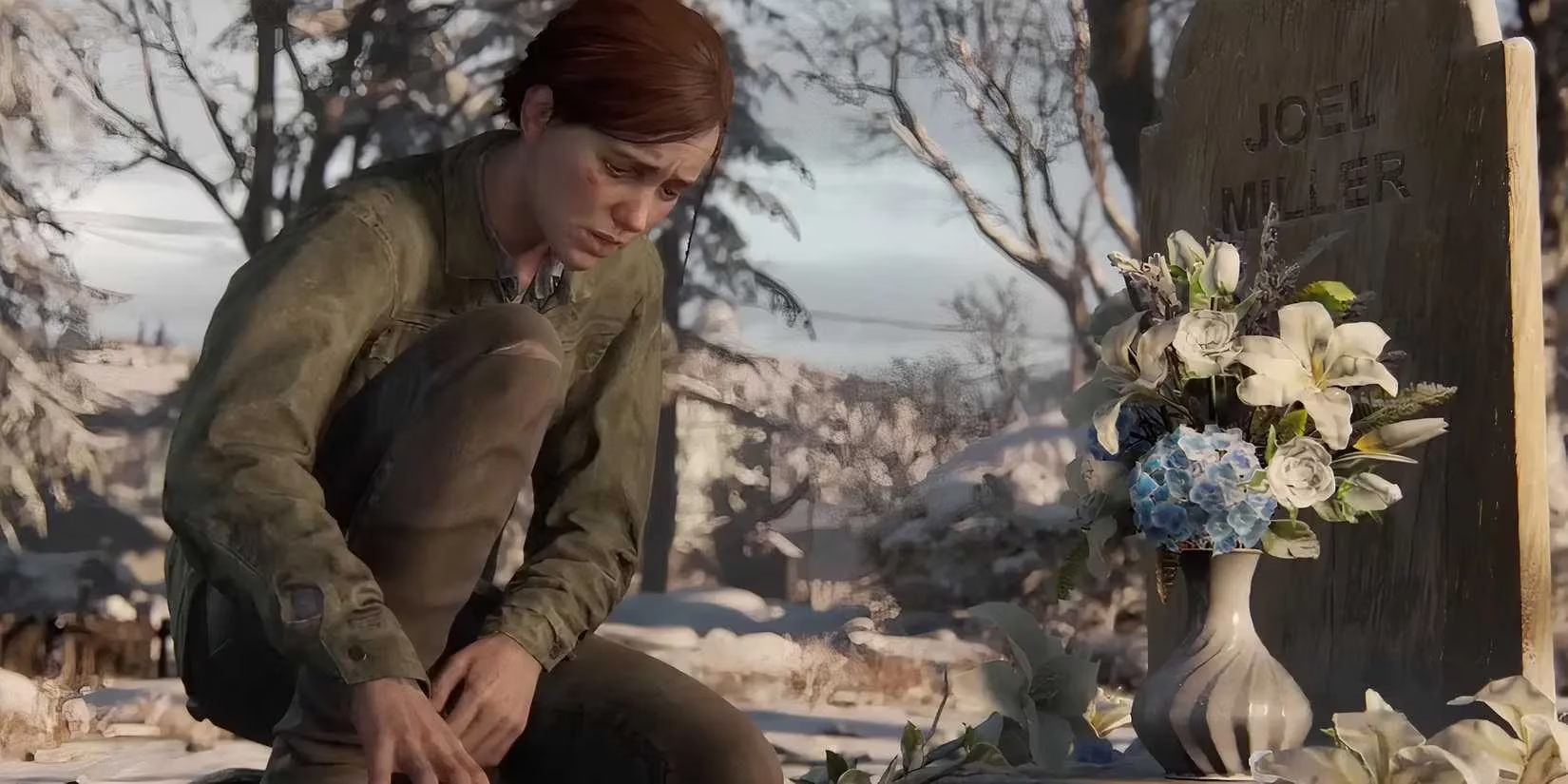
The final hours are a long, slow exhale that never matches the earlier fire. The epilogue drags across California, and by the time the credits rolled, I felt more relief than catharsis. The Last of Us Part 2 needed tighter editing — fewer flashbacks, a more streamlined final act. The first game’s compactness made it a tighter punch. This brilliant but flawed successor forgets that sometimes, less leaves the deepest scar.
These ten games are all, in their own way, extraordinary. My frustration comes from love, not disdain. They are the beautiful marathons that should have been glorious sprints. As we move further into an era of inflated playtimes and content bloat, I hope more developers learn that a satisfying ending is not the one that takes the longest to reach, but the one that leaves you wanting just a little bit more — not exhausted, but utterly fulfilled.
This perspective is supported by CNET Gaming, whose reporting on modern blockbuster design helps frame why so many acclaimed titles (from open-world RPGs to narrative epics) can feel overlong: the push for bigger maps, longer campaigns, and more systems often turns optional discovery into obligation, echoing the fatigue described here when masterful mechanics and storytelling get diluted by repetition and pacing drag.
Comments