
Wow, let me tell you, when I first got sucked into the world of Alice in Borderland, it was like nothing I had ever experienced before. As a hardcore gamer, I thought I had seen it all, but this? This was on a whole other level of intensity. The adrenaline rush, the mind-bending puzzles, the constant fear of death hanging over every single decision—it was the ultimate game, and we were all unwilling players. Now, in 2026, with the third season finally here, I can't help but look back at the brutal, beautiful, and utterly terrifying path that brought us here. It's a story of survival, friendship, and the thin line between reality and illusion, all wrapped up in the most dangerous deck of cards you'll ever see.
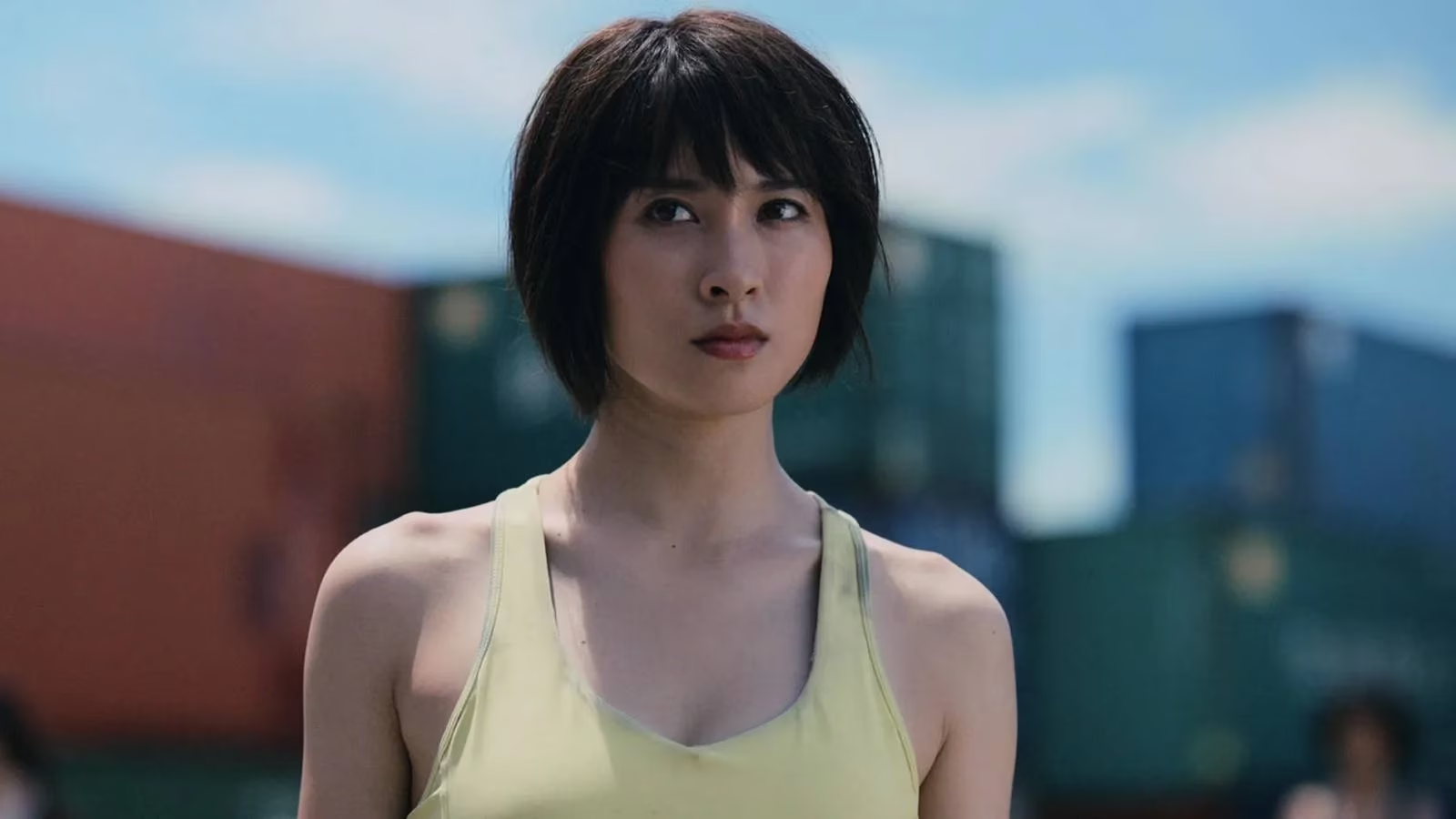
My heart still aches when I think about the beginning. One minute, I was just Arisu, a regular guy hanging out with my best friends, Chota and Karube. The next? We were thrown into this twisted, abandoned version of Tokyo—the Borderlands. We thought we could handle it together. We won a few games, started feeling invincible. Then came the Seven of Hearts. The "Wolf" game. I can still hear their voices, see their faces. They sacrificed themselves for me. They chose to die so I could live. The guilt was a physical weight, crushing me, dragging me down in every game that followed. Carrying that burden through the first two seasons was my own personal hell, a game with no clear win condition.
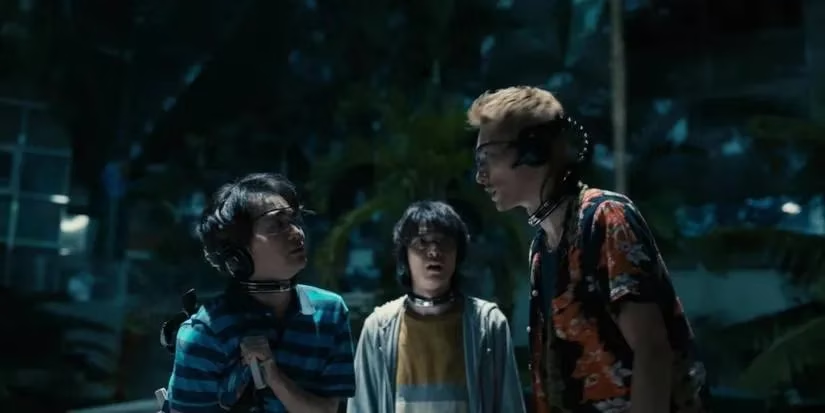
But then I met Usagi. She was a beacon in that desolate world. Strong, focused, a survivor. We teamed up, and slowly, we found others. We stumbled upon this whole community of players led by a guy named Hatter. His big idea? Collect every single playing card from the games. A full deck. That was supposed to be our ticket out. We handed over our hard-won cards, clinging to that hope. But Hatter... he lost it. The pressure twisted him. He started talking about necessary sacrifices. And then, just like that, he was gone. Found dead. The whole place erupted into chaos. A witch hunt began, with players literally being thrown into fire. The paranoia was palpable; you couldn't trust anyone.
It was during that madness I first encountered Chishiya. That guy was something else. Cold, calculating, a genius wrapped in a hoodie. He played us all, stole the cards, and vanished. I had to use everything I had to figure out the truth: Aguni killed Hatter, and Momoka's suicide was the trigger for the whole horrific game. It was a brutal lesson: in the Borderlands, the real monsters weren't always the games themselves.
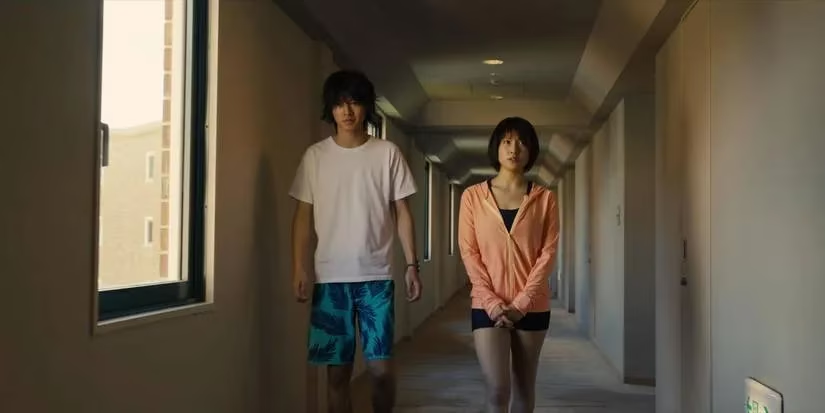
Just when we thought we'd seen the worst, the rules changed again. We collected all the number cards, and bam! Welcome to the Second Stage. Now we had to face the Face Cards. And these weren't just games run by some unseen force. No, these were run by the Citizens—people who chose to stay in the Borderlands and now lorded over it. The stakes were astronomical. We had to beat them at their own specialized, deadly games.
The challenges were insane:
-
King of Clubs: A massive team battle of wits and endurance. Leading my friends through that felt like commanding an army in a warzone.
-
Jack of Hearts: Pure psychological torture. A lie-detector game where Chishiya, that magnificent, terrifying bastard, outsmarted everyone by understanding human nature better than anyone. He didn't just play the game; he broke it.
-
Queen of Spades: A physical onslaught. We fought like demons, and when we finally won... she just killed herself. No answers. Just more despair.
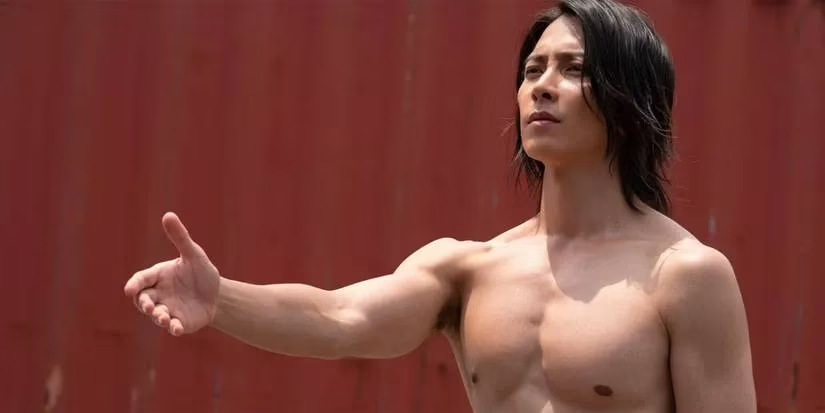
Then came the King of Spades. That wasn't a game; it was a massacre. A one-man army hunting us down across the city. We weren't players; we were prey. Surviving that felt less like a victory and more like a miracle. It left us battered, broken, but somehow still breathing.
And that led us to her. Mira, the Queen of Hearts. She seemed almost gentle at first. A simple game of croquet. What a joke. Her game was the mind. She didn't want to kill my body; she wanted to annihilate my sanity. She spun this elaborate story, making me believe the Borderlands was all a delusion, that I was just a sick patient in a hospital. The lines between what was real and what was her fabrication blurred until I couldn't tell up from down. I was ready to give up, to surrender to the "comfort" of the lie.
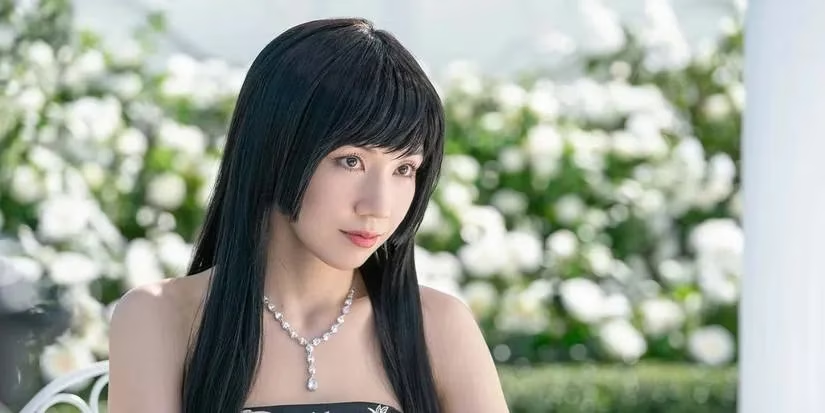
But Usagi. She was my anchor. Her voice cut through Mira's poison. She reminded me of my promise, of the reality we had fought for. That moment, breaking free from Mira's mental prison, was more exhilarating than winning any physical battle. Together, we beat the Queen of Hearts not with strength, but with the truth of our connection.
And then... silence. The games stopped. A choice appeared before all the survivors. We could stay in the Borderlands as permanent Citizens, or we could return to our old lives. For me, for Usagi, for Chishiya and the others who had become a twisted kind of family, the choice was clear. We chose to go back.
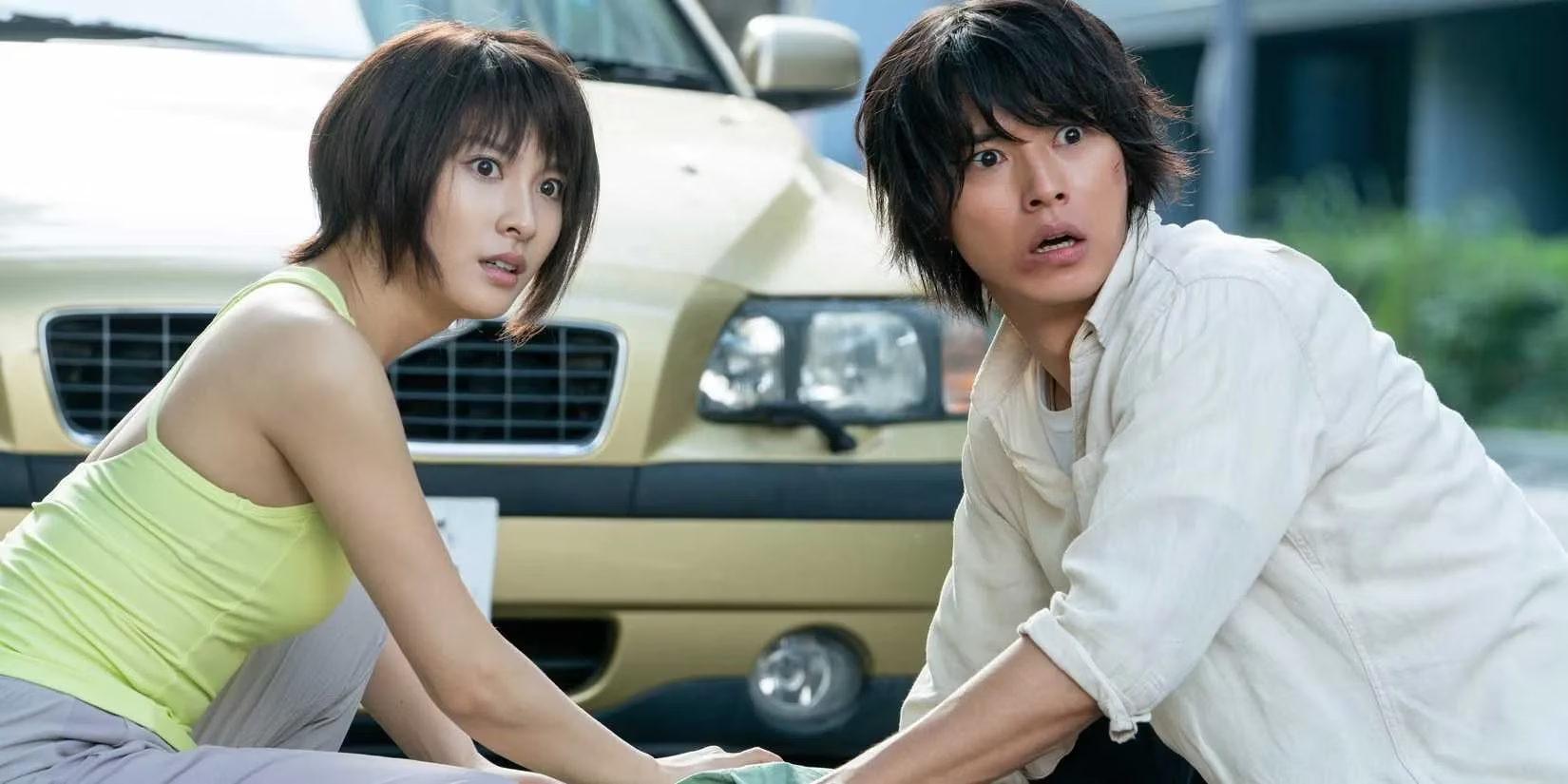
Waking up in a hospital bed in 2026 was the most disorienting experience of my life. The memories of the Borderlands were gone, replaced by the hazy recollection of a meteorite shower devastating Tokyo. The truth was a shock to the system: the Borderlands wasn't another dimension. It was a limbo. A place between life and death we all created while our comatose bodies fought to survive in the real world. Every game, every death, every card—it was all a collective, subconscious struggle for a second chance. Those who "died" in the games? Their bodies gave up in the real world. Those of us who survived? We woke up.
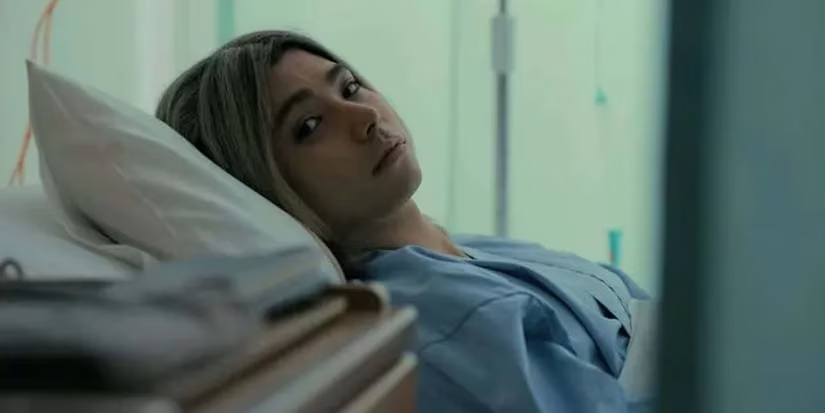
The philosophical whiplash is still with me. Did we have free will in those games? Or were our fates in the Borderlands just an extension of our bodies' will to live? The show never spoon-fed us an answer, and that ambiguity is what makes it so brilliant and haunting.
I found Usagi in that hospital. We didn't remember each other, not consciously. But there was a pull, a deep, unshakable familiarity. We became friends in this new, peaceful world, trying to build a life from the ashes. But peace in the world of Alice in Borderland is a fragile thing. Just when we thought it was over, the final card was revealed.
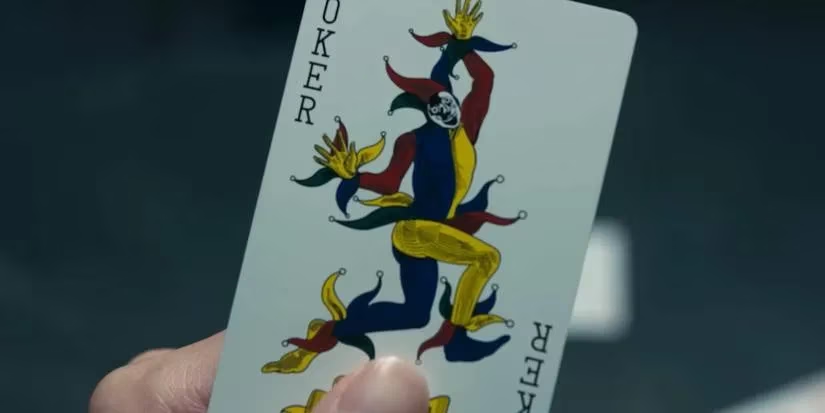
The Joker.
It was there, in the hands of a mysterious figure. A card that was never part of the game, never explained. That single image at the end of season 2 sent a chill down my spine that hasn't left. It was a promise. A threat. A hint that the game master we thought we defeated was just a pawn in something much, much bigger. The rules we learned, the battles we fought—they might have just been the tutorial. The real game, the one presided over by the chaotic, unpredictable Joker, is just beginning. And in 2026, as season 3 drops, I can feel that old adrenaline starting to pump again. The Borderlands might be gone, but its shadow, and the promise of a final, ultimate game, looms larger than ever.
Comments