
In 2026, the open-world genre has ballooned to include everything from sprawling fantasy realms to post-apocalyptic survival sandboxes. Yet, as the market becomes saturated, the games that linger in memory are those that demand more than just exploration—they require genuine cooperation. Whether it's a tactical four-man infiltration or a desperate scramble to outlast a horde of undead, the magic happens when players synchronize their actions and lean on each other's strengths. This selection of titles proves that the best open-world adventures are the ones where teamwork isn't just encouraged; it's the only path forward.
Many developers try to bolt multiplayer onto their open worlds, but few execute it with the finesse of Tom Clancy's Ghost Recon Wildlands. Released as the first truly open-ended entry in the tactical shooter series, it drops a Ghost squad into a massive, cartel-controlled Bolivia. The map is enormous, filled with missions that range from interrogating lieutenants to destroying drug shipments. What sets Wildlands apart is how seamlessly it marries strategic planning with spontaneous action. A team of four human players can coordinate a synchronized sniper takedown, with one player marking targets from a hilltop while another provides overwatch with a LMG. The moment a plan breaks down—and it will—the frantic switch to suppressive fire and revives feels organic rather than scripted. Even years after its release, the mission structure ensures no two sessions feel identical, rewarding patient groups who treat each outpost as a puzzle rather than a shooting gallery.
A different flavor of camaraderie pulses through Final Fantasy XV. Here, the open world of Eos is not just a backdrop but the stage for one of gaming's most heartfelt road trips. Noctis, the brooding prince, is accompanied by his three closest companions: Gladio, Ignis, and Prompto. Their bond isn't merely narrated through cutscenes; it emerges in battle. 🛡️ Combat is a ballet of cooperative techniques. Noctis can warp-strike an enemy, then cue Ignis to mark a weak point for a devastating follow-up. Gladio swings his massive sword to create a window for a potion-chugging Prompto to recover. The Royal and Windows Editions deepened this by letting players directly switch control to any party member mid-fight, transforming the dynamic from a single-character action RPG to a fluid team-based tactical dance. The open world exploration—camping, cooking, and taking photos together—cements the feeling that these four aren't just allies; they're family.
Then there’s the grit and grind of The Division 2. Set in a meticulously recreated Washington D.C. seven months after a viral pandemic, this shared-world shooter forces agents to cooperate or crumble. The streets are littered with hostile factions, and missions scale mercilessly with group size. 🏙️ A disorganized squad will quickly find itself flanked, suppressed, and picked off. Effective teams, however, become surgical instruments. One agent might deploy a hive of repair drones while another flanks with a ballistic shield, drawing fire so the sniper can eliminate high-value targets. The gear system further incentivizes role specialization, making a well-balanced group feel unstoppable. While PvP exists in the Dark Zones, the core PvE experience is a masterclass in cooperative urban warfare that continues to draw players in 2026.
No conversation about open-world teamwork is complete without Grand Theft Auto Online. 🌆 What began as a rocky launch in 2013 has evolved into a living, breathing criminal empire simulator. Los Santos and Blaine County serve as a sandbox for everything from armored car robberies to open-wheel racing. The heists, however, are the jewel. These multi-stage missions demand exacting coordination: one hacker disrupts security, a pilot navigates a getaway helicopter through downtown skyscrapers, and two gunmen push through the front door, all while communicating timing down to the second. The adrenaline spike when a plan comes together, even after a dozen failed attempts, is unmatched. Rockstar’s continual updates have expanded the heist repertoire, keeping veteran crews engaged and forcing newcomers to learn the art of high-stakes collusion.
Venturing into the survival realm, Valheim proves that cooperative labor can be genuinely joyful. Set in a purgatorial Norse wilderness, this game tasks players with carving out a foothold in hostile biomes, from the serene Meadows to the ash-choked Ashlands (added in 2025). ⛏️ Chopping trees, smelting iron, and sailing a longship through a storm are all better with a friend—or three. A lone Viking can spend twenty hours building a fortress; a crew can do it in five. Boss battles, like the swamp-dwelling Bonemass, become tactical puzzles where someone kites adds, another manages poison resist mead, and everyone revives the fallen. The game’s refusal to hold your hand means teamwork is the ultimate survival tool, transforming grindy tasks into shared accomplishments.
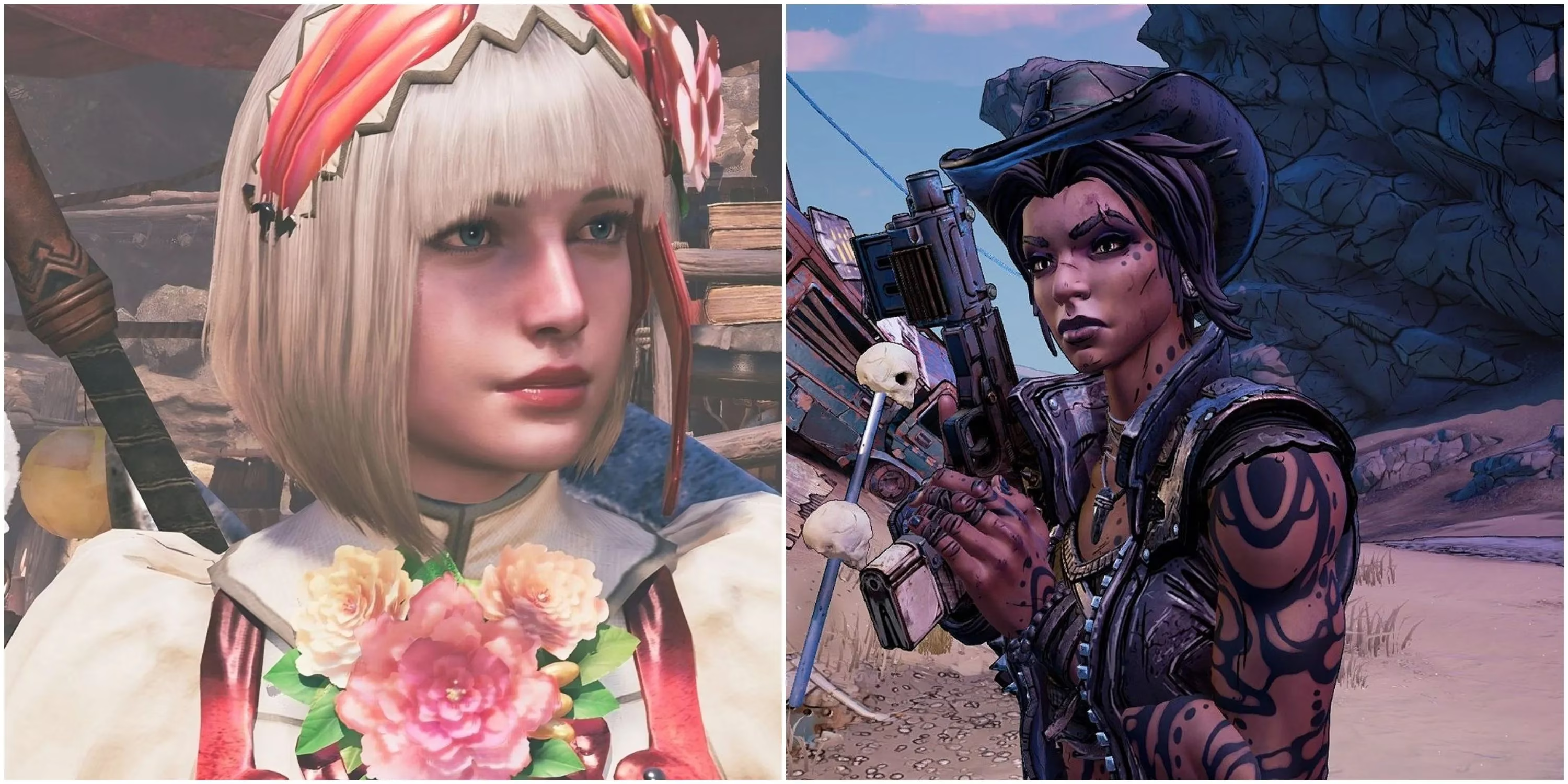
Borderlands 3 carries forward the franchise's co-op DNA with irreverent humor and a bazillion guns. On the planet Pandora and beyond, teams of Vault Hunters tear through cultists and wildlife to claim legendary loot. 🎯 The role-based design of each character—Moze’s mech, Amara’s phasegrasp, FL4K’s pet, Zane’s gadgets—means a squad that allocates responsibilities flattens bosses. One player debuffs with cryo damage while another pumps crits into a slagged enemy. The “Coopetition” mode lets groups share loot or fight for it, adding a layer of social negotiation. Endgame raids like the Maliwan Takedown demand synchronized burst damage phases that feel immensely satisfying when executed cleanly.
For those who prefer terror to comedy, Project Zomboid stands as the ultimate test of cooperative survival. 🧟 This isometric hardcore simulator is set in a zombie-infested Kentucky county, where a single scratch can end a run. Playing alone is an exercise in despair; with a partner, it becomes a tense but manageable experience. One survivor barricades a safehouse while the other scouts for canned goods and gas cans. Out in the world, a lookout must watch both the treeline and the teammate who is frantically jimmying a car door. When a helicopter event draws a screaming horde, split-second teamwork decides who stays and who becomes a meal. The game’s 2025 updates to crafting and NPC animals only deepened the reliance on coordinated effort.
Finally, the monster-hunting phenomenon Monster Hunter Wilds, launched in 2025, delivers the series’ signature co-op action in a seamlessly connected open world. Hunters track massive creatures through living ecosystems, where even the weather influences behavior. ⚔️ In battle, the classic rhythm of teamwork sings: a Gunner rains status ammunition to paralyze the monster while a Great Sword user charges a true charged slash on the tail. A Hunting Horn player buffs the entire group with earplugs and attack up, and a Sword & Shield user cracks open wounds for massive damage. The new “Focus Mode” allows precise targeting of monster parts, elevating coordination to a new level. A well-synced party can make even an elder dragon feel like a choreographed dance, a testament to why this franchise remains king of cooperative combat in 2026.
From tactical shooters to survival sims, these open worlds remind players that the best stories aren’t just about the heroes—they’re about the people standing beside them, ready to share the weight of the world.
Comments