
Let me tell you, as someone who has tried to spin a yarn or two, crafting a coherent story is like trying to herd cats while juggling flaming torches. It's tough! And video games? Oh, they're no different. Over the years, even the most beloved titles have had their fair share of narrative inconsistencies—gaping chasms in logic that leave players scratching their heads. But sometimes, the brilliant minds behind these games actually go back and try to patch these holes. The results? Well, let's just say they range from the brilliantly clever to the hilariously absurd. Grab your thinking cap and join me on a tour through some of gaming's most famous (and infamous) retconned plot holes.
9. The Case of Mickey's Missing Shirt in Kingdom Hearts
Ah, Kingdom Hearts. A series with more plot threads than a sweater knitted by a caffeinated octopus, and consequently, more holes than said sweater after a run-in with a cheese grater. One of the most delightfully random inconsistencies involves everyone's favorite mouse. At the climax of the original game, King Mickey emerges from the Realm of Darkness to help Sora seal the Door to Darkness. He's silhouetted, but one thing is crystal clear: the dude is not wearing a shirt.
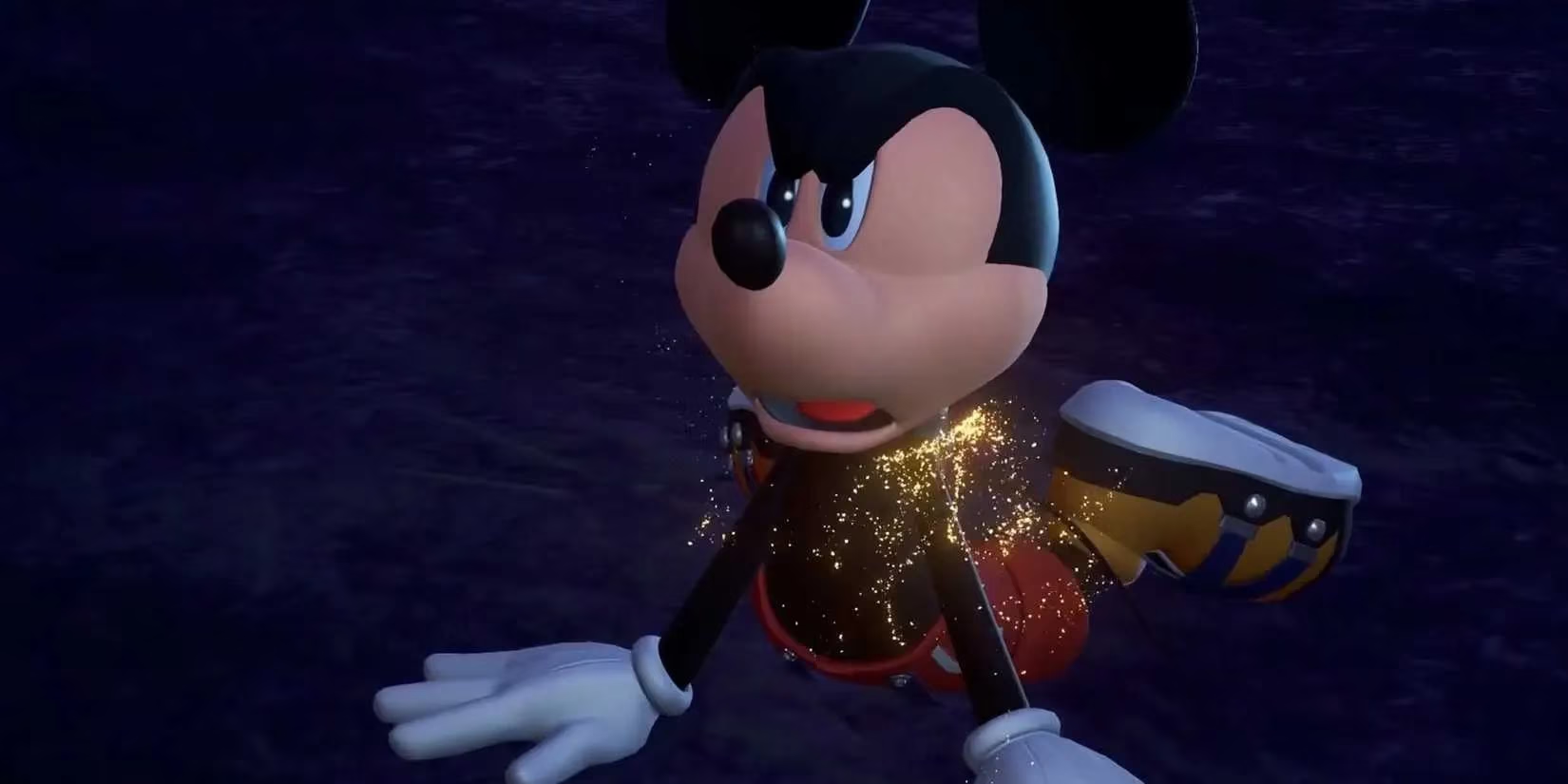
Now, Mickey is famously pants-only in his classic cartoons, but in later Kingdom Hearts titles, he's fully suited up. So, what gives? Did he lose it in a poker game? The answer came years later in Kingdom Hearts 0.2 Birth by Sleep – A Fragmentary Passage. The game shows that just before his grand entrance, Mickey was ambushed by a swarm of Shadow Heartless. In the scuffle, they... dissolved his shirt. I'm not kidding. The developers dedicated precious resources to explaining a wardrobe malfunction. It's the kind of meticulous, utterly unnecessary lore patch that makes me love this series even more.
8. The Existential Crisis of Borderlands' New-U Stations
Borderlands presents a peculiar narrative quandary. You, the Vault Hunter, die constantly. Skag food, bandit target practice, you name it. Yet, you're always resurrected at a New-U station for a small fee. Handy for gameplay, but it utterly demolishes the stakes of the story. If death is so cheap, why do we mourn when major characters like Roland buy the farm?
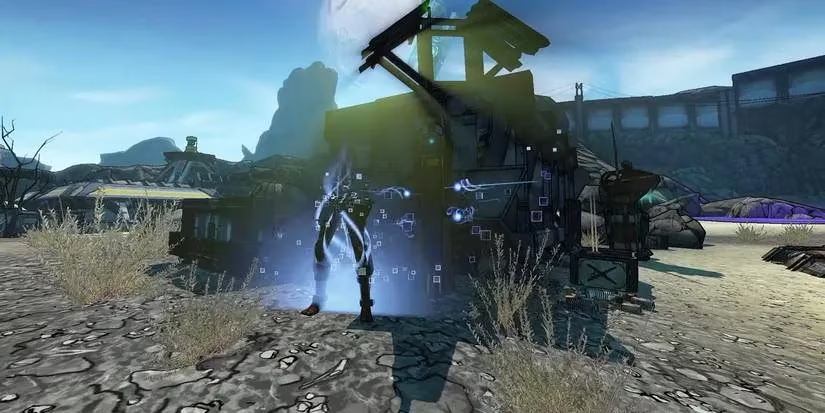
The writers' solution? The fourth wall didn't just break; it was vaporized by a Cobra rocket launcher. They officially declared New-U stations non-canon. That's right. They just threw their hands up and said, "Don't think about it." The series has since leaned into this meta-fix with glorious self-awareness. In The Pre-Sequel, a station explicitly states its non-canonicity. My personal favorite is from Borderlands 3, where a station cheerfully informs you it can always bring you back... "unless you died in a cutscene." It's a clumsy, hilarious, and perfectly Borderlands way to handle a narrative dead end.
7. The Unnecessarily Lethal Levers of Fallout 3
The original ending of Fallout 3 was... a choice. In the final act at Project Purity, your character is tasked with entering a control chamber flooded with lethal radiation to activate the purifier. The glaring issue? You have companions like Fawkes, a super mutant who is literally immune to radiation, or a radiation-resistant robot. Ask them to do it? They refuse. So, you, a squishy human, march in, flip the switch, and die a heroic, yet completely avoidable, death.
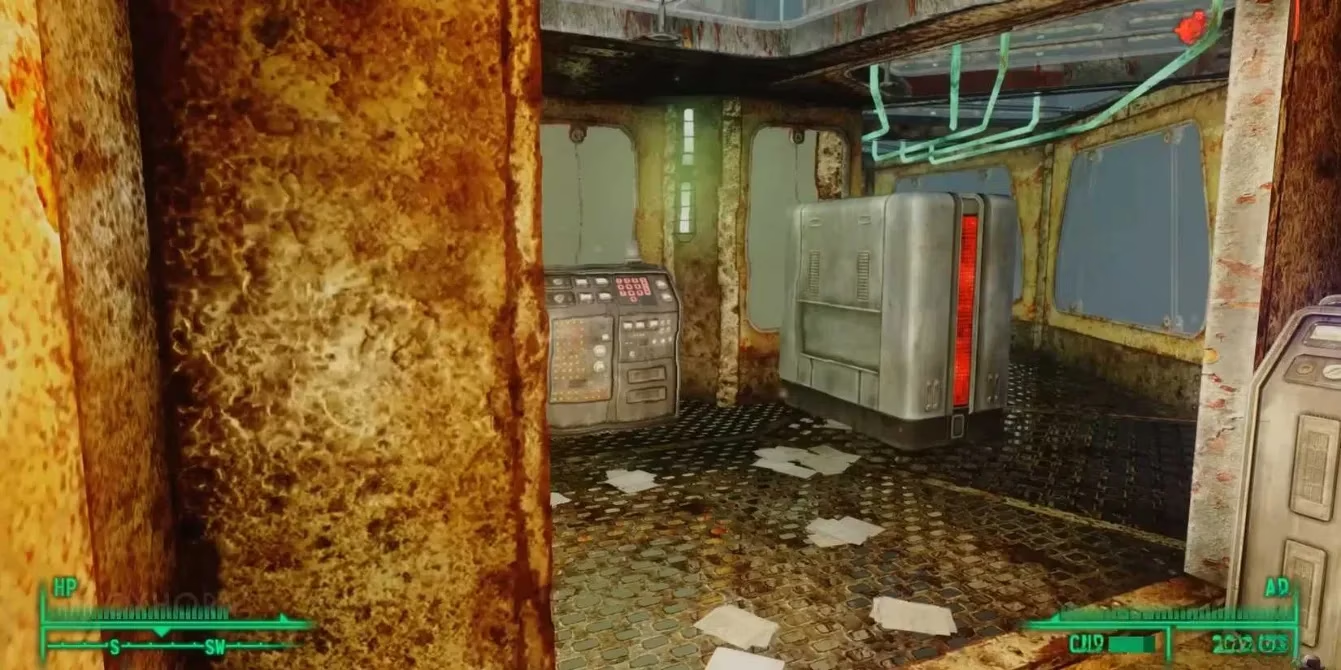
Players rightly called this out as a massive plot hole. Bethesda's patch? The Broken Steel DLC. This expansion not only continues the story past your supposed death but also fixes the logic gap. Now, you can actually send your rad-proof buddies into the chamber, or the game hand-waves your survival. Was this always the plan, or a clever cover-up? We may never know, but I'm just glad I didn't have to microwave my Lone Wanderer for no good reason.
6. The Unlikely Bond of Big Daddies and Little Sisters in BioShock
BioShock's Rapture is a masterpiece of environmental storytelling. One audio log from Dr. Yi Suchong always puzzled me. He complains that he can't get the hulking Big Daddies to bond with the fragile Little Sisters. The log ends with him slapping a Sister, followed by the sound of a Big Daddy drill... and his demise. Wait, hold on. If they wouldn't bond, why did that Daddy care?
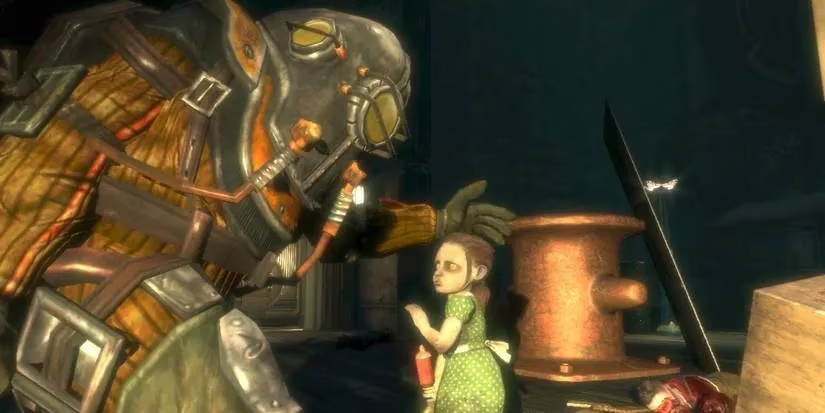
This hole lingered for years until the final piece of BioShock content, Burial at Sea Episode 2. We learn the bonding mechanism was discovered by accident—and observed by Elizabeth. She saw Little Sisters helping a distressed Big Daddy by reattaching its air hose. This act of kindness, a proverbial "thorn in a lion's paw" moment, created the protective bond. Suchong's logs were about forcing the bond; the solution was an emergent, empathetic connection. It's a beautiful, tragic patch that adds depth to Rapture's fall.
5. The Architectural Absurdity of the Raccoon City Police Department
Every Resident Evil fan has asked this while running from a Licker: "What architect designed this police station?!" Locked doors requiring jeweled medals? A statue that opens a secret passage when you place a red gem in its eye? It felt less like a precinct and more like a haunted escape room.
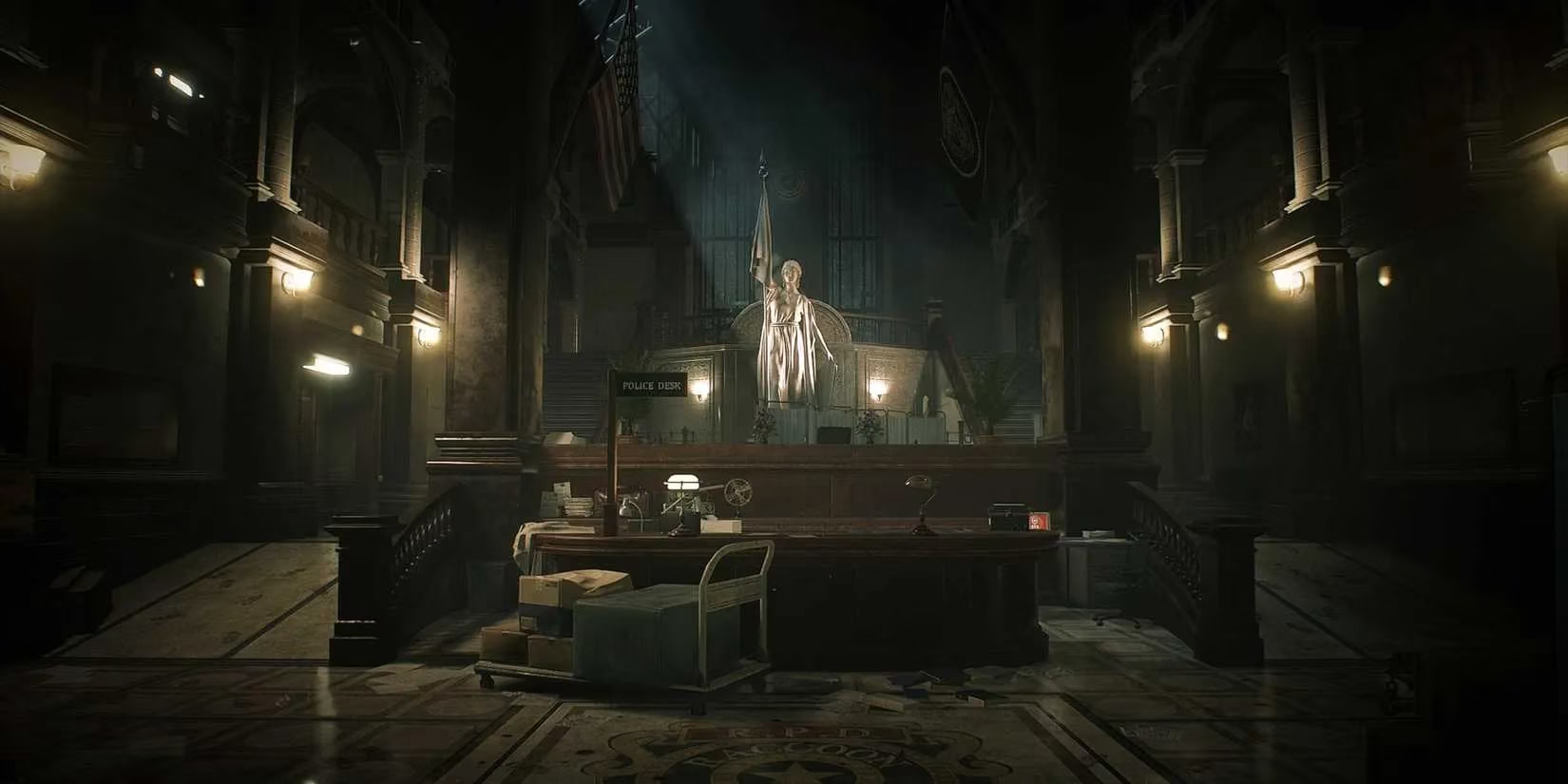
The glorious retcon, solidified in the Resident Evil 2 remake, is simple and perfect: It used to be a museum. In the late 80s, the expanding RPD needed a new HQ and bought the failing Raccoon Art Museum for its central location and parking. They did the bare minimum to convert it. So, those "puzzles" are just old museum security features and art displays they never bothered to remove. Suddenly, the absurdity makes perfect, hilarious sense. Chief Irons probably loved the ambiance.
4. Tails's Crisis of Confidence in the Sonic Series
Miles "Tails" Prower has had a rollercoaster of character development. In Sonic Adventure, he finds his courage and saves a city. In Sonic Forces, he's reduced to a quivering mess when faced with a phantom of Chaos. Fans noted this wild inconsistency, often blaming different writing teams.
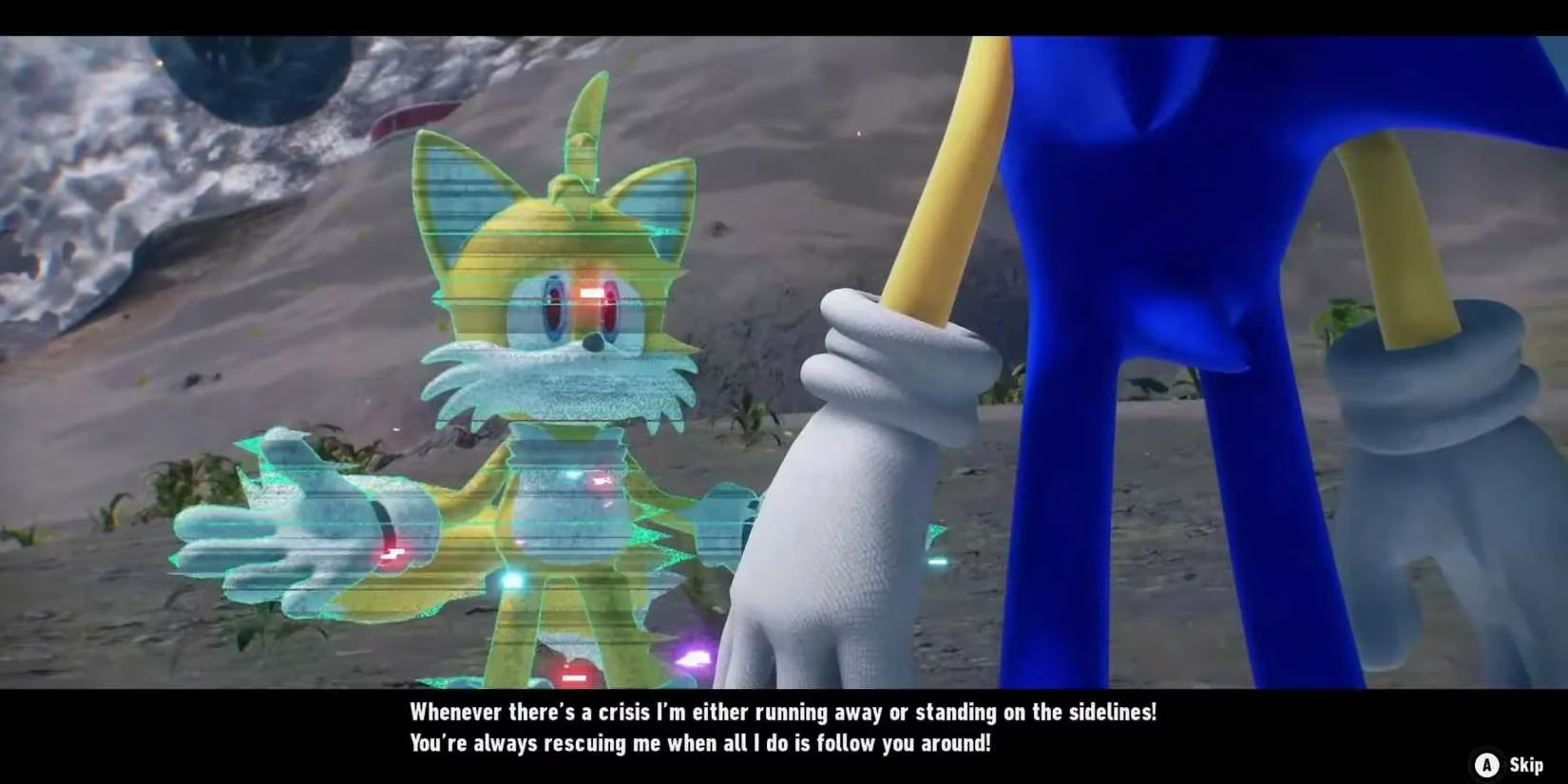
Remarkably, Sonic Frontiers directly addressed this. In a heartfelt campfire chat, Tails admits to Sonic he's been struggling, feeling inadequate and dependent. When Sonic reminds him of his past bravery, Tails drops a legendary meta-line: "I'm wildly inconsistent." He acknowledges his own narrative whiplash! He decides he needs time alone to find his footing without Sonic. It's a surprisingly mature moment that retroactively frames his prior cowardice as part of a genuine emotional arc, not just bad writing.
3. Dante's Mysterious Disappearance in Devil May Cry 2
For years, Devil May Cry 2 was the chronological end of Dante's story, ending with him riding a motorcycle into a demonic portal. Where did he go? The games were silent... until DMC5 needed to tell a new story that also left Dante in the demon realm.
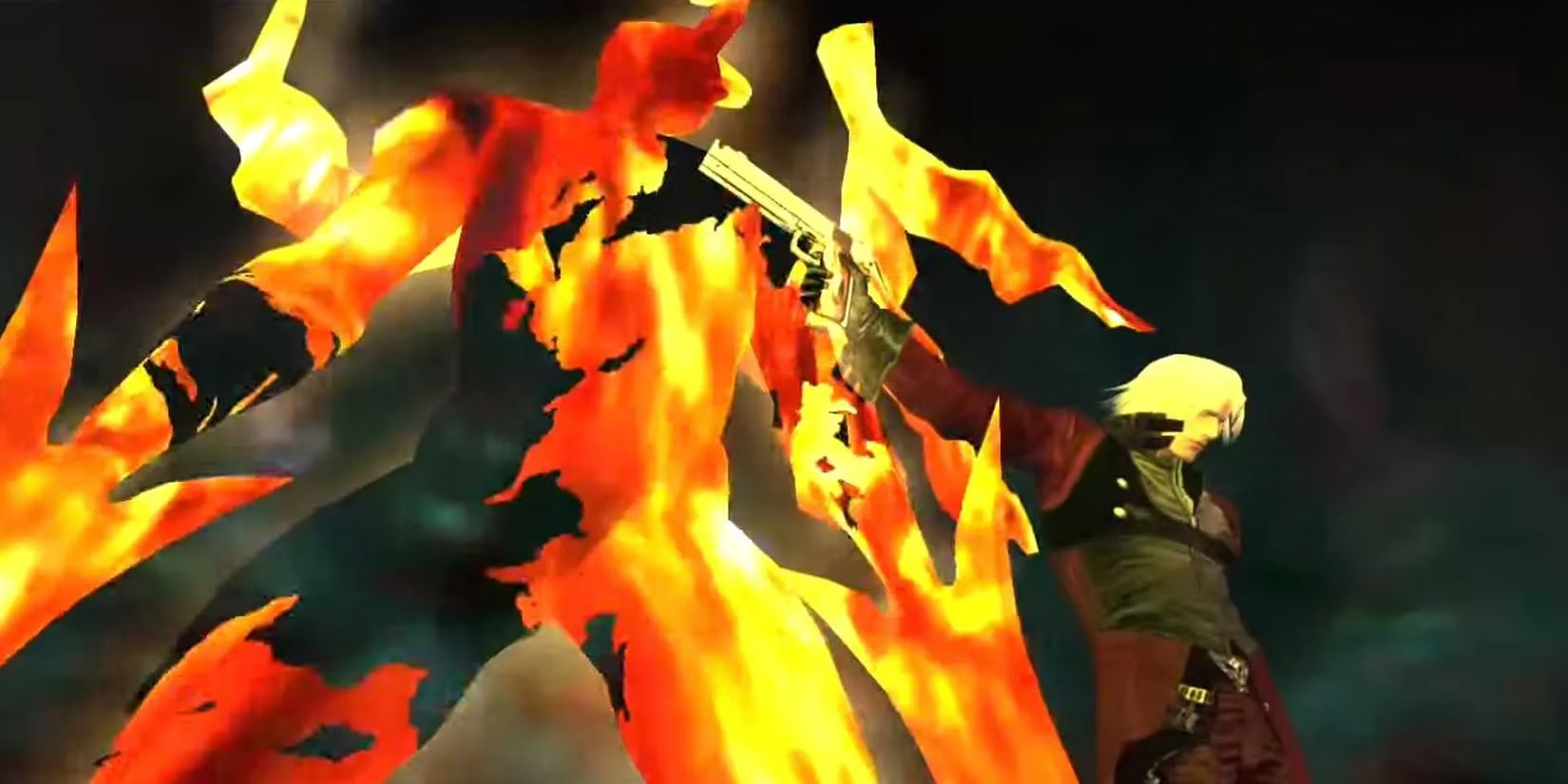
Capcom's fix was elegantly simple: they shuffled the timeline. The official order is now 3, 1, 2, 4, 5. DMC2 is now just a weird, quiet chapter before the events of 4 and 5. Why was Dante so brooding? He was just in a funk. Where did he go at the end? He just... left. Sometimes the best way to fix a plot hole is to gently move it out of the way of the new, better plot.
2. The Many, Many Deaths of Big Boss in Metal Gear Solid
Big Boss holds a record in the Metal Gear series: he's died at least three times. Hideo Kojima's sprawling epic needed some serious retroactive stitching to make this work.
-
"Death" #1 (Metal Gear): Killed by Solid Snake. The Fix: That wasn't him! It was Venom Snake, his body double from The Phantom Pain. A brilliant twist that recontextualized the entire series.
-
"Death" #2 (Metal Gear 2): Killed by Solid Snake (again). The Fix: He was mostly dead. The Patriots retrieved his body, used life-extending nanomachines, and put him in a coma.
-
Final Death (MGS4): Succumbs to FOXDIE. The Fix: No fix needed—this one finally stuck, after all the nanomachine-induced shenanigans.
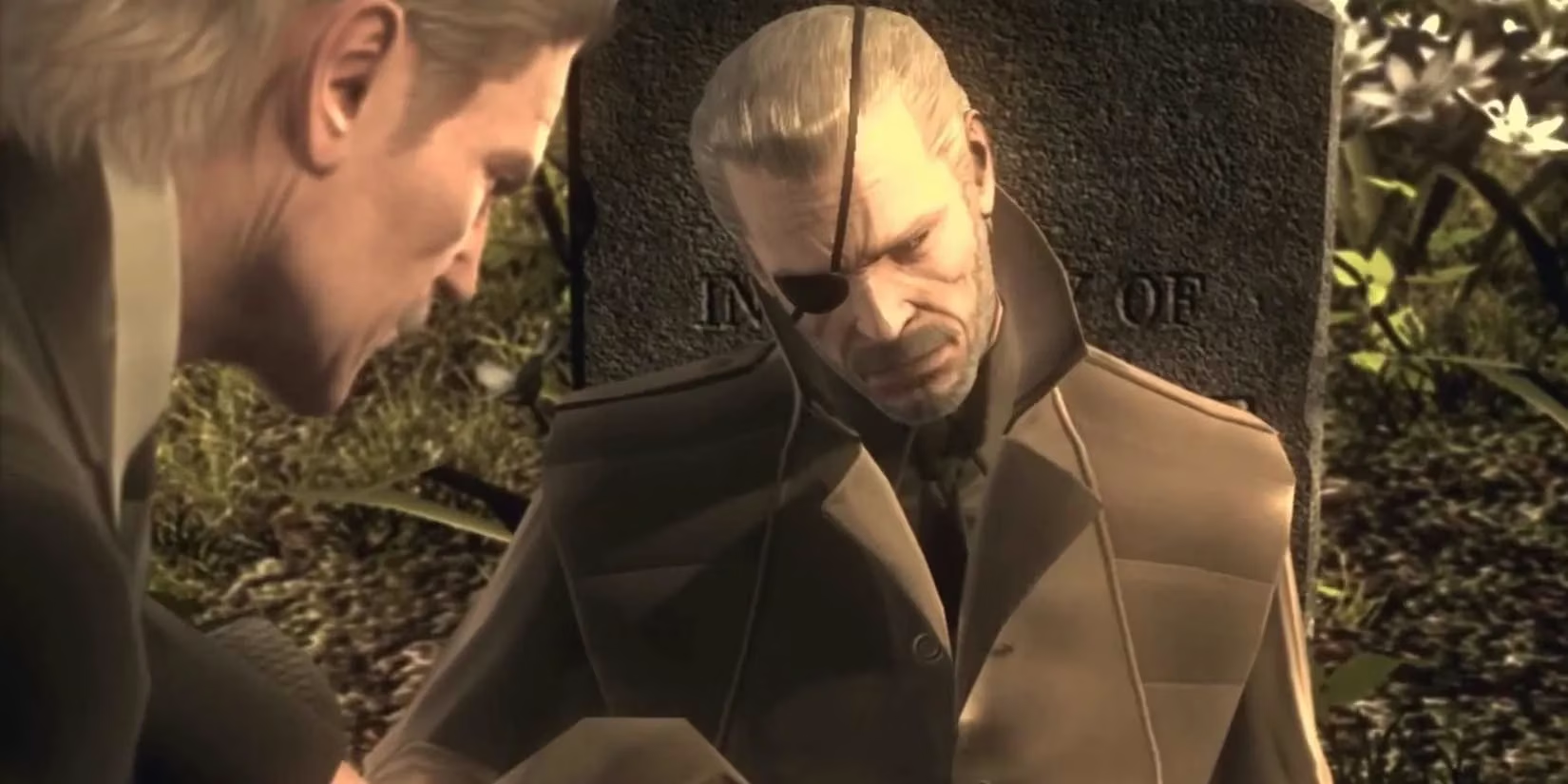
The explanation is pure Kojima: body doubles, nanomachines, and decades-long conspiracies. It's convoluted, but it somehow works within the series' own insane logic.
1. The Vanishing Scar of Tifa Lockhart in Final Fantasy VII Remake
Here's a detail only the most eagle-eyed fans caught. In Final Fantasy VII Rebirth, we learn Sephiroth gave Tifa a massive, near-fatal scar down her torso in Nibelheim. It's a crucial part of her history and Cloud's fractured memory. So, why can't we see this prominent scar on her model in Final Fantasy VII Remake, despite her outfits showing plenty of skin?
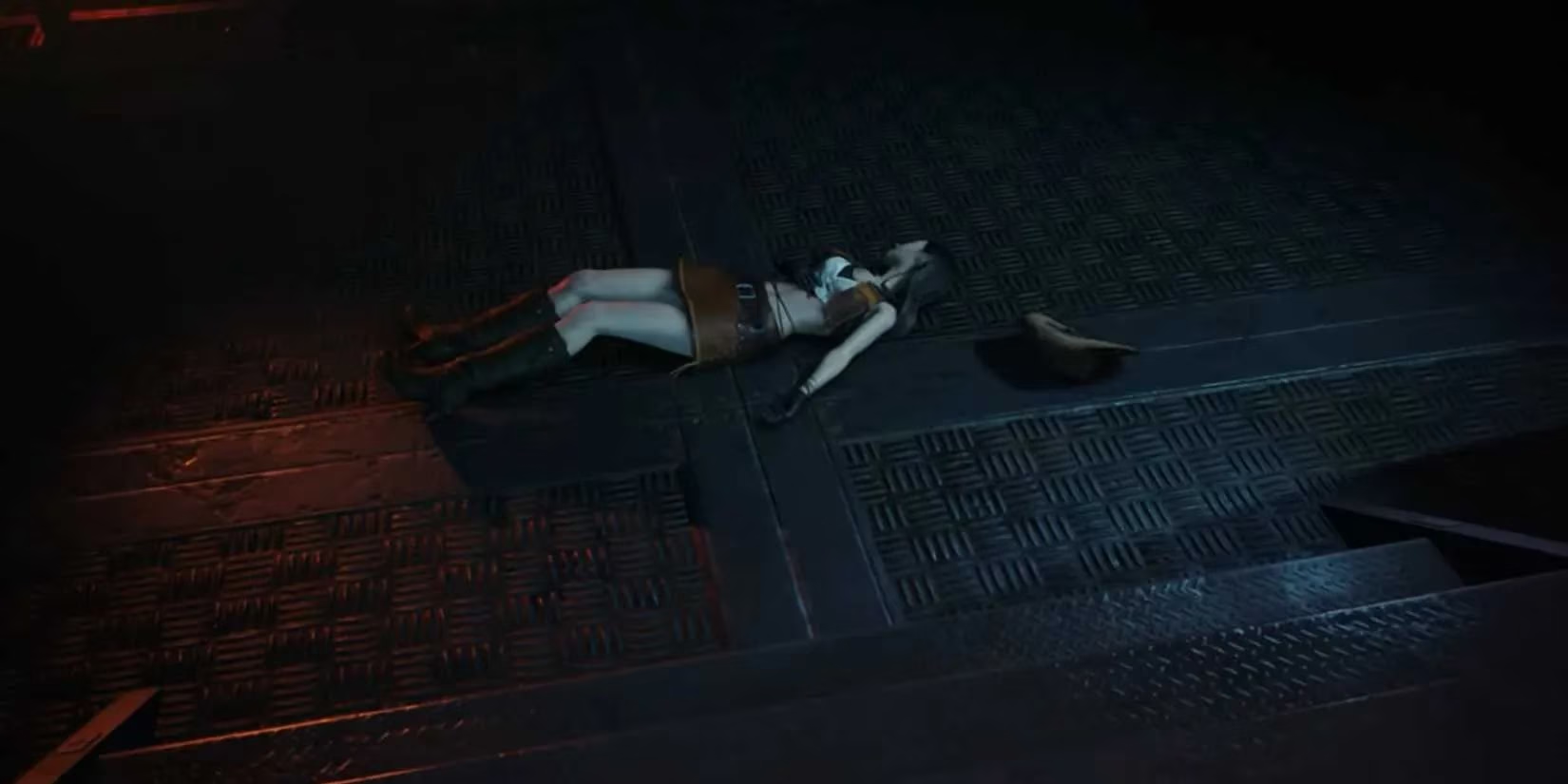
The answer comes from an official novel, Final Fantasy VII Remake: Trace of Two Pasts. After the attack, Tifa underwent extensive reconstructive surgery, including skin grafts. The massive scar was significantly reduced, now only visible as a smaller mark that's hidden unless she specifically shows it. It's a practical, in-universe explanation for a visual discrepancy between the original game's description and the remake's character model. A small but thoughtful patch for devoted fans.
So there you have it! From shirt-eating Heartless to non-canon resurrection machines, game developers have employed every trick in the book to mend their stories' frayed edges. Some fixes are strokes of genius that deepen the lore; others are gloriously silly band-aids. But they all show that in the ever-evolving world of video game narratives, it's never too late to go back and say, "Wait, that didn't make sense. Let's try this instead." And honestly? I wouldn't have it any other way. 😄
Comments