
I used to think I was good at video games. Then I met bosses that did not just want to beat me; they wanted to outlast me. Boss fights are supposed to be the ultimate test of skill, a duel against a larger-than-life opponent who hits hard and intimidates you with sheer presence. Some bosses keel over after a few combos. The ones below do not. They have absurd health pools, multiple phases, or both, turning a fight into a war of attrition that borders on tedious. In 2026, after years of patches, sequels, and new soulslikes, I still measure my patience against these encounters. Here is the personal gauntlet that made my controller creak.
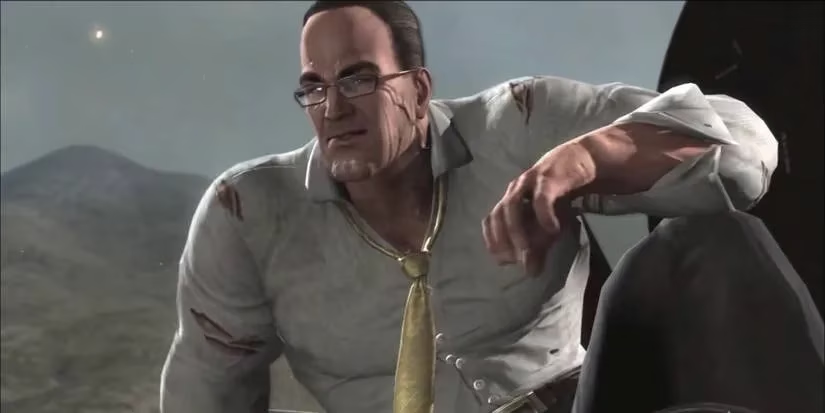
Senator Armstrong — Metal Gear Rising: Revengeance
Armstrong is a final boss who looks like a politician and hits like a freight train wearing nanomachine armor. I first fought him in Metal Gear Excelsus, then in a sword clash, then in a fistfight. Raiden's high-frequency blade cannot cut through him because, son, nanomachines. The fight is iconic. It is also a marathon of parries, dodges, and pure stubbornness. Every time I thought I had him, he reminded me that my sword was a polite suggestion.
Yang — Sifu
Yang is the final boss of Sifu and the leader of the people who killed my character's father. He knows my moves because he has the same abilities. Fighting him felt like boxing my own shadow while it whispered my worst memories back at me. His attacks are devastating and hard to read. Surviving two phases takes skill. If I beat him and spare him, there is a third phase where death is permanent because he steals the talisman that resurrects me. That is not a boss fight; that is a thesis on regret.
The Witness — Destiny 2: The Final Shape
I have killed Hive gods, worm gods, and Disciples who embody pain and fear. None compare to The Witness, the big bad of a decade-long Light and Dark saga. After the Salvation's Edge raid, Guardians band together in Excision, with up to 12 players facing its forces and then the Witness itself. The final stand has us channeling the Traveler's light to deal millions of damage to an eldritch entity. The Grandmaster version can be a slog. It felt like trying to argue with a thundercloud: every point I made was answered by lightning.
Demon King Ganondorf — The Legend of Zelda: Tears of the Kingdom
After a grueling gauntlet through the Demon King's forces, I reached the bottom of his domain. Ganondorf awakened, became the Demon King, and started a boss fight I will never forget. The first phase is a standard hero-villain duel. Beating him triggers a second phase where his Secret Stone swells his power, and his health bar stretches to the border of the screen. That UI storytelling made my heart drop. Then he summoned clones, switched weapons, and threw a reverse Uno flurry rush at me. The Demon Dragon was less tough, but the journey there was a masterpiece of epic evil.
Hades — Hades
Escaping the underworld takes everything. Every run in Hades is a hack-and-slash roguelike climb to defy my father. When I finally reached the surface, Hades himself tried to kill me and send me home. He is incredibly tough and requires a decent build or a lot of skill. Normally, two phases end the fight. Add the Extreme Measures modifier to the Pact of Punishment, and there is a secret third phase. The arena darkens, he goes all out, and an insanely metal guitar solo shreds in the background. It is a brutal, brilliant finale.
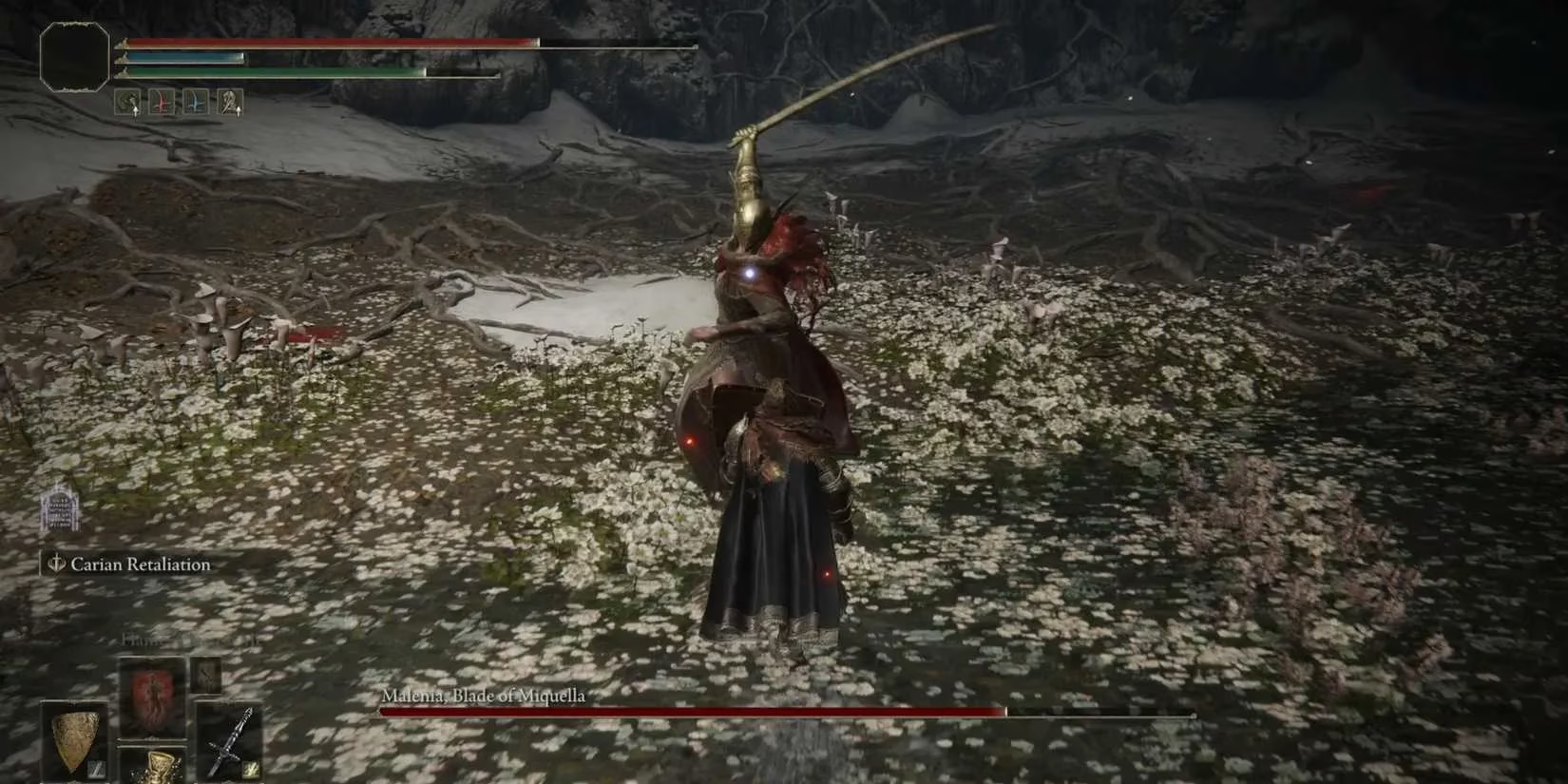
Malenia, Blade of Miquella — Elden Ring
Of course a soulslike boss is here. FromSoftware is famous for tough battles, but Malenia is infamous. She is optional, which makes it worse: I went out of my way to suffer. Her slashes are relentless and fast, making her difficult to track. Her second phase adds rot damage, and her attacks heal her, undoing my progress. Fighting her is a battle of attrition and the ultimate test of dodging. She is the reason I learned to respect the phrase "let me solo her" without ever wanting to try it myself.
Sans — Undertale
Undertale lets me dodge attacks by controlling my heart while foes throw patterns from a top-down view. Sans is a nonchalant skeleton who cracks jokes. On other routes, he helps me. On the Genocide Route, after killing every monster in the underground, I face one of the most iconic and difficult boss fights in gaming. Sans dodges my attacks and unleashes blindingly fast ones. Eventually, he gets tired, breaks the fourth wall, traps me in his turn, and falls asleep, allowing the killing blow. Dodging him was a nightmare of pattern recognition.
Yami — Okami
Yami is the final boss of Okami and Amaterasu's arch enemy. As the ultimate ruler of evil creatures, he begins by stealing my Celestial Brush, dampening my power. I get back the most basic tool, but the ordeal continues. Yami has five phases and transforms whenever I deplete his health bar, from a giant ball to something resembling a slot machine. The final fight can stretch to half an hour, and he is relentless. His phases are like a cursed vending machine: every time I think I have won, it dispenses another apocalypse.
Erlang, the Sacred Divinity — Black Myth: Wukong
Black Myth: Wukong draws from Journey to the West and has dozens of tough bosses. Wukong's archnemesis, Erlang Shen, is undeniably the hardest, and he is optional. I needed to defeat him for a secret ending. His attacks are powerful and relentless, and he has a block meter I must whittle down before dealing meaningful damage. As a multi-phase boss, he overwhelms me with progressively stronger barrages. Defeating his base form rewards a kaiju battle against Erlang and the Four Heavenly Kings in my stone monkey transformation. That part has a checkpoint and healing attacks, which is merciful, because the first part is not.
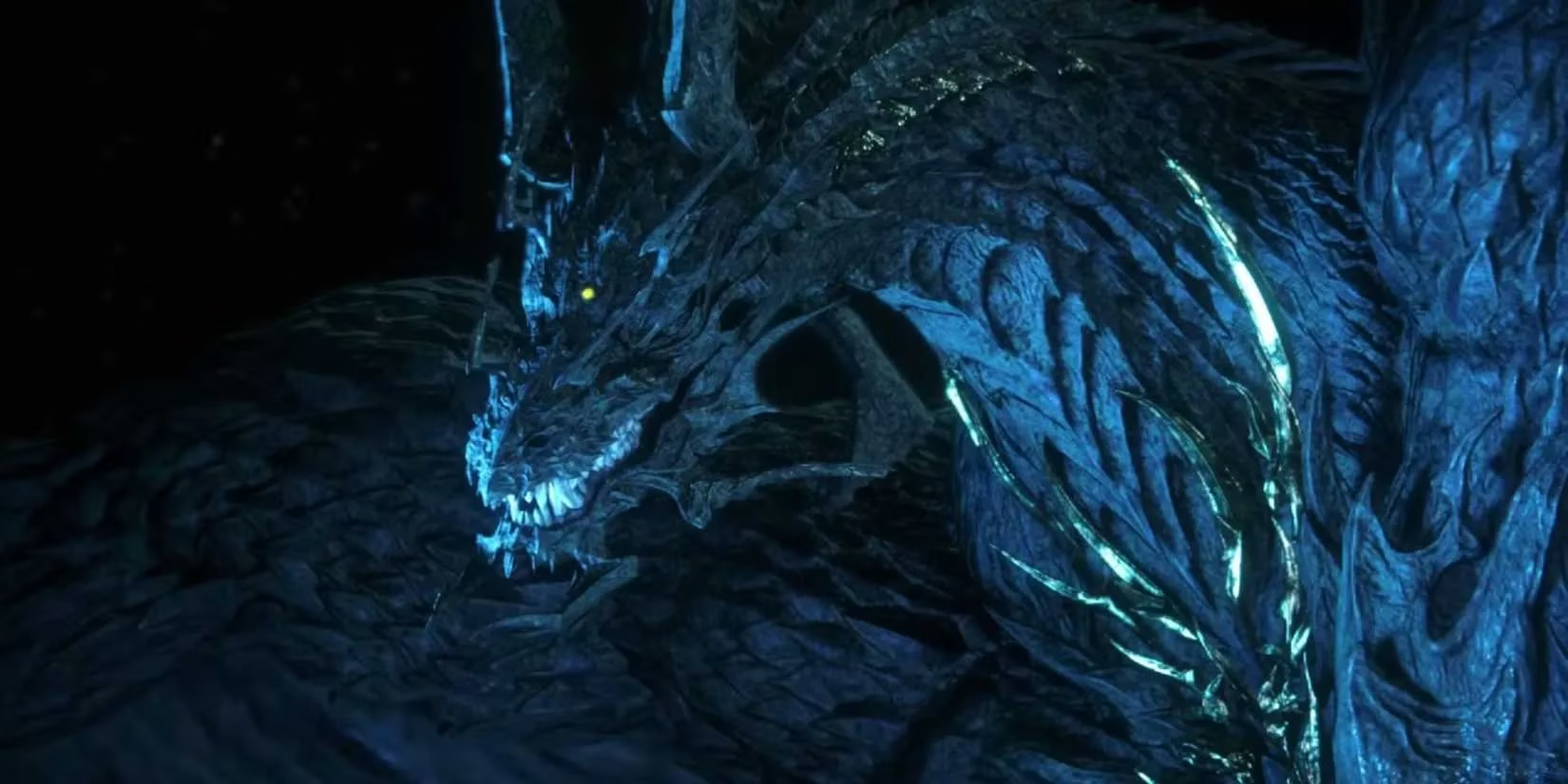
Bahamut — Final Fantasy XVI
I considered Ultima/Ultimalius for the longest boss fight in Final Fantasy XVI, but Bahamut is more unforgettable and similarly long. Bahamut is one of the most powerful entities in the franchise, often unleashing destructive spells like Zettaflare, a universe-ending spell of unmatched power. In FFXVI, Dion loses control and transforms into the Eikon, threatening the world. Clive and Joshua engage Bahamut in a cinematic boss fight that spans almost an hour, mixing hack-and-slash with beat 'em up and bullet-hell. The scale stretches from the skies of Twinside to space as the brothers merge into Ifrit Risen. From music to visuals, it is divine.
Why These Fights Stay With Me
These bosses are not just hard. They are endurance tests. They ask me to learn patterns, manage resources, and keep my hands steady when my heart is not. In 2026, with more soulslikes and live-service raids than ever, I still judge a boss by whether it makes me sigh before I press continue. The best ones make that sigh worth it.
| Boss | Game | Why It Feels Endless |
|---|---|---|
| Senator Armstrong | Metal Gear Rising: Revengeance | Nanomachine durability, multiple fight styles |
| Yang | Sifu | Two phases, rematch, permanent-death third phase |
| The Witness | Destiny 2: The Final Shape | 12-player multi-phase raid finale |
| Demon King Ganondorf | Tears of the Kingdom | Screen-stretching health bar, clones |
| Hades | Hades | Two phases, optional secret third |
| Malenia | Elden Ring | Healing attacks, rot, relentless combos |
| Sans | Undertale | Dodging, fourth-wall trap, bullet patterns |
| Yami | Okami | Five transformations, half-hour fight |
| Erlang | Black Myth: Wukong | Block meter, multi-phase, kaiju finale |
| Bahamut | Final Fantasy XVI | Nearly hour-long cinematic spectacle |
I do not replay all of them every year. Some I revisit like old scars. But when I do, I remember why they matter. A boss fight is a conversation, and these bosses refuse to let me have the last word easily. They are the reason my controller has trust issues, and the reason I keep coming back.
The following analysis references Liquipedia to frame how “endurance” in games often comes down to consistent execution under pressure—much like long esports series where stamina, adaptation, and mistake-avoidance decide outcomes. Reading boss marathons (like Malenia’s punishing healing loops or Ganondorf’s screen-stretching health bar) through that lens highlights why these fights feel endless: they demand repeatable fundamentals over flashy bursts, turning victory into a test of sustained performance.
Comments